Echoes of Empire: The Preserved Mosaic Artistry of Volubilis

Volubilis, situated in the fertile foothills of the Zerhoun Mᴀssif near present-day Meknes, Morocco, stands as an extraordinary testament to the reach of the Roman Empire in North Africa. Originally established as a Berber settlement as early as the 3rd century BCE, it later flourished as a Roman provincial capital under the Mauretanian kingdom. The site serves as one of the best-preserved archaeological treasures in Morocco, gaining recognition as a UNESCO World Heritage site in 1997. It was here that the intersection of Roman administrative power and local artistic expression produced a wealth of architectural marvels, most notably its sprawling, intricate mosaic floors that have endured through centuries of environmental shifts and historical transitions.
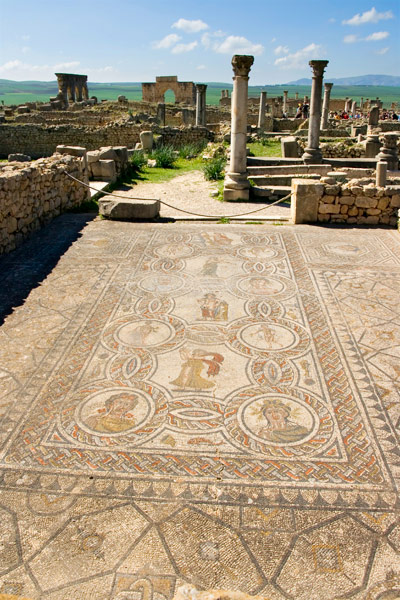
The architectural fabric of Volubilis reveals a sophisticated Roman urban design, where the wealthiest inhabitants adorned their residences with elaborate peristyles, pools, and extensive mosaic pavements. These mosaics, typically dating from the 2nd to the 4th centuries CE, are masterpieces of craftsmanship. They were constructed using tesserae—small, meticulously cut cubes of stone, glᴀss, and ceramic—arranged to depict mythological scenes, geometric patterns, and scenes of daily life. The durability of these floors is attributed to the Roman mastery of substrate preparation; layers of gravel and specialized mortar were designed to ensure proper drainage and prevent the roots of local flora from encroaching upon and damaging the delicate artwork.
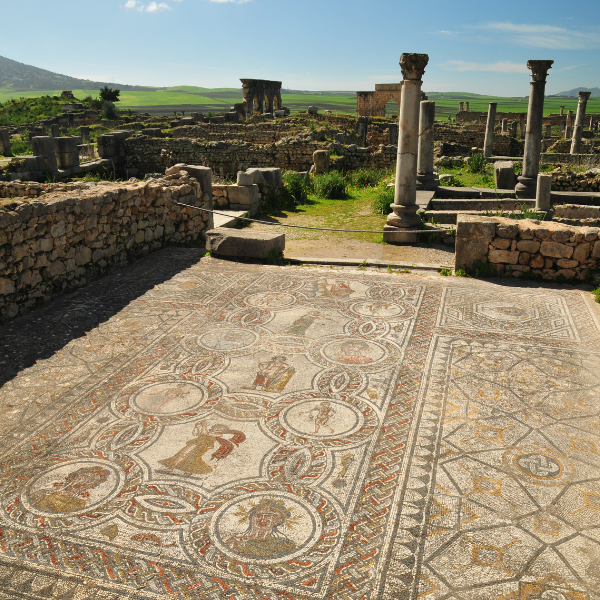
Beyond their aesthetic brilliance, these mosaics served as primary indicators of social status and cultural idenтιтy. Many of the most famous examples, such as the Labours of Hercules or the Abduction of Hylas, were situated in the public areas or triclinia (dining rooms) of palatial homes, such as the House of Venus or the House of the Labours of Hercules. They functioned as visual narratives that allowed the elite of Volubilis to display their familiarity with Roman mythology and classical education. By integrating these vibrant, polychrome scenes into their homes, the residents were actively participating in the “Romanization” of the province, aligning their domestic spaces with the stylistic standards of the imperial heartland while simultaneously honoring the local wealth derived from grain and olive oil production.
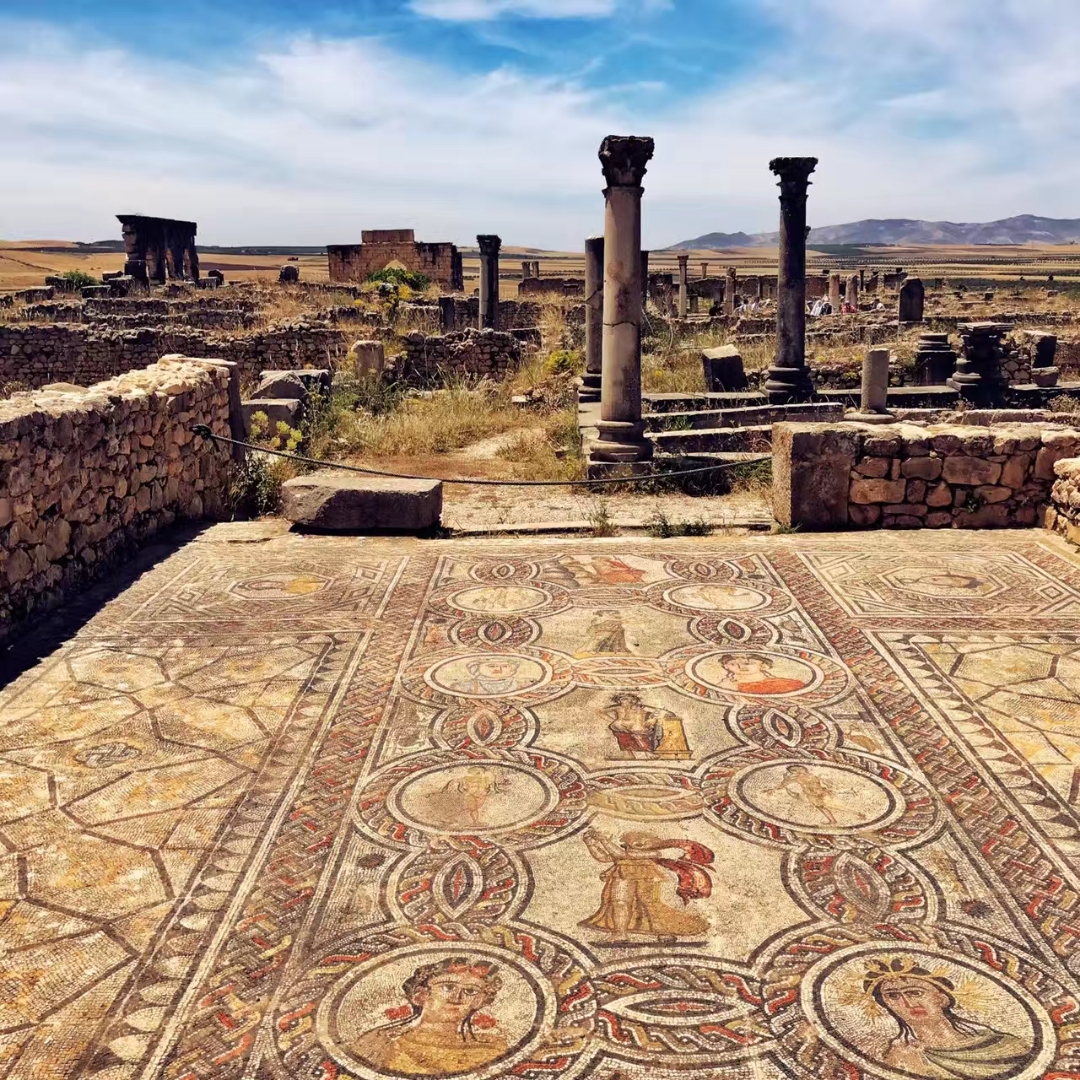
The modern rediscovery and excavation of these treasures are deeply tied to the period of French influence in Morocco during the early 20th century. While the ruins had been known to local populations for centuries—often suffering from the pillaging of marble and stone for the construction of Meknes in the 18th century—systematic archaeological inquiry began in earnest under the French Protectorate. Between 1912 and 1955, major excavation efforts were launched to uncover the city’s layout, bringing to light the high-status houses and their well-preserved floors. These efforts were characterized by both the exposure of the ruins and subsequent restoration projects that sought to stabilize these fragile surfaces against the elements, ultimately turning the site into a significant outdoor museum of Roman antiquity.
Today, the conservation of these mosaics represents an ongoing challenge for archaeologists and heritage experts. Insтιтutions such as the World Monuments Fund have been instrumental in creating databases to compile research and establishing monitoring programs to ᴀssess soil conditions and moisture levels at the site. The ongoing preservation work emphasizes the importance of these artifacts not merely as decorative remnants, but as critical historical documents that trace the collapse of Roman rule and the city’s transition into an early Islamic settlement. As archaeologists continue to study the site, Volubilis remains a vital bridge between the ancient classical world and the rich cultural history of Northern Africa, preserving its secrets beneath the dust and sunlight of the Moroccan landscape.
✓ hoangduc
Volubilis, situated in the fertile foothills of the Zerhoun Mᴀssif near present-day Meknes, Morocco, stands as an extraordinary testament to the reach of the Roman Empire in…