Engineering the Roman Peace: The Aqueduct of Ferreres
The magnificent structure captured is the Ferreres Aqueduct, also known as the Les Ferreres Aqueduct or the Devil’s Bridge (Pont del Diable), located near the city of Tarragona in northeastern Spain. Constructed during the reign of Augustus, this monumental engineering feat dates to the late 1st century BCE or early 1st century CE. As a crucial component of the infrastructure serving the Roman city of Tarraco—the capital of the province of Hispania Citerior—the aqueduct exemplifies the sophisticated urban planning and public works programs that consolidated Roman administrative, economic, and social control over its vast Mediterranean territories during the early imperial period.

The construction of the Ferreres Aqueduct represents a remarkable synthesis of Roman masonry techniques and landscape integration. The structure consists of two superimposed tiers of arches, built primarily of dry-stone blocks made from locally quarried limestone, carefully fitted to withstand the structural stresses of the terrain. The conduit itself, visible at the top of the bridge, was lined with opus signinum—a waterproof mortar composed of lime, sand, and crushed pottery—to ensure the efficient transport of water while preventing leakage. The precision of the arch alignment, designed to maintain a consistent gradient over a significant distance, highlights the advanced surveying capabilities and logistical organization available to Roman engineers working in provincial settings.
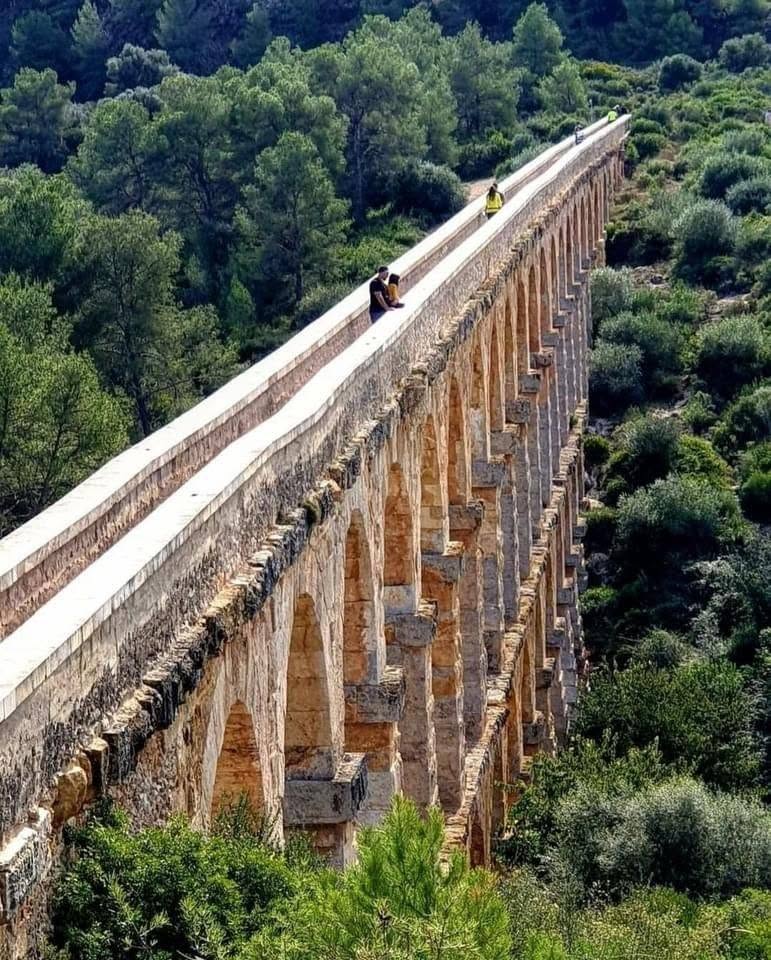
The primary function of this engineering marvel was to channel fresh water from the Francolí River to the urban center of Tarraco, sustaining its baths, public fountains, and domestic needs. Beyond mere utility, the aqueduct served as a powerful symbol of Roman civilization and the benefits of the Pax Romana. By conquering the natural geography with such a dominant and permanent structure, the Roman administration physically manifested its power to provide for its citizens and maintain order within its borders. Its continued presence in the landscape serves as a testament to the durability of Roman architectural design and the central role that water management played in defining the cultural and social standards of Roman life.
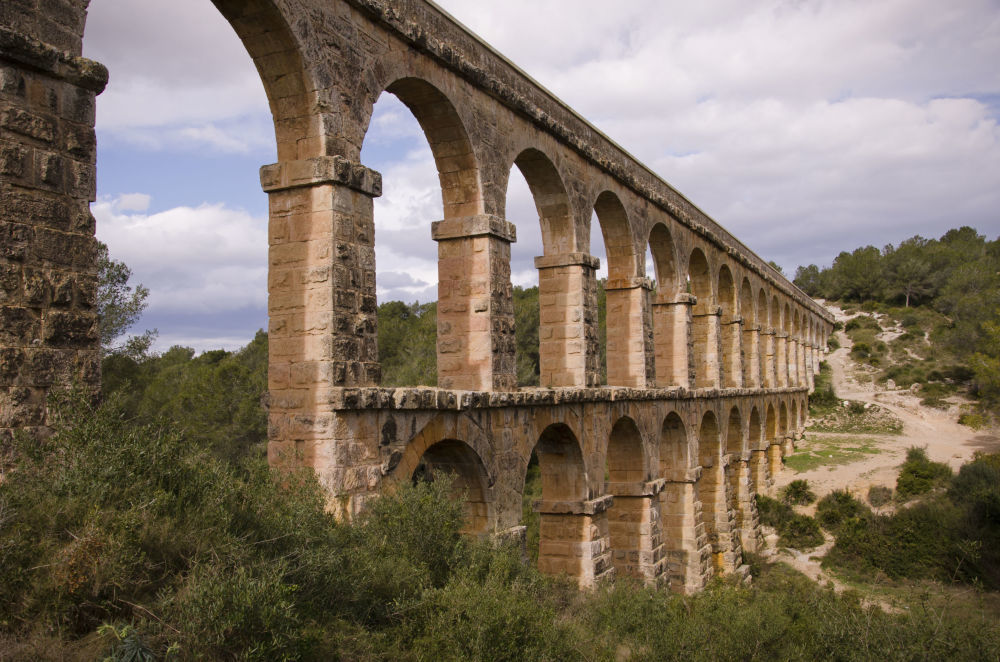
The historical documentation and preservation of this site have been the focus of dedicated archaeological and heritage management efforts for centuries. While the aqueduct has remained a visible feature of the Spanish landscape since antiquity, its formal study and inclusion in protected heritage registers have been overseen by regional organizations, such as the Catalan Agency for Cultural Heritage. Archaeologists and historians have meticulously analyzed the structural integrity, epigraphic evidence, and surrounding site topography to confirm its dating and function. Through these sustained scholarly efforts and ongoing conservation initiatives, the Ferreres Aqueduct is now recognized as a vital component of the Tarraco archaeological ensemble, a UNESCO World Heritage site that protects the legacy of Roman occupation in the region.

In conclusion, the Ferreres Aqueduct shown remains an awe-inspiring example of the technical brilliance and enduring influence of the Roman Empire. Its ability to traverse the rugged terrain while maintaining the necessary engineering tolerances speaks to the extraordinary skill of ancient builders and the state’s prioritization of public infrastructure. As we look at this bridge today, it continues to serve as an essential archaeological record of the logistical and social complexity of the ancient world. Through continued study and protection, this remarkable structure remains not only a conduit for water, but a lasting bridge between our modern understanding and the remarkable engineering culture of the Roman past.
✓ hoangduc
The magnificent structure captured is the Ferreres Aqueduct, also known as the Les Ferreres Aqueduct or the Devil’s Bridge (Pont del Diable), located near the city of Tarragona…