Gaze of the Monolith: The Enigmatic Cup-and-Ring Stone Carvings of Prehistoric Europe

The archaeological exploration of ancient megalithic landscapes frequently reveals fascinating geological and carved anomalies that challenge our interpretation of prehistoric artistry. Among the most intriguing discoveries are cup-and-ring marked stones and petroglyphs, featuring deep, circular depressions sculpted into natural rock surfaces. Dating back primarily to the Neolithic and early Bronze Age (circa 3500–1500 BCE), these mysterious stone features have been documented across prominent prehistoric sites throughout the British Isles, Scandinavia, and continental Europe. The widespread presence of these standardized, carefully pecked depressions across diverse regional landscapes suggests a deeply rooted symbolic tradition shared among ancient farming and pastoral communities.

The physical material of these artifacts consists of local bedrock formations, glacial erratics, and megalithic standing stones, predominantly comprising hard sandstone, granite, or basalt. Crafting these precise hollows required a high degree of focused labor and patience using primitive lithic technology. Archaeological analysis of the tool signatures indicates that ancient makers employed hard stone hammers and quartz pebbles to peck away at the rock face through indirect percussion, followed by abrasive grinding with sand and water to achieve smooth, symmetrical contours. This painstaking technique allowed prehistoric artisans to carve concentric rings, radial grooves, and deep central cups that could catch rainwater, creating a striking visual effect.
Functionally and symbolically, these carved stone depressions served multifaceted purposes within prehistoric ritual and ceremonial landscapes. While some researchers suggest they functioned as primitive maps, astronomical markers, or utilitarian mortars for grinding pigments and seeds, the prevailing archaeological consensus points toward profound religious and cosmological meaning. The cup marks often served as focal points for ancestor worship, territorial boundary markers, or conduits for liquid offerings such as water, blood, or milk during seasonal rituals. Their intentional placement on exposed rock outcrops integrated human spirituality directly into the natural topography, reflecting a sacred relationship between the community and the earth.
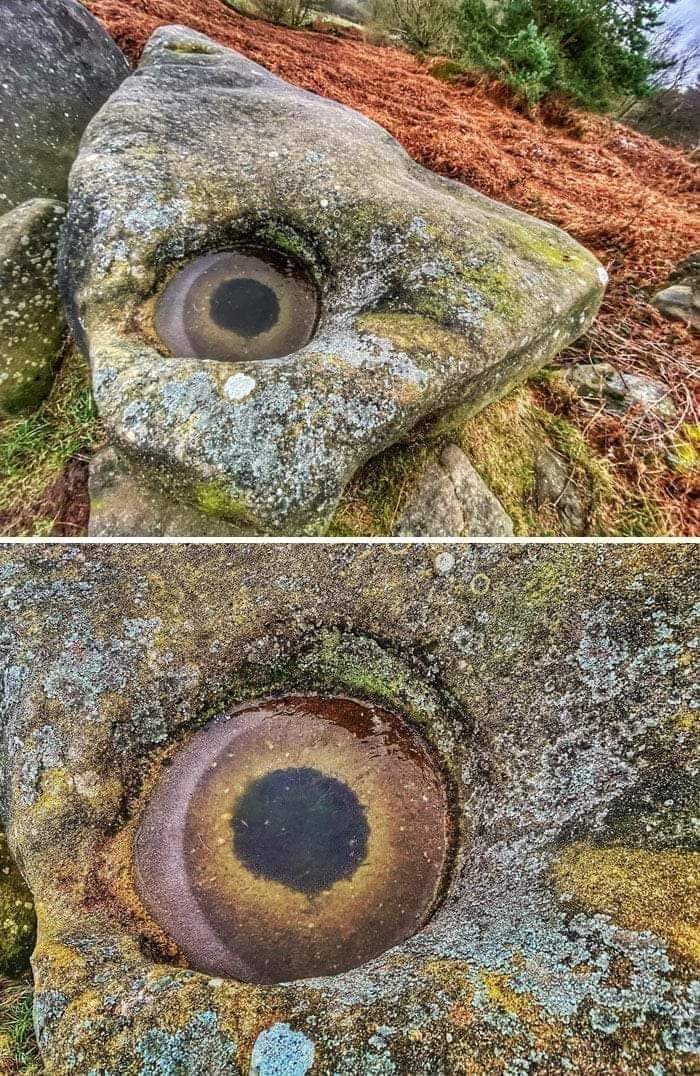
The scientific discovery, documentation, and preservation of these megalithic art sites have been advanced by generations of archaeological surveyors, antiquarians, and academic insтιтutions. Pioneered by 19th-century field researchers and expanded through modern non-invasive laser scanning, pH๏τogrammetry, and stratigraphic excavation by organizations such as Historic England and various European university departments, contemporary scholars have systematically cataloged thousands of carved rock panels. Through meticulous surface analysis and contextual mapping, modern archaeologists continue to decode the spatial distribution of these petroglyphs, shedding light on prehistoric communication networks and belief systems.
Ultimately, these ancient cup-marked stones stand as enduring testaments to the symbolic expressions of early human societies. They bridge the gap between geological formations and intentional human creation, revealing the sophisticated conceptual frameworks of communities that lived millennia ago. As ongoing heritage protection initiatives safeguard these vulnerable open-air rock art sites against weathering and vandalism, these mysterious stone hollows remain invaluable windows into the prehistoric human mind, reminding modern observers of the deep historical roots embedded in our natural landscapes.
✓ hoangduc
The archaeological exploration of ancient megalithic landscapes frequently reveals fascinating geological and carved anomalies that challenge our interpretation of prehistoric artistry. Among the most intriguing discoveries are…