Mystery in Stone: The Megalithic Jars of the Plain of Jars

Scattered across the rolling landscape of the Xieng Khouang plateau in the highlands of Laos, the Plain of Jars stands as one of Southeast Asia’s most extraordinary and enigmatic archaeological landscapes. Spanning more than a hundred distinct sites across the province, this monumental complex dates primarily from the Iron Age, roughly between 500 BCE and 500 CE. The region serves as a vast prehistoric necropolis where thousands of heavy stone containers dot the remote valleys and foothills. These ancient relics offer profound insights into the complex mortuary practices, social stratification, and long-distance trade networks of early Southeast Asian societies that flourished centuries before the rise of classical regional states.

The physical makeup of these megalithic artifacts reveals remarkable quarrying, transportation, and stone-working techniques achieved by ancient craftspeople. The containers are carved predominantly from solid blocks of local geological materials, including granite, sandstone, conglomerate, and limestone, reflecting the mineral composition of nearby mountain outcrops. Artisans employed primitive stone and metal tools to meticulously excavate the interior chambers, creating smooth, deep hollows with wide rims designed to hold heavy stone lids, some of which feature carved animal motifs and geometric reliefs. The sheer scale of these monolithic vessels—ranging from one to over three meters in height and weighing up to several tons—demonstrates a high degree of cooperative social organization and engineering capability.
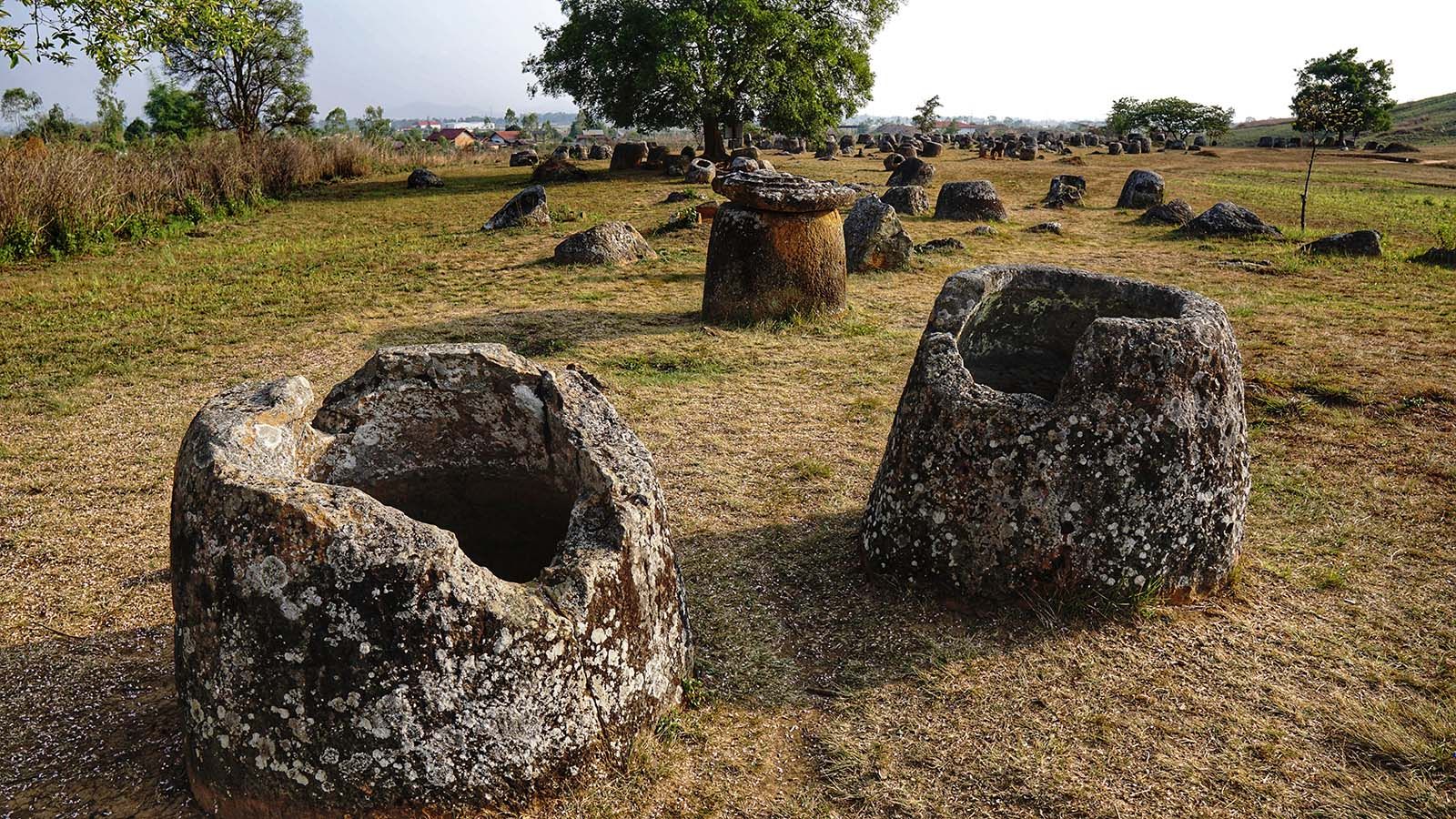
While local Lao folklore traditionally attributes the vessels to ancient giants who brewed and stored rice wine to celebrate a mythical victory, modern archaeological consensus identifies them as sophisticated mortuary urns. Excavations around and within the vessels have consistently yielded human skeletal remains, secondary burials, teeth, glᴀss beads, iron and bronze tools, and ceramic fragments, indicating that they were utilized for funerary rituals. Archaeologists hypothesize a two-stage burial process wherein bodies were initially left to decompose elsewhere before selected bones were collected, cremated or treated, and finally deposited inside these stone jars as part of an elaborate ancestor-worship and community mourning tradition.
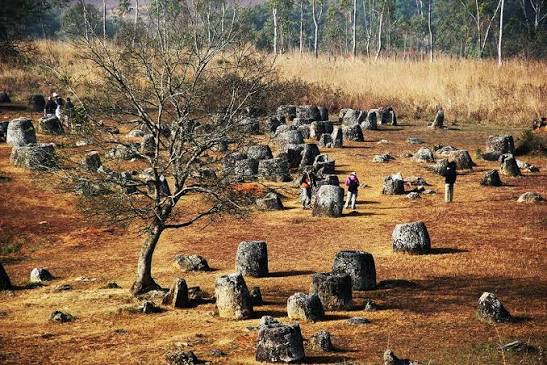
The scientific investigation of the Plain of Jars began in earnest during the French colonial period, most notably through the pioneering work of French geologist and archaeologist Madeleine Colani in the 1930s. Colani conducted the first systematic excavations, documenting dozens of sites, categorizing the urn types, and discovering surrounding secondary burial features such as underground burial pits and stone disks. Following decades of interruption due to heavy regional conflict and unexploded ordnance contamination that left the plateau heavily mined, modern international research resumed in the 21st century through collaborative efforts involving Lao authorities and Australian archaeologists, such as those from the Australian National University.
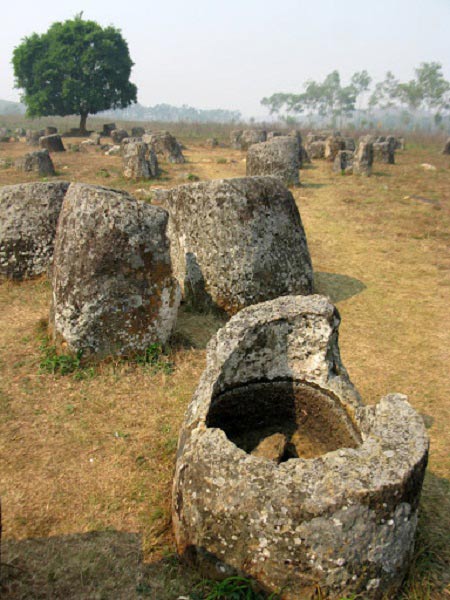
In contemporary times, the preservation and safeguarding of these ancient monuments have entered a new era, culminating in the inscription of the Plain of Jars as a UNESCO World Heritage site in 2019. Ongoing conservation initiatives focus heavily on clearing dangerous unexploded wartime ordnance, managing sustainable tourism, and protecting the fragile sandstone surfaces from weathering and livestock damage. These international and local preservation efforts ensure that the prehistoric necropolis can continue to be studied, offering researchers deeper clues into the mysterious Iron Age cultures that once dominated the interior uplands of Indochina.
✓ hoangduc
Scattered across the rolling landscape of the Xieng Khouang plateau in the highlands of Laos, the Plain of Jars stands as one of Southeast Asia’s most extraordinary…