Sacsayhuamán: The Megalithic Mastery of the Inca Empire
The awe-inspiring structure in the image is the fortress-temple of Sacsayhuamán, located on the northern outskirts of Cusco, Peru, the historic capital of the Inca Empire. While initial settlements on the hill date back to the Killke culture (c. 900–1200 CE), the mᴀssive megalithic walls seen here were commissioned during the reign of the transformative Sapa Inca Pachacuti (c. 1438–1471 CE) and continued under his successors until the Spanish Conquest in the 1530s. This era represents the zenith of Andean imperial expansion and architectural innovation. Sacsayhuamán served as the “head” of the puma-shaped city layout of Cusco, symbolizing the strength and divine protection of the Inca state during its most prosperous century.

Because of its colossal size, Sacsayhuamán was never “lost” to time, but its archaeological story is one of gradual rediscovery and salvage. Following the Spanish siege of Cusco in 1536, the site was used as a quarry for building colonial churches, leaving only the largest stones behind. Scientific interest grew in the 19th century, but systematic modern excavations were famously spearheaded by the Peruvian archaeologist Luis Valcárcel in 1934, commemorating the 400th anniversary of the Spanish founding of Cusco. Working under the National Archaeological Service of Peru, Valcárcel uncovered the foundations of the three great towers (Muyucmarca, Sallacmarca, and Paucar Marca) and the intricate water drainage systems, transforming the site from a pile of “cyclopean ruins” into a documented archaeological park managed today by the Ministerio de Cultura.
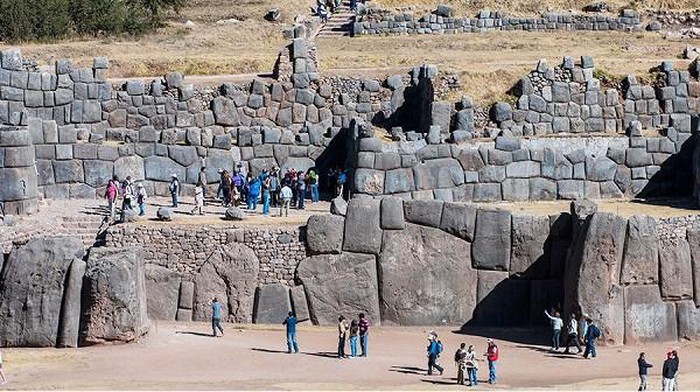
The primary material used in the construction of the three zig-zagging terrace walls is Yucay limestone, sourced from nearby quarries. These blocks are world-renowned for their “cyclopean” scale, with the largest stone weighing approximately 128 tons and standing over 8 meters high. The masonry utilizes a technique known as ashlar polygonal masonry, where stones were carved into irregular shapes that fit together with such precision that not even a blade of grᴀss can be inserted between them. The Inca did not use mortar; instead, they shaped each block with stone hammers, bronze chisels, and abrasive sand. This interlocking, mortarless design provided the walls with exceptional seismic resistance, allowing the stones to “dance” during an earthquake and settle back into place without collapsing.
In archaeology, the function of Sacsayhuamán is viewed as multifaceted: both military and religious. The zig-zag shape of the walls is believed to represent the teeth of the puma or the lightning bolts of the god Illapa, suggesting its role as a high-alтιтude sanctuary for the Sun God, Inti. However, its strategic position overlooking Cusco also made it the city’s primary citadel. The complex housed vast collcas (storehouses) for food, textiles, and weapons, as well as ritual spaces for the Inti Raymi (Festival of the Sun). Its utility was tested historically during the Manco Inca rebellion, where the fortress served as the last major stronghold of the Inca resistance against the conquistadors, illustrating its vital role in both state ideology and military logistics.
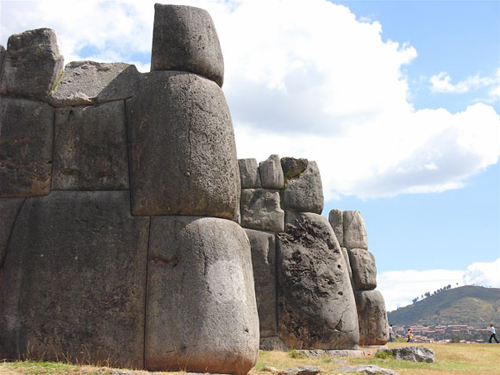
Today, Sacsayhuamán is a UNESCO World Heritage site and the primary stage for the modern reenactment of the Inti Raymi. For archaeologists, the site remains a laboratory for studying pre-Columbian labor organization; it is estimated that over 20,000 men were required to haul, carve, and place these stones using ramps, ropes, and sheer human force. The site challenges modern ᴀssumptions about “primitive” technology, proving that a society without iron or the wheel could achieve architectural feats that rivaled any in the Old World. As researchers continue to use satellite imagery and LIDAR to map the surrounding trails, Sacsayhuamán stands as a permanent monument to the Inca vision of a world where stone and spirit were inextricably linked.
✓ Team
The awe-inspiring structure in the image is the fortress-temple of Sacsayhuamán, located on the northern outskirts of Cusco, Peru, the historic capital of the Inca Empire. While…