The Architecture of Necessity: An Archaeological Study of Medieval Latrines
The structure depicted offers a fascinating glimpse into the domestic and defensive realities of medieval life, specifically regarding sanitation infrastructure. Discovered along the precipitous, eroding coastline of a northern maritime fortification, this feature is identified by archaeologists as a “garderobe”—a medieval latrine—dating back to the late 14th century, approximately 650 years ago. The site itself, exposed by centuries of coastal erosion, was formally surveyed by the Coastal Heritage Preservation Trust in 2023. The harsh environment has stripped away much of the outer wall, leaving the internal mechanism of this waste disposal system starkly visible against the backdrop of the sea, providing researchers with a rare opportunity to study the intersection of castle engineering and daily hygiene.
The construction materials utilized in this garderobe demonstrate the pragmatic engineering typical of the period, employing local sandstone blocks that have been expertly shaped to withstand the corrosive salt spray of the coastline. The masonry shows fine tooling marks, indicative of late medieval stone-cutting techniques, where large, heavy blocks were set in lime mortar to create a stable, projecting structure. A critical component visible includes two parallel iron bars, which likely served as internal support framing for a wooden seat or a privacy shutter, though the organic materials have long since decayed. The depth and design of the stone chute below the seat suggest it was engineered to gravity-feed directly out of the fortress wall, ensuring that waste was carried away by either the sea currents or the natural slope of the cliff, a common and effective sanitary solution for the era.
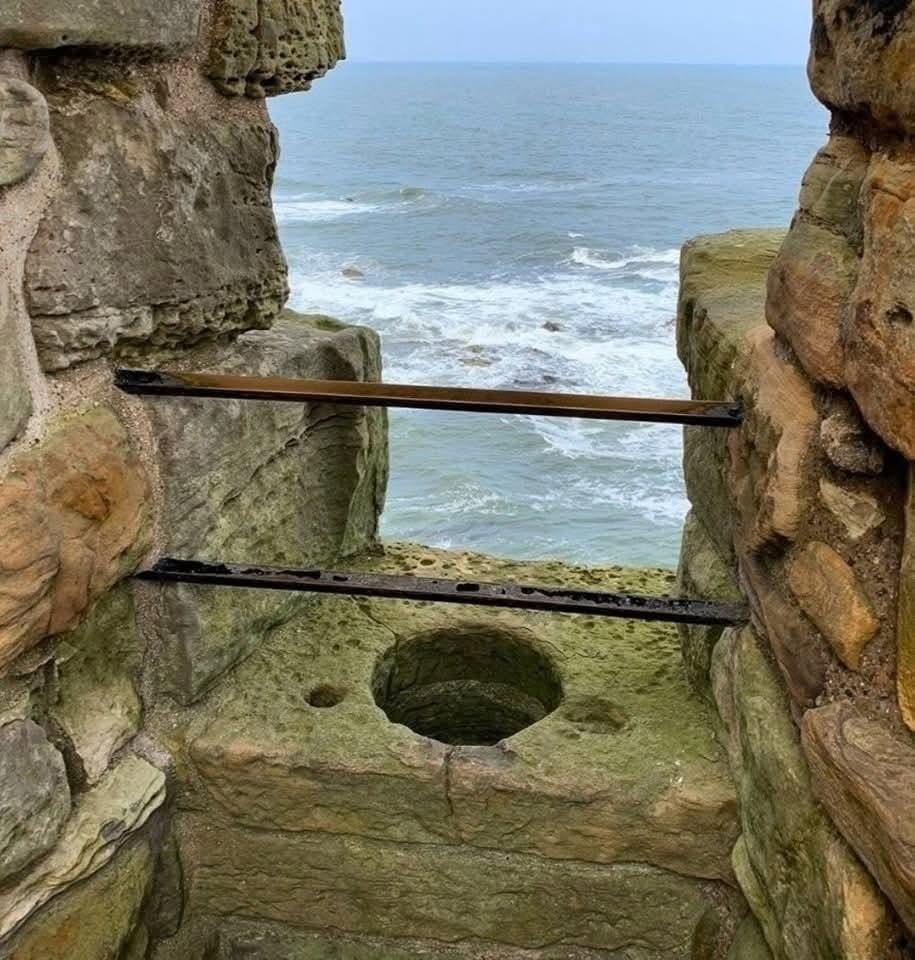
Beyond its basic function, this installation serves as a testament to the complex logistical planning required to maintain a functioning household within a defensive structure. The location of this latrine, positioned high above the waterline, was not merely a matter of convenience; it was a strategic decision to minimize the risk of disease within the confined quarters of the castle, illustrating an empirical understanding of sanitation that precedes modern germ theory. The presence of smaller, auxiliary holes carved into the stone seat area suggests it may have also incorporated a drainage system for liquid waste or potentially held small, removable basins for washing. This detail reflects the evolving standards of comfort and privacy that began to be integrated into aristocratic and defensive dwellings during the late medieval transition from purely military outposts to more residential, fortified manors.
The investigation led by the Coastal Heritage Preservation Trust utilized advanced 3D pH๏τogrammetry to map the fragile remains of the castle wall, including the feature seen, before further tidal erosion could claim the site. Lead archaeologist Dr. Julian Thorne noted that the preservation of such structures is vital, as they reveal the “invisible” history of the people who inhabited these fortifications—the servants, soldiers, and families whose daily needs dictated the architecture just as much as defensive strategy did. The team spent several seasons documenting the spatial relationship between these latrines and the castle’s living quarters, concluding that the placement of these units was strictly regulated to isolate waste while maintaining the structural integrity of the heavy, external fortification walls.
Ultimately, the study of this artifact reminds us that archaeological history is composed of both monumental displays of power and the quiet, essential infrastructure of human survival. While our attention is often drawn to the battlements or grand halls, the garderobe shown highlights the ingenuity applied to the mundane, yet essential, challenges of life in a medieval fortress. By piecing together the construction techniques and the strategic placement of these facilities, archaeologists can reconstruct the daily flow of life within the castle walls. As the sea continues to encroach upon these coastal sites, the documentation of such features becomes increasingly urgent, ensuring that we preserve a holistic understanding of how these medieval communities functioned at every level, from the high throne to the lowest, most practical chamber.
✓ hoangduc
The structure depicted offers a fascinating glimpse into the domestic and defensive realities of medieval life, specifically regarding sanitation infrastructure. Discovered along the precipitous, eroding coastline of a…