The Colossal Lamᴀssu: Winged Sentinels of the Neo-ᴀssyrian Empire
This majestic sculpture represents a Lamᴀssu, a celestial protective deity from ancient Mesopotamia, characterized by its hybrid form: the head of a human, the body of a bull (or occasionally a lion), and the wings of an eagle. The specimen shown in the image was discovered at Dur-Sharrukin (modern-day Khorsabad, Iraq), the capital city built by King Sargon II. These colossal statues were typically positioned in pairs at the monumental gateways of the city and the royal palace. From an archaeological perspective, the Lamᴀssu is more than just art; it is a structural and symbolic component of Neo-ᴀssyrian urban planning, designed to awe visitors and spiritually fortify the entrance against chaotic forces and enemies of the state.

The artifact is carved from a single, mᴀssive block of monolithic gypsum alabaster, often referred to as “Mosul Marble” due to its local abundance in northern Iraq. The fabrication of such a giant involved a sophisticated interplay between quarrying logistics and refined artistry. To manage the immense weight, the figures were carved as high-relief orthostats—flat on the back to lean against the mud-brick walls of the gates. A fascinating detail of their “craftsmanship” is the optical illusion created by their legs; when viewed from the front, the creature appears to be standing still (two legs visible), but when viewed from the side, it appears to be walking (four legs visible). To achieve this transition, the sculptor carved a total of five legs, a unique Mesopotamian solution to maintain anatomical logic from multiple viewing angles.
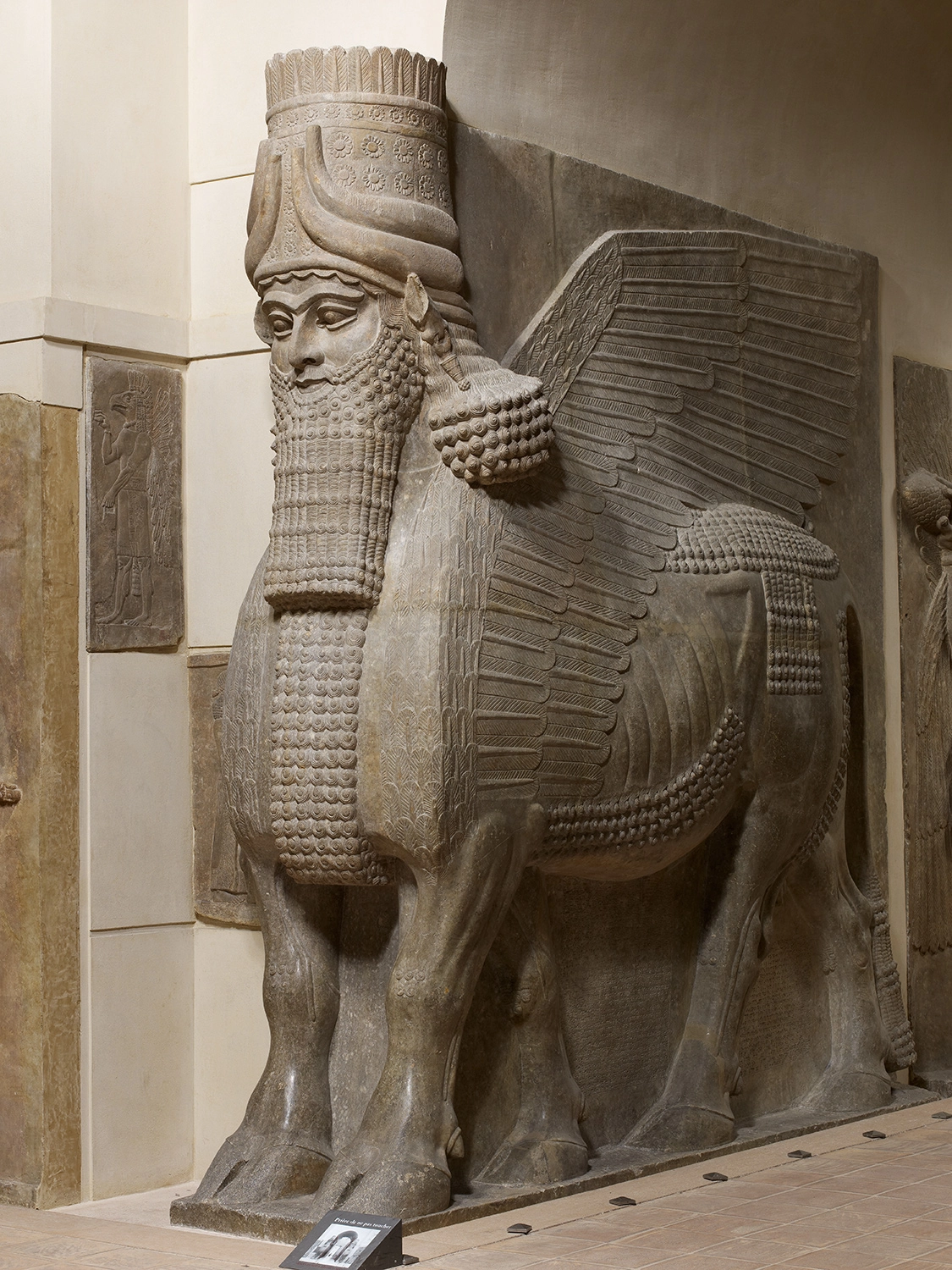
The intricate details of the carving reflect the peak of Neo-ᴀssyrian aesthetic conventions. The human head wears a divine horned tiara, a symbol of godhood, while the face features the stylized, meticulously curled beard and mustache typical of royalty and high-ranking deities. The body is covered in complex patterns representing both the powerful musculature of a bull and the delicate, overlapping feathers of an eagle. Beneath the belly and between the legs, many of these statues contain cuneiform inscriptions—royal annals that detail the King’s military triumphs and the construction of the palace. Every curve of the stone was intended to project a sense of “melammu,” a terrifying, radiant splendor that served as a psychological deterrent to any who approached the throne.
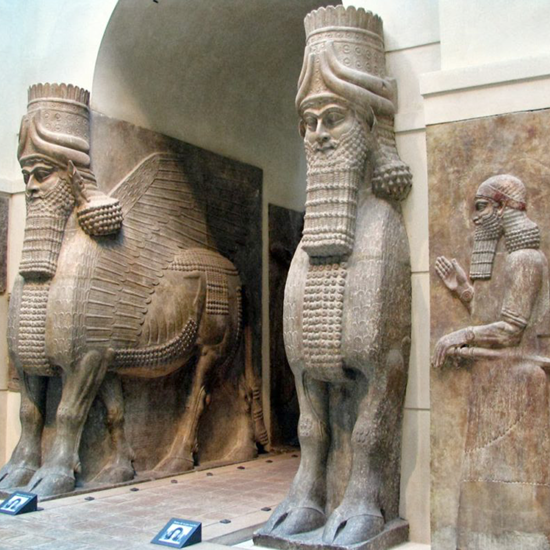
The “discovery” and systematic excavation of the Khorsabad site were led by the French diplomat and archaeologist Paul-Émile Botta beginning in 1843. Botta was the first to uncover the remains of an ᴀssyrian palace, initially mistaking Khorsabad for the biblical Nineveh. His work, supported by the French Government, marked the birth of modern ᴀssyriology. The excavation was a Herculean task; transporting these multi-ton sculptures from the desert to the Tigris River, and eventually to Europe, required building custom rafts and navigating treacherous waters. Today, this specific Lamᴀssu resides in the Louvre Museum in Paris, forming the centerpiece of the “Khorsabad Court,” where it continues to represent the pioneering spirit of 19th-century archaeology.
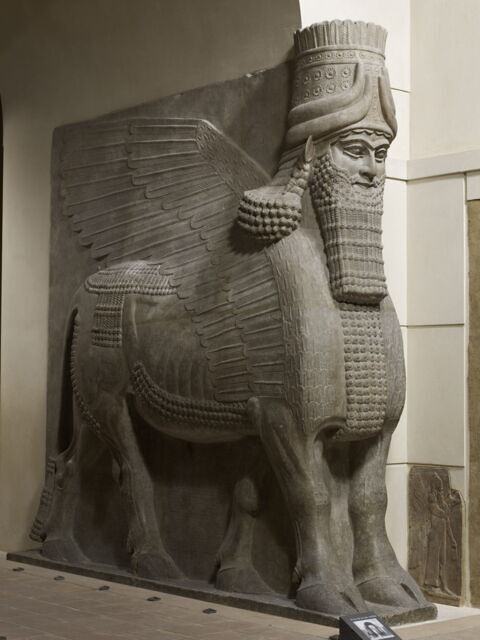
In terms of utility and significance, the Lamᴀssu functioned as an apotropaic figure, a magical guardian intended to turn away evil. In ᴀssyrian belief, these statues were “living” enтιтies, animated through specific rituals to serve as the king’s spiritual bodyguards. They represented the fusion of three types of power: the intelligence of man, the soaring speed of the eagle, and the raw physical strength of the bull. Architecturally, they served as the literal pillars of the empire, framing the thresholds where the human world met the royal/divine presence. Their survival through millennia, despite the rise and fall of countless empires, offers a profound look into the Mesopotamian obsession with permanence, order, and the eternal protection of the sovereign’s legacy.
✓ Team
This majestic sculpture represents a Lamᴀssu, a celestial protective deity from ancient Mesopotamia, characterized by its hybrid form: the head of a human, the body of a…