The Engineering Marvel of Inca Ashlar Masonry: An Archaeological Analysis of the Cushioned Polygonal Blocks in Cusco

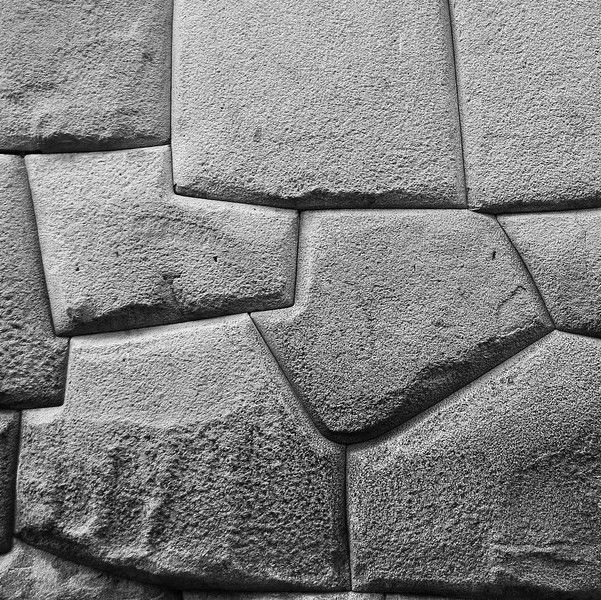
The study of Andean monumental architecture reveals an extraordinary level of technical mastery, perfectly embodied by the sophisticated dry-stone masonry of the Inca civilization. Chronologically attributed to the Late Horizon period of the Inca Empire—specifically dating from approximately 1438 to 1532 CE during the reigns of expansionist emperors such as Pachacuti—these structural wonders reflect the pinnacle of pre-Columbian stonework. The architectural feature shown in the image is situated in the historic center of Cusco, Peru, which served as the capital and administrative heartbeat of Tawantinsuyu. This remarkable section of wall displays finely dressed, тιԍнтly fitted ashlar blocks, highlighted by a unique diagnostic architectural element: a precision-carved small rectangular knob, socket, or interlocking joggled joint positioned directly at the vertex where multiple stones converge.

Geographically, these megalithic structures were built using dense, durable stones extracted from local Andean geological formations, predominantly hard diorite, andesite, and limestone sourced from nearby quarries such as Rumicolca and Muyna. In terms of manufacturing and craftsmanship details, Inca masons achieved astonishing dimensional tolerances without the use of metal saws, wheels, or mortar. The stones were shaped through an intensive, multi-step process involving stone hammerstones made of harder basalt, repeated pounding, abrasive quartz sand, and continuous water grinding. The blocks were meticulously carved with slightly convex or “cushioned” faces (al almohadillado) and precise bevels around their edges, while the internal contact surfaces were ground down to fit each other with such immaculate accuracy that even a thin blade cannot be inserted between the joints.

From a functional and structural perspective, these intricate masonry techniques served crucial mechanical, architectural, and socio-political purposes. The primary utility of the mortarless, interlocking design—including the small protruding knobs or socket nodes often found at joint intersections—was twofold: it facilitated the controlled positioning of heavy blocks during construction using levers and ramps, and it acted as a dynamic anti-seismic mechanism. Because the Andes is an active seismic zone, rigid mortared walls would easily shatter under tectonic stress; conversely, the interlocking dry-stone blocks could slide and shift slightly during an earthquake, absorbing shock waves and settling back perfectly into place without catastrophic failure. Furthermore, these monumental walls projected the ideological power, state organization, and sacred order of the Inca Empire to all subjects and visitors.
The formal documentation, stratigraphic analysis, and scientific study of Cusco’s ancient architecture have been advanced by generations of prominent chroniclers, archaeologists, and architectural historians. Early modern observations began with 16th-century Spanish chroniclers, which were later expanded in the 20th century through systematic archaeological investigations by Peruvian scholars like Luis E. Valcárcel and international experts such as John H. Rowe. Notably, architectural historian Jean-Pierre Protzen conducted pioneering experimental archaeological studies that replicated Inca quarrying and fitting methods, proving the feasibility of their labor-intensive techniques. Modern conservation and site management are coordinated by the Peruvian Ministry of Culture and international research bodies, ensuring that these seismic-resistant marvels are preserved for future generations.
In conclusion, the sophisticated ashlar and polygonal masonry visible in Cusco stands as a timeless monument to the engineering genius of the Inca Empire. By combining intensive manual lithic craftsmanship with an intuitive understanding of physics and structural mechanics, ancient Andean builders created structures that have endured centuries of weathering and severe earthquakes. These walls transcend mere defensive or residential utility, serving as a profound manifestation of collective labor coordination, spatial intelligence, and imperial ideology. Protected as part of the UNESCO World Heritage designation for the City of Cusco, these stone structures continue to inspire deep academic research and global admiration, maintaining their status as an unmatched achievement in architectural history.
✓ hoangduc
The study of Andean monumental architecture reveals an extraordinary level of technical mastery, perfectly embodied by the sophisticated dry-stone masonry of the Inca civilization. Chronologically attributed to…