The Enigmatic Geoglyphs of the Pampa Colorada
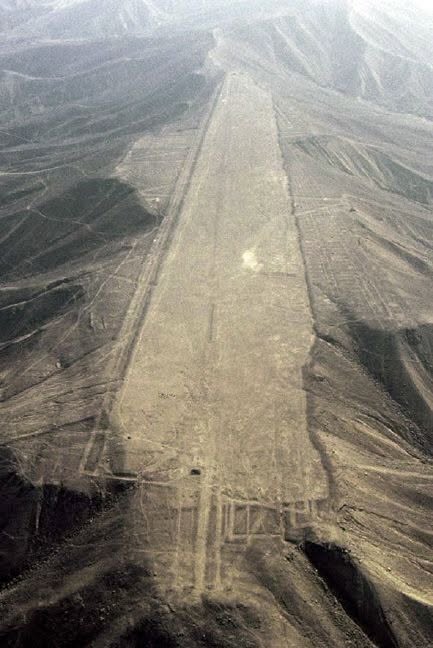
The Nazca Lines, located on the arid Pampa Colorada in southern Peru, stand as one of the most compelling archaeological mysteries of the ancient world. These colossal geoglyphs, consisting of over 800 straight lines, 300 geometric figures, and 70 intricate zoomorphic designs—such as the famous hummingbird, monkey, and spider—stretch across nearly 500 square kilometers of desert floor. Constructed between 500 BCE and 500 CE by the Nazca culture, these monumental drawings are only fully appreciable from an aerial perspective, a fact that has spurred countless theories regarding their origin and intent for nearly a century.

The creation of these geoglyphs involved a sophisticated yet ingenious technique of subtraction rather than addition. The desert floor is covered in a dark, iron-oxide-coated layer of pebbles, beneath which lies a much lighter, yellow-grey subsoil. The Nazca people meticulously removed the top 10 to 40 centimeters of these dark, weathered rocks, exposing the starkly contrasting light earth underneath. To achieve the precision of their monumental geometric shapes and intricate animal forms, archaeologists believe the creators utilized simple surveying tools, such as wooden stakes connected by ropes, which allowed them to plot and scale their designs across the vast, undulating landscape with remarkable accuracy.

While the Nazca Lines were first systematically studied in 1926 by Peruvian archaeologist Toribio Mejía Xesspe, it was not until the mid-20th century that they gained global attention. American historian Paul Kosok, during a flight over the region in 1941, was the first to recognize the bird-like shape of one of the figures, later observing its alignment with the solstice sunset. He was followed by the pioneering researcher Maria Reiche, often called the “Lady of the Lines,” who spent four decades documenting and protecting the site. In more recent years, modern technology has revolutionized this research; teams like those from Yamagata University, led by Masato Sakai, have successfully utilized AI and high-resolution imagery to uncover hundreds of previously unseen, smaller geoglyphs tucked into the slopes and trails of the desert.
The true purpose of these monumental designs has long been the subject of intense debate among scholars. Early theories, most notably championed by Reiche, suggested they served as an astronomical calendar or observatory. However, contemporary archaeological consensus has shifted toward a more ritualistic interpretation. Many researchers, including Johan Reinhard, argue that the lines were sacred processional pathways used in ceremonies to invoke the mountain gods for life-sustaining water in the hyper-arid environment. The zoomorphic figures, which often appear to cluster at the start and end points of pilgrimage routes, are thought to have functioned as ceremonial plazas where communal rites for crop fertility and abundance were performed.
Ultimately, the Nazca Lines serve as a profound testament to the ingenuity and spiritual depth of the pre-Inca civilizations. They represent a unique convergence of art, engineering, and religious devotion, preserved for millennia by the region’s exceptionally dry climate and lack of wind erosion. Whether viewed as an elaborate map of the heavens, a complex water-cult ritual site, or a monumental offering to deities, the geoglyphs continue to challenge our understanding of ancient capabilities. Today, these lines remain not only an archaeological treasure but also a symbol of humanity’s enduring quest to communicate with the divine through the vast, transformative canvas of the earth.
✓ hoangduc
The Nazca Lines, located on the arid Pampa Colorada in southern Peru, stand as one of the most compelling archaeological mysteries of the ancient world. These colossal…