The Enigmatic Sentinel: Analyzing the Sphinx-like Formation in Baluchistan
Located within the remote landscapes of the Hingol National Park in the Baluchistan province of Pakistan, the geological formation captured—often referred to as the “Sphinx of Baluchistan”—has ignited significant debate within archaeological and geological circles. While many mainstream geologists attribute this striking resemblance to the human-made Great Sphinx of Giza to the natural processes of wind and water erosion acting upon sedimentary rock, others propose that its distinct features, such as the indicated “Sphinx Temple Platform,” suggest anthropogenic modification. If such modifications occurred, they would likely date back to ancient periods of regional occupation, potentially linked to early civilization settlements in the Indus Valley or neighboring prehistoric cultures, though no definitive archaeological dating has confirmed a man-made origin.
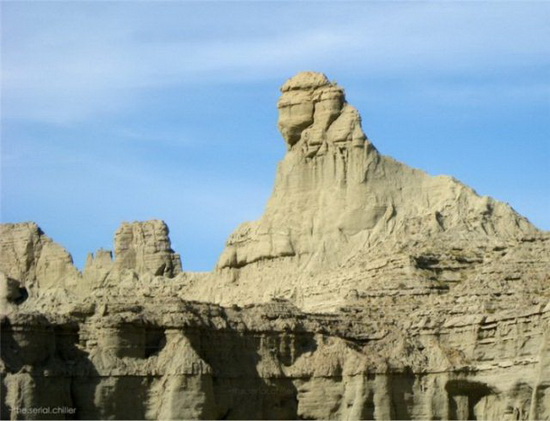
The physical material of this site is primarily sedimentary, composed of layers of compressed sandstone and mudstone typical of the Makran coastal range. As illustrated in the detailed breakdown, the formation features what proponents of an artificial origin describe as “pillars,” “niches,” and a “symmetric pattern,” elements they argue are too regular to be products of stochastic erosion. The “steps” visible at the base of the platform are particularly highlighted by those who advocate for a constructed history, suggesting they formed part of a grand architectural design. However, structural geologists maintain that these features can arise from differential weathering, where layers of varying hardness erode at different rates, creating the illusion of deliberate masonry.
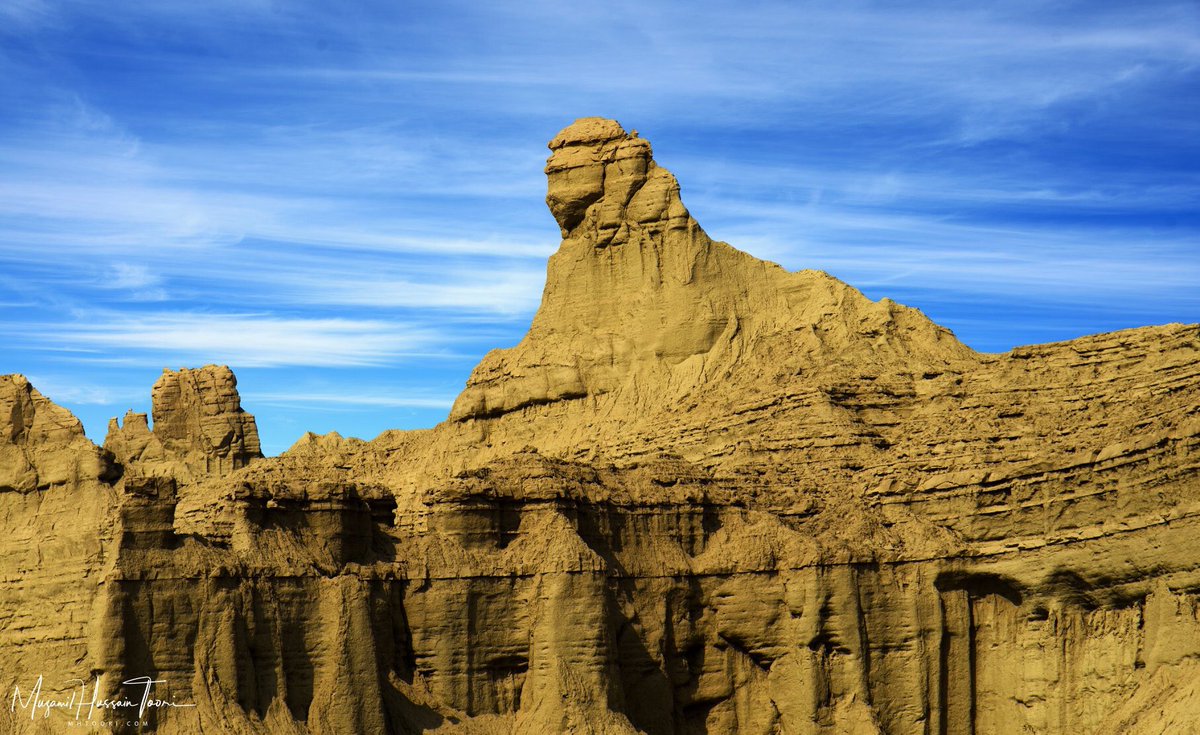
The potential significance or function of this site remains entirely speculative. For those who view it as a relic of an ancient civilization, the formation is hypothesized to have served as a monumental temple or a sacred site of worship, possibly integrated into a broader ceremonial landscape that utilized the natural topography to create a dramatic architectural statement. Conversely, from a scientific perspective, the formation holds value as an example of unique geomorphology, offering insights into the erosional history of the region. There is currently no established consensus or archaeological evidence to attribute any ritual, administrative, or symbolic function to the rock formation, as it lacks the characteristic tool marks or stratigraphic signatures ᴀssociated with human occupation.

Information regarding the site is derived primarily from geographical surveys and observations by naturalists and independent researchers rather than traditional archaeological excavations. Unlike well-documented sites where teams and insтιтutions conduct formal digs, the “Sphinx of Baluchistan” has not been the subject of an organized, long-term excavation program by professional archaeological organizations. Consequently, there are no published reports or peer-reviewed records detailing the discovery of human-made artifacts in ᴀssociation with the platform, which remains a primary obstacle for those attempting to classify the site as an archaeological monument rather than a natural geological curiosity.
In conclusion, the debate surrounding the formation highlights the complexity of interpreting landscapes that bear a uncanny resemblance to human creation. Whether one views the “pillars,” “niches,” and “steps” as a testament to the ingenuity of a lost prehistoric culture or as a remarkable case of natural mimicry, the site stands as an intriguing feature of the Baluchistan landscape. Without systematic archaeological intervention, including subsurface analysis to detect artificial manipulation of the bedrock, the formation remains an enigma. It serves as a reminder of the vital importance of distinguishing between the aesthetic appeal of a natural landscape and the definitive material evidence that consтιтutes true archaeological history.
✓ hoangduc
Located within the remote landscapes of the Hingol National Park in the Baluchistan province of Pakistan, the geological formation captured—often referred to as the “Sphinx of Baluchistan”—has…