The Flavian Amphitheatre: From Imperial Grandeur to Skeletal Ruin
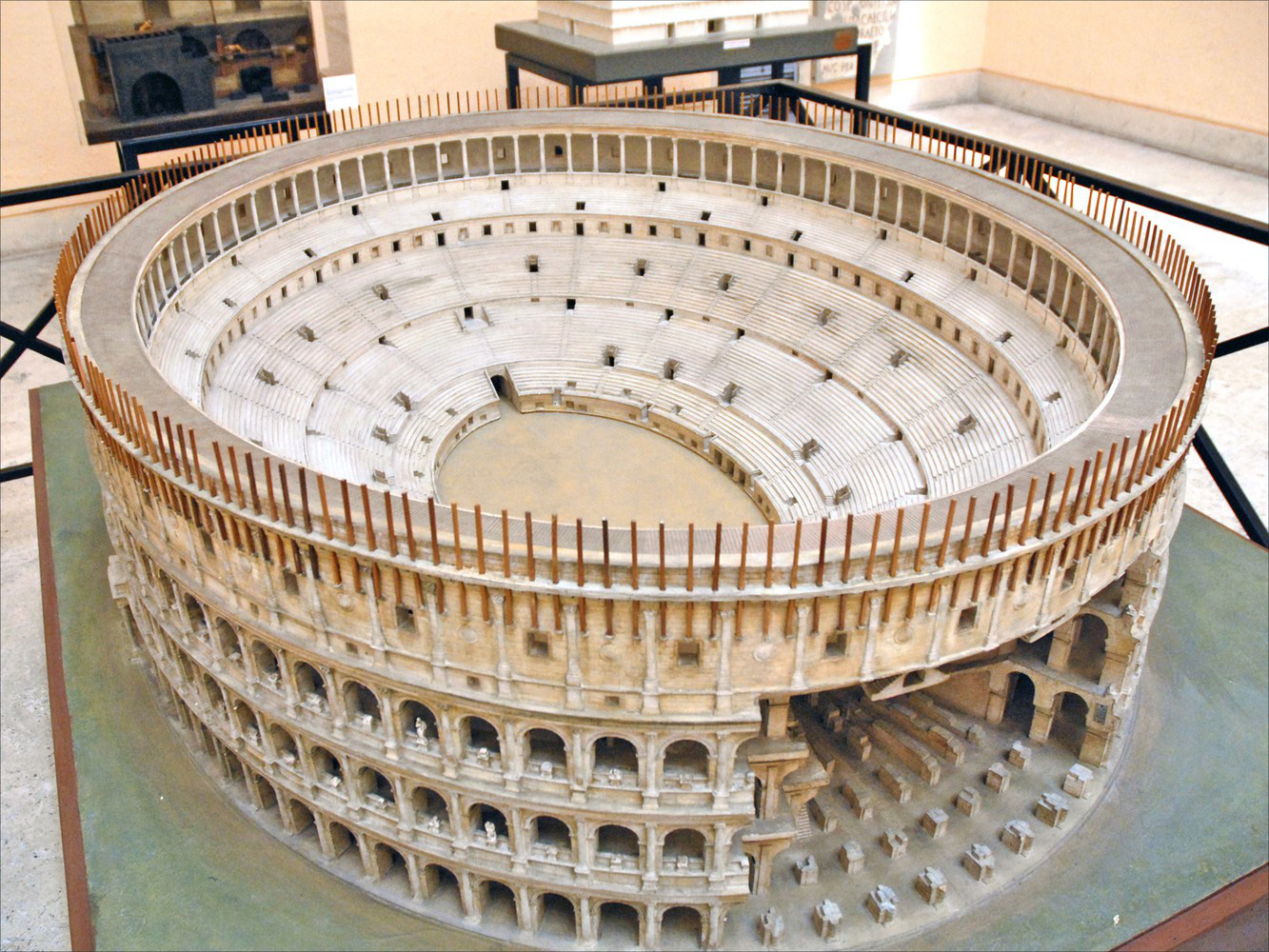
The image presents a striking side-by-side reconstruction and current state of the Flavian Amphitheatre, universally recognized as the Colosseum in Rome, Italy. This pinnacle of Roman architectural achievement dates to the Flavian Dynasty, with construction beginning under Emperor Vespasian in 72 CE and reaching completion under his son тιтus in 80 CE. Further modifications were added by Domitian shortly thereafter. It was built on the site of the former Domus Aurea, the private lake of the widely despised Emperor Nero, a symbolic “handing back” of the city center to the Roman people. For over four centuries, it served as the empire’s primary stage for state-sponsored violence, reinforcing the social hierarchy of Rome through meticulously choreographed spectacles of death and triumph.
Unlike many ancient sites that were lost to time, the Colosseum has remained a visible landmark throughout the Middle Ages and the Renaissance. However, its modern archaeological history began in the early 19th century when the papacy, specifically Pope Pius VII, initiated structural reinforcements to prevent total collapse. The first systematic scientific excavations were led by Carlo Fea and later Pietro Rosa in the 1870s, following the unification of Italy. They focused on clearing the debris from the arena and the subterranean hypogeum. In the late 20th and early 21st centuries, the Soprintendenza Archeologica di Roma led mᴀssive restoration efforts, funded partly by the Italian government and private patrons. These modern interventions have utilized LIDAR and 3D modeling to understand the building’s seismic vulnerabilities and the incredible complexity of its ancient drainage systems.
The Colosseum is a masterclass in Roman material science, utilizing a strategic combination of heavy stone and lightweight concrete. The main structural framework consists of approximately 100,000 cubic meters of travertine limestone, quarried from nearby Tivoli and held together not by mortar, but by 300 tons of iron clamps. To reduce the weight on the upper tiers, engineers used tufa and brick-faced concrete (opus latericium). The vaults were made of lightweight pumice concrete. The exterior was originally covered in gleaming marble, and the arches of the second and third floors were filled with life-sized marble statues. A unique feature seen in the reconstruction is the Velarium, a mᴀssive retractable canvas awning operated by a specialized detachment of imperial sailors, which sheltered the 50,000 to 80,000 spectators from the Mediterranean sun.

The primary function of the Colosseum was the hosting of gladiatorial contests (munera) and wild animal hunts (venationes). However, its deeper “utility” was the maintenance of the Pax Romana through “bread and circuses.” The building was designed with 80 numbered entrances (vomitoria), allowing for the rapid entry and exit of tens of thousands of people—a design principle still used in modern stadium architecture. The interior seating was strictly segregated by social class: the emperor and senators sat closest to the action on the podium, followed by knights, citizens, and finally the poor and women in the highest wooden tiers. This vertical stratification of the audience provided a physical manifestation of the Roman social order, making the building a tool of political and social control.
Today, the Colosseum stands as a UNESCO World Heritage site and the most iconic symbol of the Roman Empire. Its skeletal appearance is the result of centuries of neglect and “stone mining” during the Middle Ages, where its marble and travertine were looted to build Roman palaces and even St. Peter’s Basilica. From an archaeological perspective, the ruins provide a “living laboratory” for studying ancient hydraulic engineering, as the arena could reportedly be flooded for mock naval battles (naumachiae). The recent restoration of the hypogeum (the underground tunnels) allows visitors to see where gladiators and beasts were staged before being hoisted into the arena. It remains a poignant reminder of both the absolute brilliance of Roman engineering and the incredible brutality of the civilization that created it.
✓ Team
The image presents a striking side-by-side reconstruction and current state of the Flavian Amphitheatre, universally recognized as the Colosseum in Rome, Italy. This pinnacle of Roman architectural…