The Geoglyphs of the Nasca Desert: Tracing Ancient Ritual Landscapes
The vast archaeological expanse captured reveals the legendary Nasca Lines, a series of immense geoglyphs etched into the arid plains of southern Peru. Created primarily by the Nasca culture between 200 BCE and 600 CE, these markings represent one of the most enduring mysteries of the ancient world. The site consists of thousands of lines, geometric shapes, and zoomorphic figures that span a mᴀssive geographic area, remaining visible today primarily because of the extreme aridity and lack of wind erosion in the coastal desert region, which preserves these delicate markings for centuries.
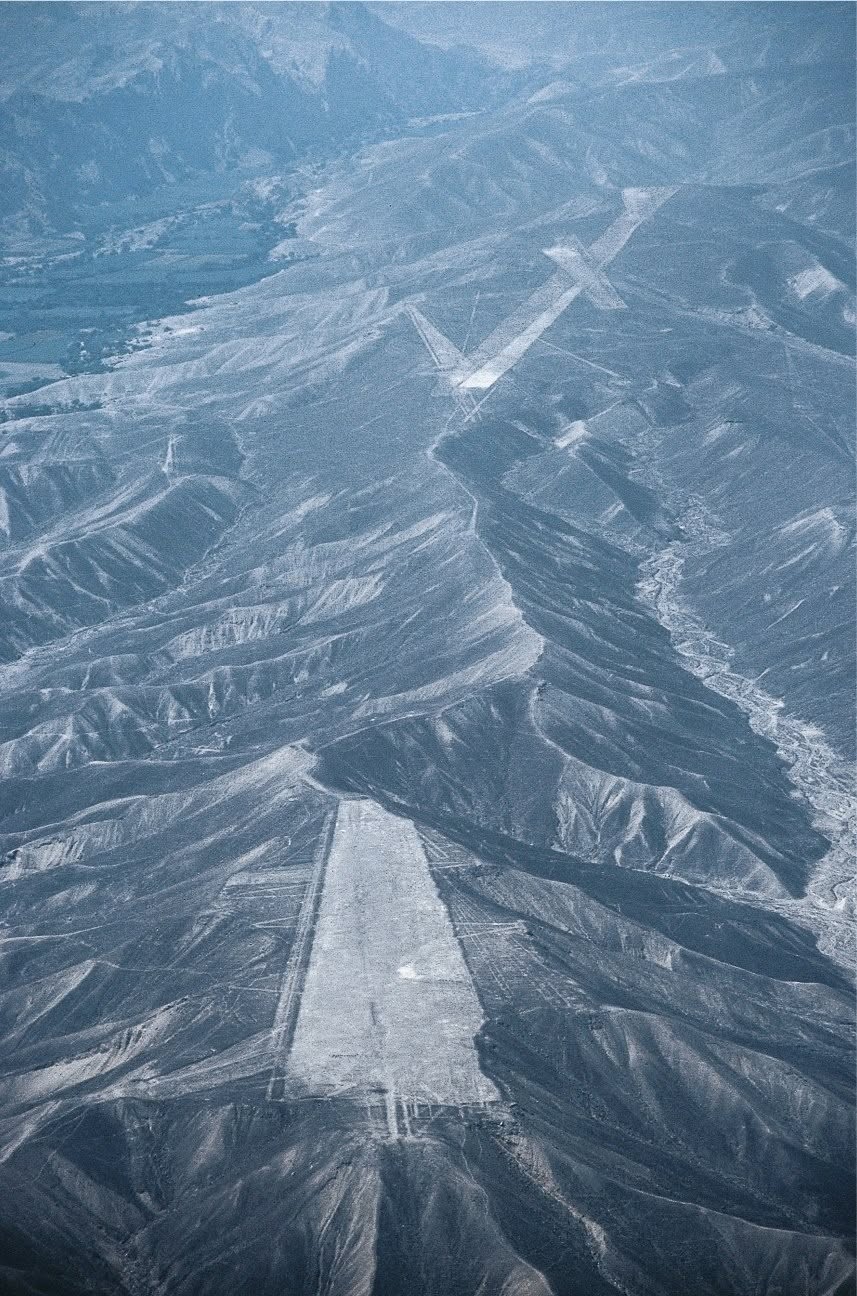
Regarding the material and construction, the geoglyphs were fashioned through a process of subtractive artistry. The surface of the desert is covered in a layer of dark, iron-oxide-coated pebbles, which contrast sharply with the lighter-colored soil lying beneath. By systematically removing these top pebbles to form lines or shapes, the Nasca artisans exposed the lighter ground, creating high-contrast designs that are best appreciated from an elevated perspective. The precision required to maintain straight lines stretching for kilometers across rugged topography suggests a sophisticated understanding of surveying and geometric planning, potentially involving simple wooden stakes and rope as measuring tools to ensure the scale and symmetry of the larger figures.
The significance and intended purpose of the Nasca Lines have been subjects of intense archaeological study for decades. While early researchers speculated they might have served as an “astronomical calendar” for planting and harvesting, contemporary consensus increasingly points toward a ritualistic or ceremonial function. Many of the lines are thought to have been processional routes used during indigenous religious ceremonies, where communities would walk along the paths as a form of active, performative worship. The figures, which represent animals, plants, and deities, may have functioned as sacred sites where prayers for water and fertility were offered to the spirits of the mountains and the earth, integrating the natural environment into a deeply spiritual framework.

The scientific recognition and protection of this site owe much to the tireless efforts of individuals like Maria Reiche, a German mathematician and archaeologist who dedicated her life to the study and conservation of the geoglyphs. Reiche and other researchers have worked closely with organizations like UNESCO to designate the region as a World Heritage site, focusing on mapping the complex web of geoglyphs to prevent modern agricultural expansion from encroaching on these fragile remnants. Through decades of patient field survey and the application of modern remote sensing technology, archaeologists have moved past early, speculative theories to gain a clearer understanding of the Nasca culture’s socio-political structure and their complex relationship with the challenging desert environment.
In conclusion, the geoglyphs visible serve as a monumental testament to the artistic ambition and spiritual life of the Nasca civilization. By etching their belief system directly into the crust of the earth, the Nasca created a landscape of memory that remains an essential focal point for contemporary archaeological research. As we continue to study these expansive designs, they challenge us to reconsider the intellectual and technological capabilities of ancient societies and the ways in which human populations have, throughout history, transformed their environment into a canvas for expressing their deepest cultural values and connections to the divine.
✓ hoangduc
The vast archaeological expanse captured reveals the legendary Nasca Lines, a series of immense geoglyphs etched into the arid plains of southern Peru. Created primarily by the Nasca…