The Golden Sandals of Tutankhamun: Regal Elegance of the New Kingdom
Among the most breathtaking artifacts recovered from the tomb of the young Pharaoh Tutankhamun (KV62) in the Valley of the Kings, the golden sandals stand as a remarkable testament to the exquisite craftsmanship of the 18th Dynasty. Dating to the mid-14th century BCE, roughly 1332–1323 BCE, these ceremonial sandals were designed not for the rough terrain of the physical world, but for the pharaoh’s eternal journey in the afterlife. Their discovery, preserved in the subterranean chambers of a tomb that had remained largely undisturbed for over three millennia, offers unparalleled insight into the opulent funerary customs and the high status accorded to the Egyptian monarch in death.
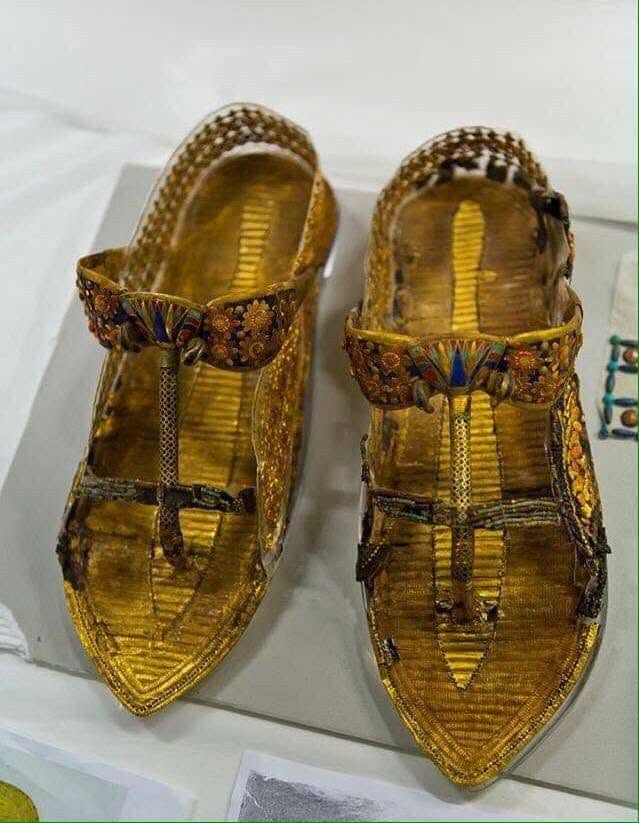
The material composition and manufacturing detail of these sandals reveal the extraordinary skill of royal artisans during the New Kingdom. Each sandal is fashioned from a sheet of hammered gold, which has been meticulously embossed with a fine, repeтιтive pattern imitating the texture of woven reeds or straw found in ordinary footwear of the period. The straps are adorned with delicate cloisonné inlays, featuring vibrant semi-precious stones such as lapis lazuli, turquoise, and carnelian, arranged in floral and lotus motifs. This combination of precious metals and colored inlays demonstrates a mastery of metallurgical techniques, requiring not only goldsmithing expertise but also the precise lapidary skill needed to shape and set the tiny, fragile stone inserts that highlight the regalia.

While the primary function of these sandals was symbolic, they were inextricably linked to the religious and funerary ideologies of ancient Egypt. Pharaohs were considered divine intermediaries between the gods and humanity, and their funerary equipment was curated to ensure their successful transition to the divine realm. These golden sandals were intended to adorn the feet of the king’s mummy, providing him with royal footwear that reflected his elevated status as he approached the throne of Osiris. By surrounding the deceased with items made of gold—the “flesh of the gods”—ancient Egyptians believed they were bestowing upon the king a permanent, incorruptible physical form suitable for eternity.
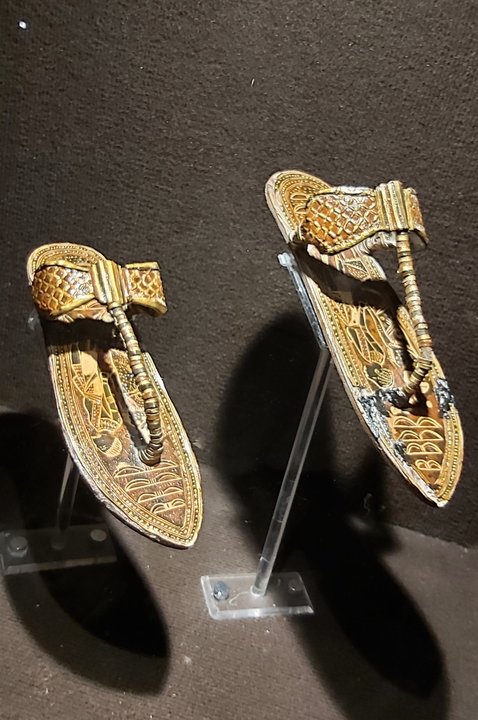
The historical significance of these artifacts is tied to one of the most famous archaeological endeavors in history: the discovery of Tutankhamun’s tomb by British archaeologist Howard Carter and his benefactor, Lord Carnarvon. In November 1922, after years of grueling search, Carter broke through the sealed doorway of KV62, revealing a treasure trove that would redefine Egyptology. The painstaking process of documenting, cataloging, and conserving the thousands of items within the tomb was led by Carter’s team, including scholars like Arthur Mace and Alfred Lucas, who utilized groundbreaking preservation techniques for the time. Their work ensured that artifacts like the golden sandals—which were fragile and prone to degradation—could be studied, analyzed, and eventually presented to the world.

Today, the golden sandals of Tutankhamun remain a centerpiece of the collection housed at the Grand Egyptian Museum, continuing to fascinate scholars and the public alike. They serve as a bridge to the past, illustrating not only the immense wealth of the pharaonic court but also the profound spiritual anxieties and aspirations of an entire civilization. Through the lens of archaeology, these artifacts have transformed our understanding of 18th Dynasty craftsmanship and the complex, deeply held beliefs surrounding the afterlife. They stand as enduring symbols of human ingenuity, preserving the legacy of a young king through the timeless, glowing medium of gold, even thousands of years after his pᴀssing.
✓ hoangduc
Among the most breathtaking artifacts recovered from the tomb of the young Pharaoh Tutankhamun (KV62) in the Valley of the Kings, the golden sandals stand as a…