The Great Sphinx of Giza: A Monumental Sentinel of Antiquity
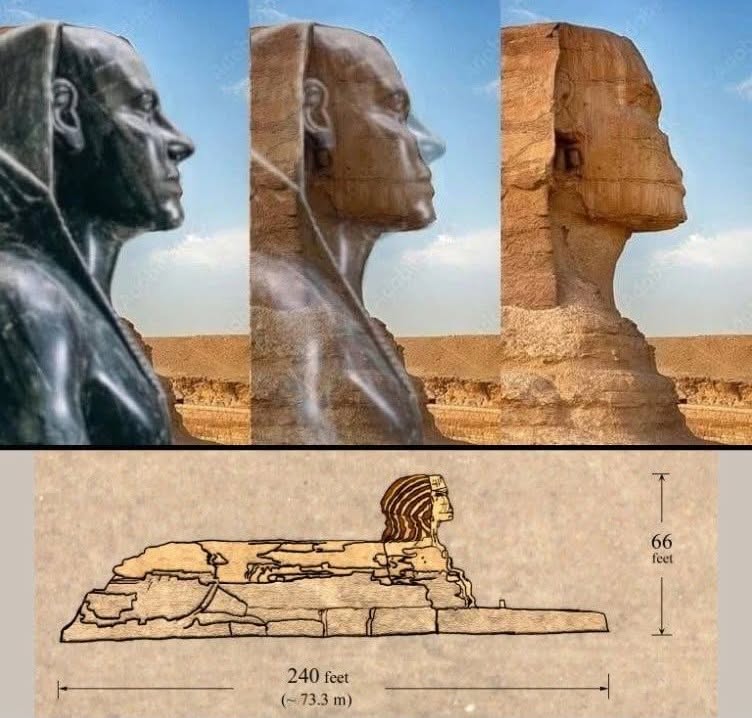
The Great Sphinx of Giza, prominently featured in the comparative analysis, stands as one of the most iconic archaeological monuments in human history. Situated on the Giza Plateau in Egypt, this colossal limestone sculpture—depicting a mythical creature with the body of a lion and the head of a human—is traditionally attributed to the Fourth Dynasty of the Old Kingdom, roughly dating to the reign of Pharaoh Khafre (c. 2558–2532 BC). The monument is not merely a freestanding statue but was carved from the bedrock of the plateau itself, integrated directly into the landscape surrounding the pyramid complex. Its placement and scale continue to captivate researchers, serving as a focal point for understanding the sophisticated funerary landscape and royal propaganda of the Old Kingdom.
The material composition of the Great Sphinx consists primarily of the soft, layered limestone native to the Giza Plateau, which presented unique challenges and opportunities for ancient artisans. As illustrated in the diagram within, the monument reaches a length of approximately 240 feet (73.3 meters) and a height of 66 feet, showcasing the immense labor required for its creation. The construction involved a complex process of quarrying the surrounding rock to isolate the central core, which was then meticulously carved into its iconic feline form. The head, though more resistant to erosion due to its specific geological layer, exhibits signs of artistic refinement that suggest it was intended to mirror the likeness of the reigning monarch, symbolizing the fusion of royal authority with the raw power of the lion.
The intended function and symbolic meaning of the Great Sphinx remain subjects of ongoing academic investigation. Archaeologists generally view the monument as a guardian figure, strategically positioned to oversee the necropolis and honor the pharaoh’s journey into the afterlife. Its eastward gaze aligns it with the rising sun, connecting the king to solar divinity and the cyclical nature of rebirth, a central tenet of Egyptian religious ideology. While various theories have emerged regarding its potential astronomical alignments or older origins, the majority of mainstream archaeological consensus maintains that it served as a spiritual protector of the Giza site, reinforcing the divine legitimacy and eternal presence of the royal lineage within the sacred landscape.
The history of the monument’s discovery and exploration is a narrative spanning centuries, beginning with early travelers and shifting to systematic modern excavation. The Sphinx spent much of its history buried in sand, which protected the stone from atmospheric erosion but also obscured its full form from view. In the 19th and early 20th centuries, pioneering figures like Giovanni Battista Caviglia, Auguste Mariette, and Gaston Maspero oversaw large-scale clearing operations that eventually revealed the full scope of the monument and its surrounding temple structures. Today, the Egyptian Ministry of Tourism and Antiquities and various international research organizations continue to study the site, employing advanced techniques like ground-penetrating radar to understand the structural integrity and hidden chambers beneath the monument.
In conclusion, as depicted in the visual transformation, the Great Sphinx is a enduring masterpiece of ancient engineering and symbolic expression. Its survival through thousands of years of climatic shifts, human intervention, and historical change highlights the extraordinary skill of Old Kingdom artisans. The monument stands as an essential link to the early Egyptian state, providing archaeologists with invaluable data on royal burial practices, architectural evolution, and the religious synthesis of power and mythology. As research continues to refine our understanding of the Sphinx’s chronology and construction, it remains a testament to the monumental ambition of a civilization that sought to define its presence in the landscape for eternity.
✓ hoangduc
The Great Sphinx of Giza, prominently featured in the comparative analysis, stands as one of the most iconic archaeological monuments in human history. Situated on the Giza…