The Heretic’s Fork: Archaeological Perspectives on Instruments of Coercion
The artifact featured, commonly known as the “Heretic’s Fork,” is a grim testament to the punitive and coercive measures employed during the Early Modern period, specifically within the context of the Inquisition and secular judicial systems in Europe, dating approximately to the 16th or 17th century. While it is often discussed in the context of museum collections and historical narrative, its precise “discovery” site is rarely cited with the stratigraphic rigor required by modern archaeology, as many such items were held by private collections or ecclesiastical authorities before surfacing in insтιтutional repositories. The object serves as a potent, if distressing, example of the material culture of punishment, illustrating how historical power structures utilized physical design to enforce orthodoxy and suppress dissent.
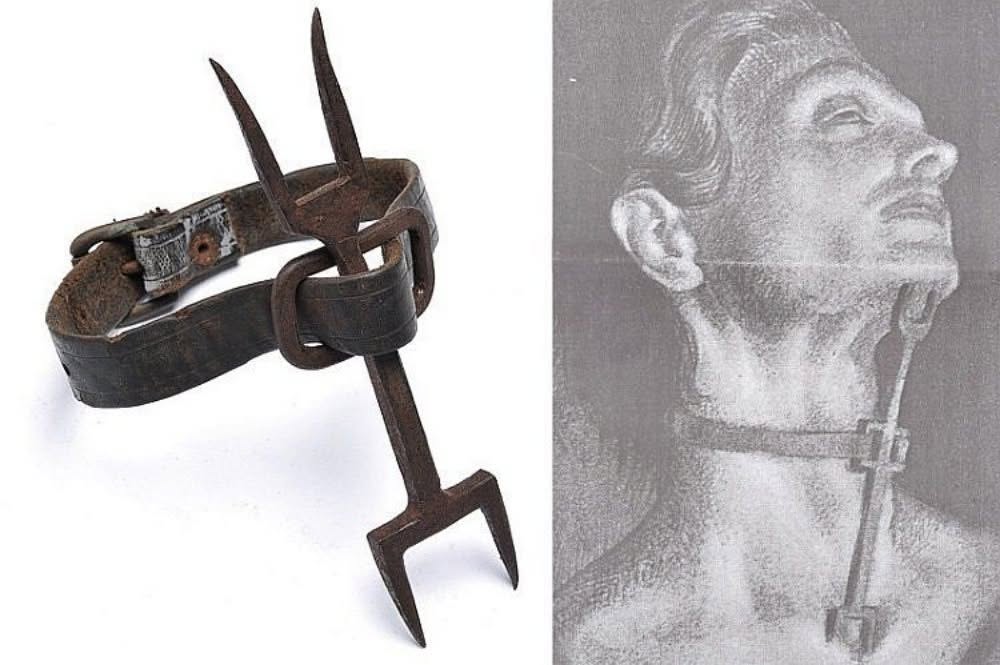
The physical construction of the Heretic’s Fork is characterized by a minimalist yet brutal design, consisting of a double-pronged metal fork attached to a central metal bar, which is then secured by a leather strap or metal collar intended to be worn around the neck. The choice of forged iron for the fork suggests a focus on durability and functionality, ensuring that the sharpened points remained rigid to prevent the wearer from lowering their head or resting their chin, thereby forcing them into a state of continuous physical distress. The leather strap, often aged and hardened by time, indicates a design meant to be fastened тιԍнтly, reflecting the harsh conditions under which such devices were applied as tools of sensory deprivation and psychological submission.
Functionally, this device was designed to prevent its wearer from speaking or sleeping, as any movement of the head would cause the prongs to pierce the chin and the sternum. In the context of the Inquisition, it was intended to extract confessions or silence those accused of heresy, essentially weaponizing physical discomfort to achieve a state of total compliance. The accompanying illustration demonstrates the intended application of the device, revealing how it forced the victim into an immobile, unnatural posture. By centering the punishment on the act of speech, the device directly targeted the “heretic’s” ability to communicate or defend their beliefs, making the act of physical suffering synonymous with the silencing of dissent.
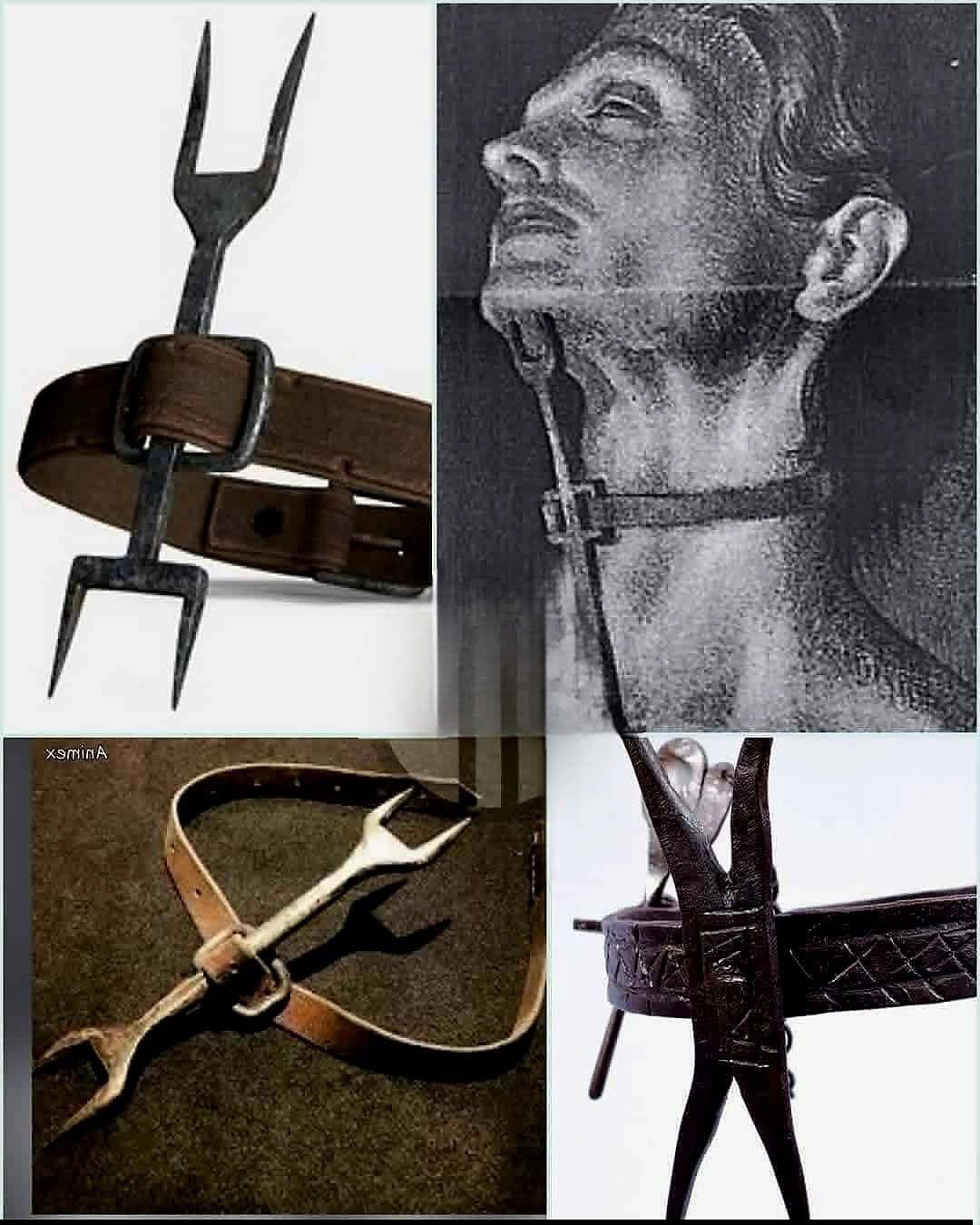
The study of such artifacts is complicated by the fact that many of these objects lack clear provenance, often entering the public consciousness through historical displays that prioritize the narrative of “the dark ages” or “inquisitorial cruelty” over systematic archaeological investigation. While these items are preserved in various museums, the organizations and individuals who first “discovered” or cataloged them often did so without documenting the specific site context, which hinders our ability to understand the geographic distribution or frequency of their use. Consequently, archaeologists must rely on comparative analysis of contemporary written records, judicial documents, and artistic depictions, such as the one, to validate the historical authenticity and the specific cultural environment in which these tools were deployed.
Ultimately, the Heretic’s Fork remains an uncomfortable but necessary subject of archaeological and historical inquiry, as it provides tangible evidence of the extreme lengths to which authorities would go to control individual thought and behavior. By treating the object as a primary source, researchers can move beyond mere sensationalism to a more nuanced analysis of the mechanics of control in Early Modern society. These artifacts represent a dark chapter in the history of insтιтutional power, forcing us to grapple with the reality that, in the past, the human body itself was frequently transformed into a theater for the enforcement of religious and political dogma.
✓ hoangduc
The artifact featured, commonly known as the “Heretic’s Fork,” is a grim testament to the punitive and coercive measures employed during the Early Modern period, specifically within…