The Himalayan Sentinels: The Medieval Defensive Towers of Western Sichuan
The soaring stone monoliths known as the Himalayan Towers, primarily located in the Gyalong Valley and the Danba County of western Sichuan Province, China, represent an extraordinary feat of high-alтιтude architectural engineering. While various forms of these towers exist across the Tibetan plateau, the most iconic and slender examples date to the medieval period, roughly between the 10th and 14th centuries CE (c. 900–1350 CE), spanning the Song and Yuan dynasties. Standing at heights of up to 60 meters, these structures are among the tallest pre-modern stone buildings in the world. Their construction in such a remote, seismically active, and rugged landscape highlights the ingenuity of the local Qiang and Tibetan ethnic groups, who developed a distinct “Tower Culture” that fused military necessity with clan prestige and spiritual symbolism.
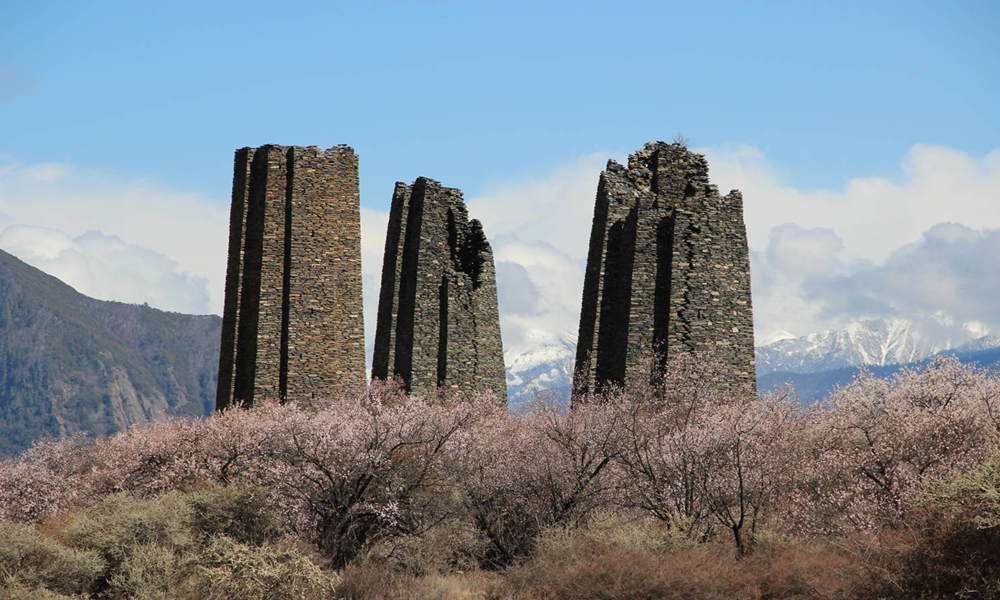
The material composition of these towers is a direct reflection of the local geology and the need for structural resilience. They were built using indigenous slate, schist, and granite, often harvested from the immediate surroundings or nearby riverbeds. The masonry technique is a variation of dry-stone walling, where flat stones are meticulously layered with a subtle, inward taper to provide a lower center of gravity. A critical and ingenious feature of their fabrication is the incorporation of internal wooden bracing systems—often made of cypress or cedar—which act as a skeletal frame to absorb shock during earthquakes. Furthermore, many towers feature a unique star-shaped or polygonal cross-section (with 8, 12, or even 13 corners). This geometry was not merely decorative; the “ribs” of the star shape provided additional structural reinforcement against the shearing forces of high-alтιтude winds and seismic tremors, a technique that predates modern earthquake-resistant design by centuries.

Archaeologists and historians suggest that these towers served a multifaceted role within the complex social fabric of the Himalayan foothills. Their primary function was defensive and communicative. Situated at strategic intervals along trade routes and mountain pᴀsses, they acted as watchtowers where signal fires could be lit to warn of approaching raiding parties or rival clans. In times of conflict, the towers served as vertical fortresses; the entrance was typically located several meters above the ground, accessible only by a retractable ladder, making the structure nearly impregnable. Beyond warfare, the towers were symbols of status and wealth for local chieftains and families. A taller, more elaborately crafted tower signified the power of a clan, and in some regions, they were used as “prayer towers” to house sacred texts or as navigational landmarks for pilgrims traversing the treacherous terrain.

The formal archaeological study and international recognition of these towers were significantly catalyzed by the efforts of Frederique Darragon, a French researcher who founded the Unicorn Foundation. Beginning in the late 1990s and early 2000s, Darragon conducted extensive surveys, mapping over 200 towers and utilizing carbon-14 dating on the internal wooden beams to provide the first scientifically accurate timeline for their construction. Her work brought these “lost” wonders to the attention of the UNESCO World Heritage tentative list and the World Monuments Fund. Prior to this, the towers had been documented by various Chinese provincial archaeological teams and Western explorers like Joseph Rock in the early 20th century, but Darragon’s systematic approach helped categorize the distinct styles—such as the “Duchu” (defensive) and “Laba” (status)—that define the region’s heritage.
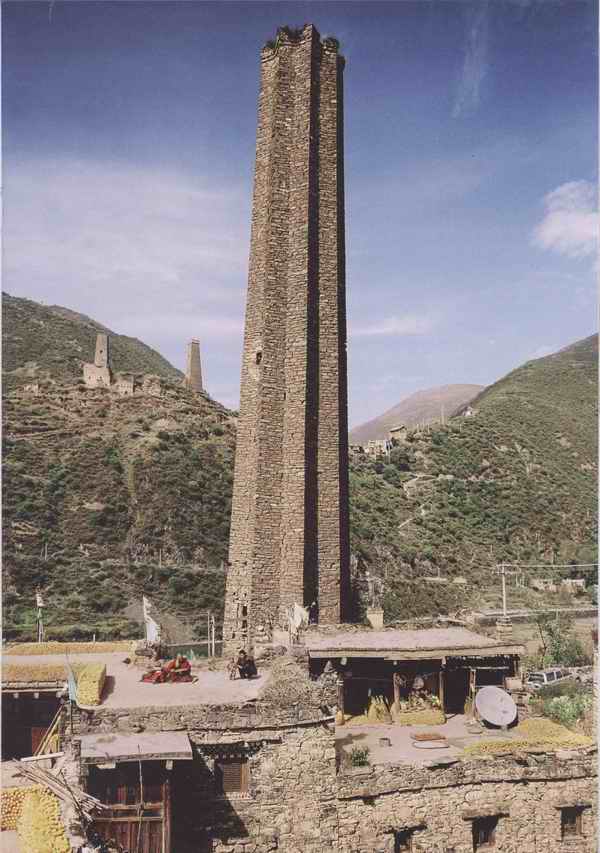
Today, the Himalayan Towers face significant threats from environmental erosion and the lack of consistent maintenance, yet they remain icons of Andean-scale masonry in Asia. The Chinese Academy of Social Sciences (Cᴀss) and local cultural bureaus have increasingly focused on the “Tibetan-Qiang Corridor” as a site of immense cultural value, working to stabilize the surviving structures against the elements. These towers are more than just ruins; they are a physical manifestation of a civilization’s ability to thrive in a vertical world. As modern engineering continues to study their seismic resistance, these medieval sentinels stand as a reminder that the most sophisticated solutions to environmental challenges are often found in the deep knowledge of indigenous builders who worked with the stone and timber of their ancestors.
✓ hoangduc
The soaring stone monoliths known as the Himalayan Towers, primarily located in the Gyalong Valley and the Danba County of western Sichuan Province, China, represent an extraordinary…