The Masterpiece of Incan Stonemasonry: The Temple of the Sun
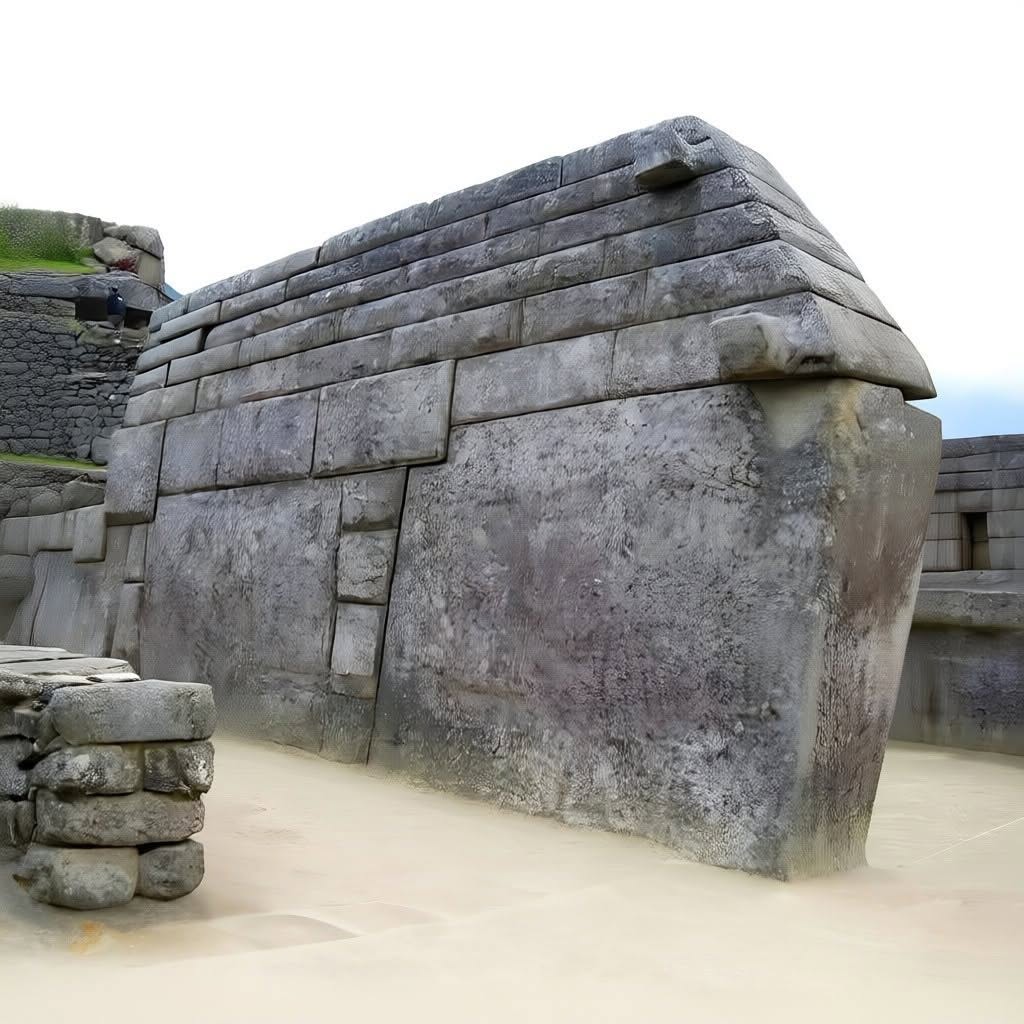
The monumental structure captured is a quintessential example of the refined ashlar masonry found within the historic sanctuary of Machu Picchu, Peru. Constructed during the height of the Inca Empire, approximately 1450–1470 AD, this curved wall is a foundational element of what is known as the Temple of the Sun (Torreón). Located on a prominent ridge within the citadel, this structure was built to align with astronomical events, showcasing the civilization’s deep integration of religious observation, solar tracking, and architectural precision. The site itself, rediscovered for the modern world in 1911, stands as a testament to the Inca’s ability to manipulate rugged terrain into highly sophisticated ceremonial spaces.
The material utilized for this structure is locally sourced white granite, which was meticulously quarried and shaped to achieve the signature seamless finish characteristic of the highest tier of Incan construction. The fabrication technique is a marvel of “dry-stone” masonry, where mᴀssive blocks were precision-cut and polished to fit together so perfectly that no mortar was required to maintain their integrity. As clearly visible, the stones are interlocked in a pattern that demonstrates not only aesthetic symmetry but also structural resilience; the subtle, irregular joints allow the structure to shift slightly during seismic activity, preventing the catastrophic collapse that would affect mortared walls.
Beyond its physical beauty, the Temple of the Sun served a crucial dual role as both a sacred religious site and a sophisticated astronomical observatory. Its semi-circular shape and the careful placement of windows allowed the Inca to track the summer and winter solstices with extraordinary accuracy. The alignment of the stone structure enabled the observation of the sun’s position relative to the mountain peaks, which was vital for the agricultural cycles of the empire. By anchoring their most important ritual activities to celestial movements, the Inca solidified the spiritual authority of the Sapa Inca, who was considered the “Son of the Sun,” thereby intertwining the physical architecture of the state with the cosmic order.
The formal documentation and study of this site began in earnest following the 1911 expedition led by the American explorer Hiram Bingham III, who brought the significance of the citadel and its structures to the global stage. While Bingham identified the architectural importance of the site, subsequent decades of intensive archaeological work by insтιтutions such as the Peruvian Ministry of Culture and various international universities have provided a much deeper, more scientific understanding of the construction phases and function of the temple. These researchers have meticulously mapped the structural stresses of the curved walls and the precise orientation of the temple windows, validating the architectural genius of the ancient stonemasons.
Today, the structure serves as a vital record of pre-Columbian engineering, preserved through ongoing conservation efforts aimed at protecting the site from both environmental erosion and the impact of modern tourism. Through the use of advanced techniques like 3D terrestrial laser scanning and stratigraphic analysis, modern archaeologists are still uncovering secrets about how the Inca planned and executed such mᴀssive projects without the use of iron tools, wheeled transport, or written plans. This temple remains a permanent, towering legacy of an empire that saw no distinction between the earth they built upon and the heavens they tracked, ensuring that their sophisticated understanding of both continues to challenge and inspire researchers today.
✓ hoangduc
The monumental structure captured is a quintessential example of the refined ashlar masonry found within the historic sanctuary of Machu Picchu, Peru. Constructed during the height of the…