The Medusa Heads of the Basilica Cistern: Recycled Myth and Byzantine Engineering
The imposing artifact shown is one of the two Medusa Head column bases located in the northwest corner of the Basilica Cistern (Yerebatan Sarnıcı) in Istanbul, Turkey. This subterranean water reservoir was constructed during the reign of the Byzantine Emperor Justinian I in 532 CE, following the devastation of the Nika riots. However, the Medusa heads themselves are significantly older, dating back to the Late Roman period (c. 2nd to 3rd century CE). They represent a fascinating archaeological phenomenon known as spolia—the repurposing of materials from ancient, pagan structures for new architectural projects. In the transition from the classical Roman world to the Christian Byzantine Empire, these heads were stripped from their original ceremonial context and integrated into the city’s vital infrastructure.
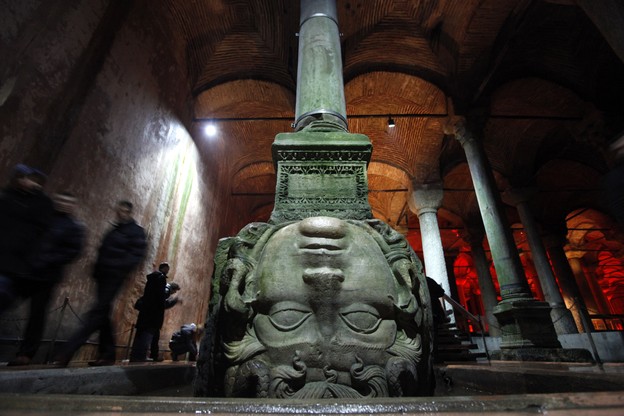
The Basilica Cistern remained a “hidden” marvel for centuries after the Fall of Constantinople. It was officially “rediscovered” for the Western world by the French traveler Petrus Gyllius in 1545, who noticed locals lowering buckets through holes in their basements to fetch water and fish. However, the Medusa heads remained submerged and obscured by deep mud for centuries. It wasn’t until the major cleaning and restoration project of 1985–1987, conducted by the Istanbul Metropolitan Municipality, that the silt was cleared away. Archaeologists were stunned to find these mᴀssive sculpted blocks at the base of two columns. Today, the site is managed as a key museum by the Istanbul Culture Co., and the 1987 excavation remains the most significant event in uncovering the cistern’s subterranean artistic secrets.

The Medusa heads are carved from mᴀssive blocks of Proconnesian marble, a high-quality white or bluish-grey stone sourced from the nearby Sea of Marmara. The craftsmanship belongs to the classical Roman tradition, featuring high-relief carving that emphasizes the Gorgon’s terrifying features: the writhing snakes for hair, the furrowed brow, and the wide, bulging eyes intended to represent her petrifying gaze. One head is positioned sideways and the other completely upside down. This orientation was not a mistake by the Byzantine builders but a deliberate engineering choice. By placing the blocks in these positions, the builders ensured the height of the column bases matched the others in the cistern, while the irregularities of the sculpted hair were neutralized to provide a stable, flat surface for the columns they support.

From a purely functional standpoint, these heads serve as sturdy plinths or load-bearing bases for the 9-meter-high marble columns supporting the cistern’s brick-vaulted ceiling. However, their symbolic meaning is a subject of intense archaeological debate. In the classical world, Medusa was an apotropaic symbol—a protective charm used to ward off evil spirits. By the time they were placed in the cistern in the 6th century, the Byzantine Empire was staunchly Christian. Turning the heads upside down or sideways likely served a dual purpose: it stripped the pagan icons of their “power” and demonstrated the triumph of the New Faith over old myths, while still allowing the empire to utilize the high-quality, pre-cut Roman marble for essential utility work.
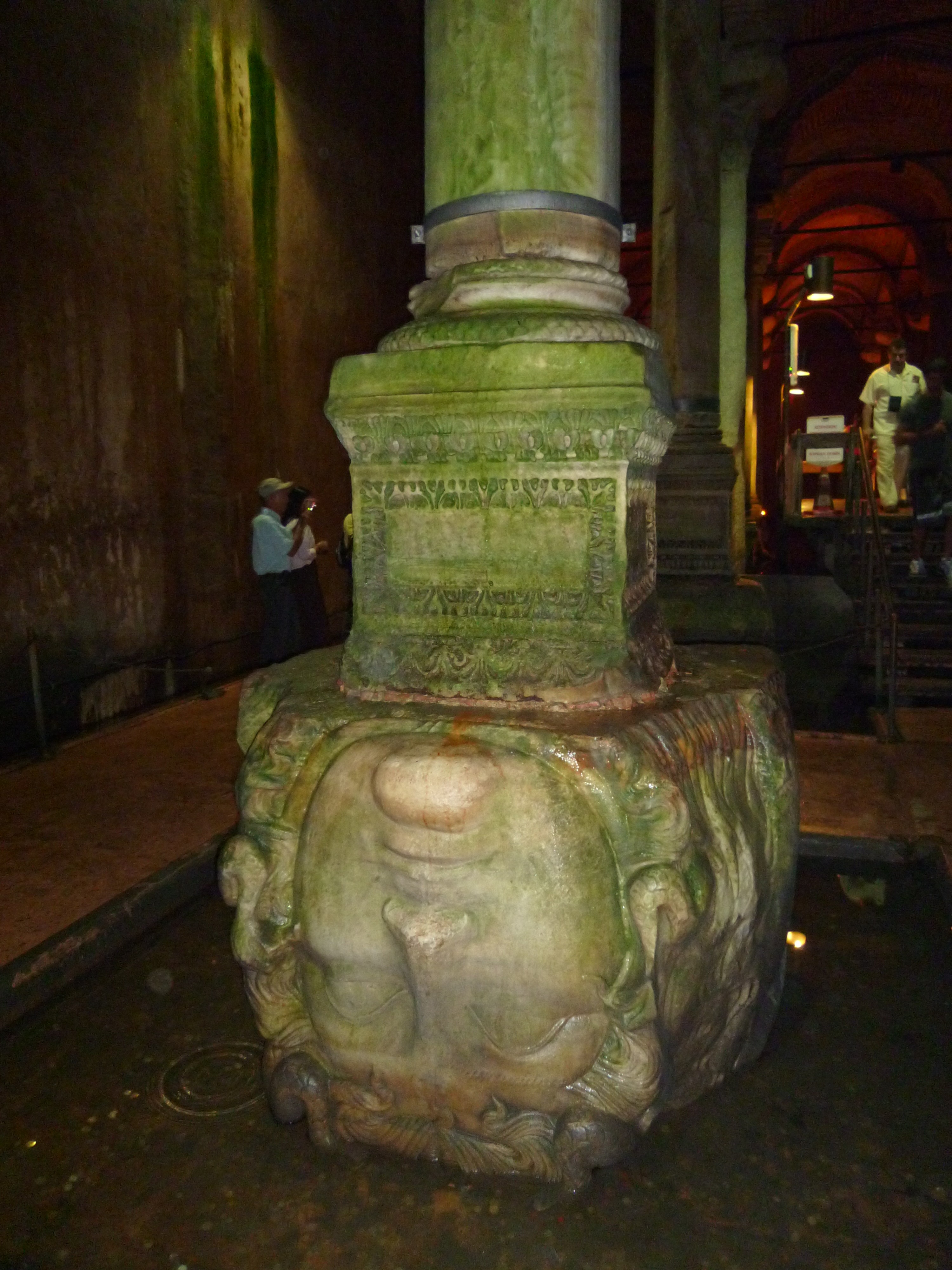
The presence of the Medusa heads in the Basilica Cistern is a prime example of Byzantine pragmatism. For archaeologists, they provide a window into the recycling economy of the 6th-century Mediterranean, where the ruins of the classical past became the quarries for the medieval future. The site highlights the sophisticated hydraulic engineering of Constantinople, which was capable of storing up to 80,000 cubic meters of water. Recently, the Sera Restoration project (completed in 2022) has used modern lighting and steel reinforcement to further preserve these marbles against seismic activity. The Medusa heads remain a haunting intersection of myth and masonry, standing as silent, submerged sentinels that reflect the enduring complexity of Istanbul’s multi-layered history.
✓ Team
The imposing artifact shown is one of the two Medusa Head column bases located in the northwest corner of the Basilica Cistern (Yerebatan Sarnıcı) in Istanbul, Turkey….