The Monolithic Mirror: Analyzing the Rock-Cut Sanctuary of Sayhuite
The geological and architectural anomaly captured represents a sophisticated example of Inca rock-cut engineering, likely functioning as a specialized ritual site within the larger Sayhuite archaeological complex. Located in the Abancay District of Peru, approximately 3,500 meters above sea level, this site is strategically positioned on the route between Cusco and the Pacific coast. Archaeologists categorize this specific feature as part of the Imperial Inca phase, dating its primary modification to the mid-to-late 15th century (c. 1450–1530 CE). During this period, the Inca state expanded its control over the central Andes, utilizing monumental stonework to sanctify the landscape and integrate local geological features into the state’s religious and administrative network.

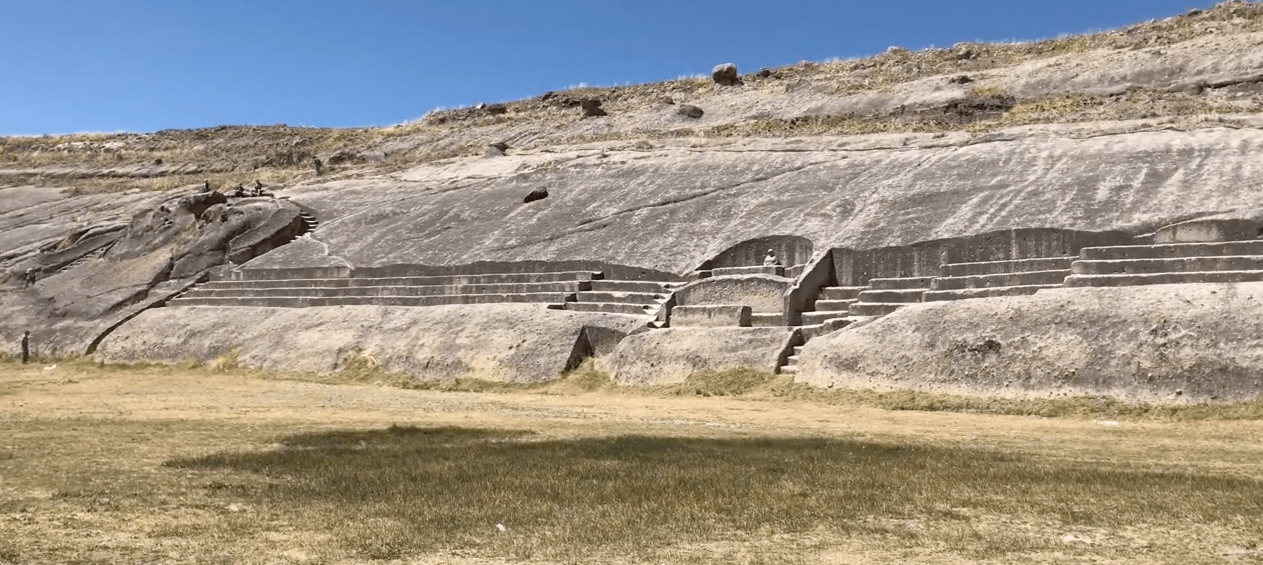
The material and craftsmanship evident demonstrate the Inca mastery of in situ carving, where the living bedrock—composed primarily of anesitic volcanic rock—was transformed into a complex geometric landscape. Unlike the transported blocks of Machu Picchu, this structure was created by subtractive methods; ancient stonemasons used obsidian and basalt pounding stones to wear away the harder rock, creating the crisp, stepped terraces and the central arched niche visible in the pH๏τograph. The precision of the horizontal planes and the “negative” space of the alcove suggest a high degree of mathematical planning. The smooth, almost polished finish of the tiered surfaces indicates a final stage of sanding using abrasive sands and water to achieve a reflective quality when wet.
The meaning and function of the Sayhuite complex, and this specific tiered wall, are deeply intertwined with the Inca cult of water and earth (Pachamama). The central arched portal and flanking steps are likely served as a ceremonial altar or “theatre of the sacred,” where priests made offerings of chicha (corn beer) or blood. The alignment of the tiers often follows hydraulic logic; many such sites in the region feature hidden channels where water would flow over the carved surfaces, mimicking the descent of mountain streams. This site functioned not just as a visual monument, but as a functional laboratory for ritual water management, symbolizing the Inca Emperor’s divine ability to control the life-giving fluids of the mountain deities (Apus).
Formal archaeological investigation of the Sayhuite area gained momentum in the early 20th century, though it remains in the shadow of Cusco’s more famous ruins for decades. Scientific documentation was significantly advanced by the Insтιтute of Archeology of the University of San Antonio Abad in Cusco, alongside international researchers who sought to categorize the site’s unique “sculptural” architecture. Unlike traditional residential excavations, the work here has focused on “landscape archaeology”—mapping the relationship between these carved outcrops and the surrounding astronomical alignments. Organizations like the National Insтιтute of Culture (INC) have since conducted conservation projects to prevent the degradation of the delicate carvings from exposure to high-alтιтude freeze-thaw cycles and modern foot traffic.
In conclusion, the rock-cut sanctuary shown is a profound material witness to the Inca philosophy of Ukhu Pacha, or the inner world. By carving directly into the “bones” of the earth, the builders create a permanent dialogue between human geometry and the natural chaos of the mountain. The site remains an essential subject of study for understanding how the Inca used architecture as a tool of political and spiritual colonization, turning every significant rock and spring into a temple. Today, Sayhuite stands as a masterpiece of lithic art, challenging our modern definitions of where nature ends and human creativity begins.
✓ hoangduc
The geological and architectural anomaly captured represents a sophisticated example of Inca rock-cut engineering, likely functioning as a specialized ritual site within the larger Sayhuite archaeological complex….