The Monteleone Chariot: A Bronze Masterpiece of the Etruscan Age
The magnificent artifact featured is the Monteleone Chariot, a rare and exquisitely crafted Etruscan vehicle dating back to approximately 530–520 BCE. Discovered in the early 20th century, this ceremonial chariot is one of the few nearly complete examples of such ancient transport in existence today. It stands as a profound testament to the artistic sophistication and technical prowess of the Etruscan civilization, which dominated central Italy before the full ascent of the Roman Republic.
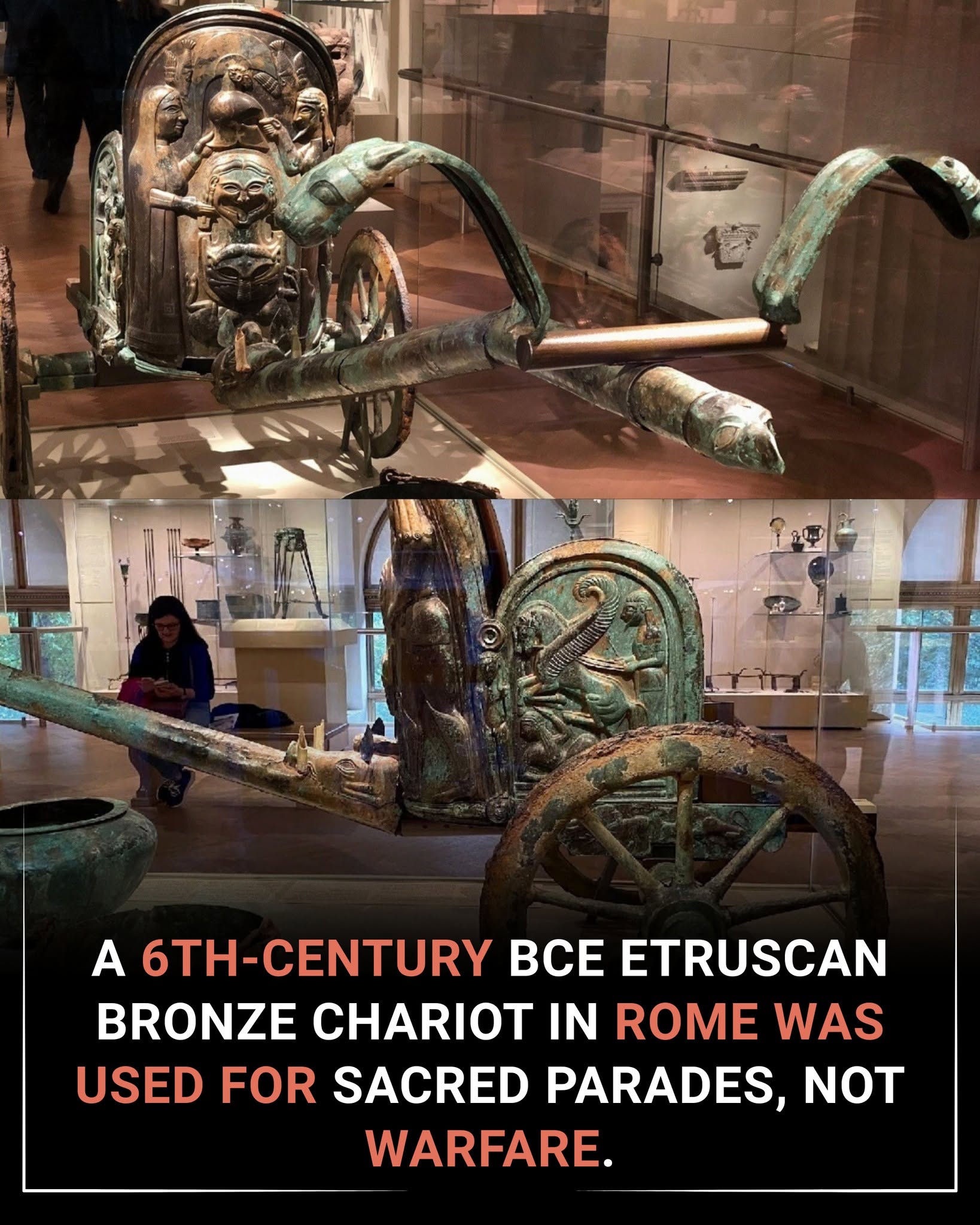
The chariot is constructed primarily from wood that was entirely sheathed in bronze plates, which are decorated with intricate, high-relief scenes. These plates were manufactured using the repoussé technique, where the artist hammered the bronze from the reverse side to create raised, detailed imagery. The iconography includes depictions of scenes from Greek mythology, such as the presentation of armor to Achilles, reflecting the heavy influence of Hellenic culture on the Etruscan elite. The craftsmanship is highly detailed, incorporating decorative animal motifs, particularly on the chariot’s pole, which terminates in a finely cast head.
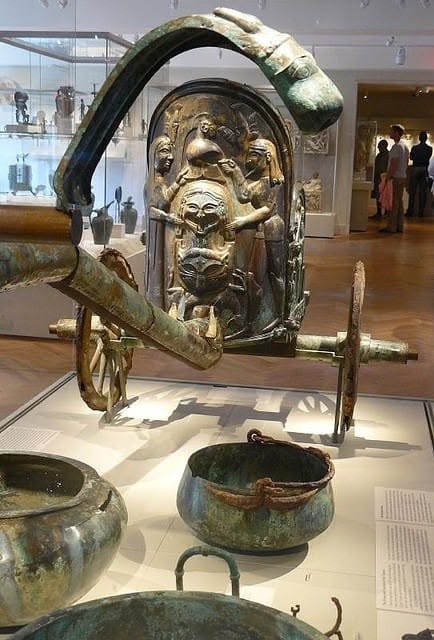
Beyond its physical beauty, the chariot likely served a significant symbolic and ceremonial role rather than being intended for everyday combat. Given its opulent decoration and the fragile nature of its bronze-clad wood, it was probably used in state processions, religious rituals, or as a prestigious vehicle for a high-ranking aristocrat during significant social events. As a funerary object, it was designed to signify the wealth, status, and divine favor of the individual with whom it was buried, acting as a powerful emblem of aristocratic idenтιтy in the afterlife.
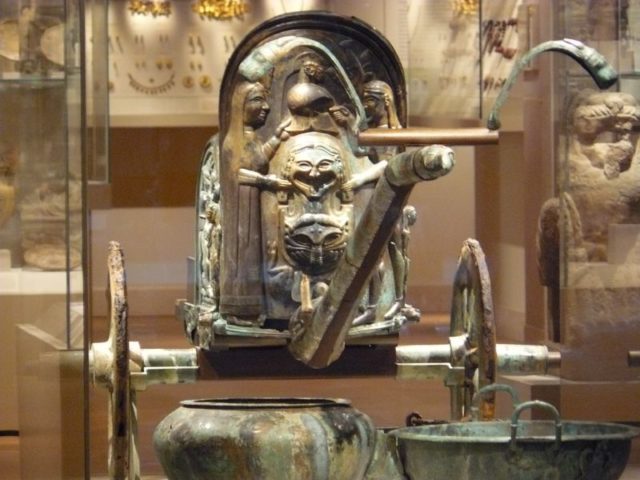
The Monteleone Chariot was discovered in 1902 in the tomb of an Etruscan prince at Colle del Capitano, near Monteleone di Spoleto in the Umbria region of Italy. It was unearthed by a local farmer who accidentally struck the tomb while plowing his fields. Following its discovery, the chariot was eventually acquired and transported, pᴀssing through private collections before being purchased by the Metropolitan Museum of Art in New York City in 1903, where it has remained a centerpiece of their ancient collection, enabling ongoing research and public appreciation.
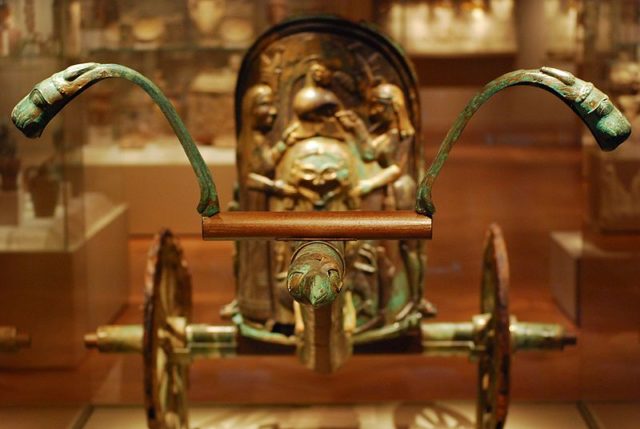
Today, the Monteleone Chariot provides invaluable insights into the complex trade networks and cultural syncretism of the archaic Mediterranean. Through its combination of native Etruscan metalworking and Greek-inspired narrative art, the artifact bridges the gap between disparate cultures. Modern archaeological and conservation efforts continue to analyze the chariot to understand the ancient manufacturing techniques and to preserve this fragile cultural treasure, ensuring that the legacy of Etruscan artistry remains accessible to future generations of scholars and the public.
✓ hoangduc
The magnificent artifact featured is the Monteleone Chariot, a rare and exquisitely crafted Etruscan vehicle dating back to approximately 530–520 BCE. Discovered in the early 20th century, this…