The Sacred Scripts of the Afterlife: Decoding the Pyramid Texts
The awe-inspiring interior space depicted is a quintessential example of the Pyramid Texts, the oldest known religious writings from ancient Egypt. These inscriptions, carved into the walls of the burial chambers and corridors within the pyramids of the Old Kingdom, date primarily to the 5th and 6th Dynasties, roughly spanning the period from 2350 to 2175 BCE. Specifically found in monuments such as the Pyramid of Unas at Saqqara, these texts represent a profound developmental milestone in human literacy, serving as a structured guide intended to facilitate the Pharaoh’s perilous journey from the earthly realm to the eternal life among the stars.
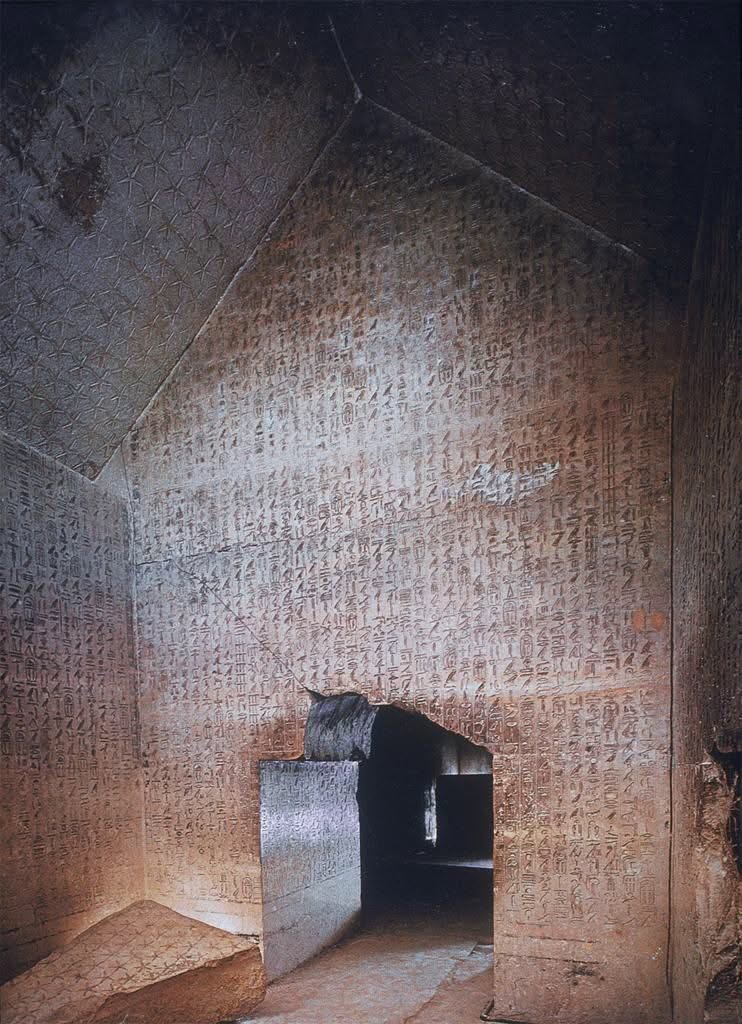
The material and technical precision of these inscriptions are a marvel of ancient Egyptian craftsmanship. The walls are constructed from high-quality, fine-grained Tura limestone, which provided a smooth and durable surface for the royal scribes and stone carvers. The hieroglyphs were meticulously incised into the stone, and in many instances, were originally filled with blue pigment to contrast against the pale limestone, imbuing the chambers with a vibrant, otherworldly aura. The technical execution—involving the careful alignment of columns of text across uneven, vaulted, and flat surfaces—demonstrates a high degree of artistic planning, ensuring that the sacred words remained readable and ritually potent for the deceased sovereign.

Functionally, these texts served as a comprehensive “liturgy for the ᴅᴇᴀᴅ,” providing the king with the necessary incantations, spells, and ritual instructions required to navigate the Duat (the underworld) and ascend to the heavens. Unlike later funerary literature that became accessible to a wider elite, the Pyramid Texts were exclusively royal, meant to secure the king’s transformation into a divine being—specifically an akh (an effective spirit)—and his unification with the solar deity, Ra, and the ruler of the underworld, Osiris. The repeтιтive nature of the texts, combined with their invocation of cosmic forces, illustrates the ancient Egyptian belief that the written word possessed performative power, capable of manifesting the reality it described through the act of recitation and presence in the tomb.
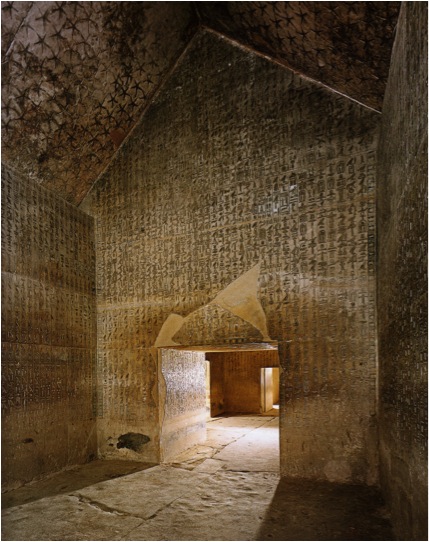
The rediscovery and scientific documentation of these texts consтιтute a major chapter in the history of modern archaeology, beginning in the late 19th century. In 1881, the French archaeologist Gaston Maspero made the groundbreaking discovery that the walls of the pyramid of King Unas were covered in these previously unknown inscriptions. Maspero’s meticulous work in recording and translating these texts transformed our understanding of Egyptian theology and political structure during the Old Kingdom. Following this, successive generations of archaeologists, including the dedicated teams at the Saqqara site, have continued to preserve and analyze these chambers, utilizing modern digital mapping and conservation techniques to protect the delicate limestone from the stresses of time and environmental change.
In conclusion, the Pyramid Texts visible remain an essential archaeological resource, offering a unique, direct window into the spiritual and intellectual life of the ancient Egyptian elite. By studying these monumental inscriptions, we move beyond the physical majesty of the pyramids to appreciate the complex belief systems and the sophisticated use of language that defined the transition of the Pharaoh into the divine. As contemporary research continues to refine our translations and spatial analysis of these burial chambers, the texts serve as a powerful reminder of how ancient societies sought to conquer mortality through the enduring intersection of monumental architecture and the written word.
✓ hoangduc
The awe-inspiring interior space depicted is a quintessential example of the Pyramid Texts, the oldest known religious writings from ancient Egypt. These inscriptions, carved into the walls of…