The Sacred Vessel: Deciphering the ᴀssyrian Ritual Pail
The image depicts a quintessential icon of Neo-ᴀssyrian art: the protective winged spirit, or apkallu, clutching a distinctive bucket and wearing a highly detailed wristband. Dating back to the Neo-ᴀssyrian period, specifically the reign of King Ashurnasirpal II (c. 883–859 BCE), these monumental stone reliefs were discovered primarily in the Northwest Palace at Nimrud (ancient Kalhu), located in modern-day northern Iraq. These panels were excavated during the mid-19th century by pioneering archaeologists such as Sir Austen Henry Layard, whose work unveiled the splendor of the ᴀssyrian Empire to the Western world.
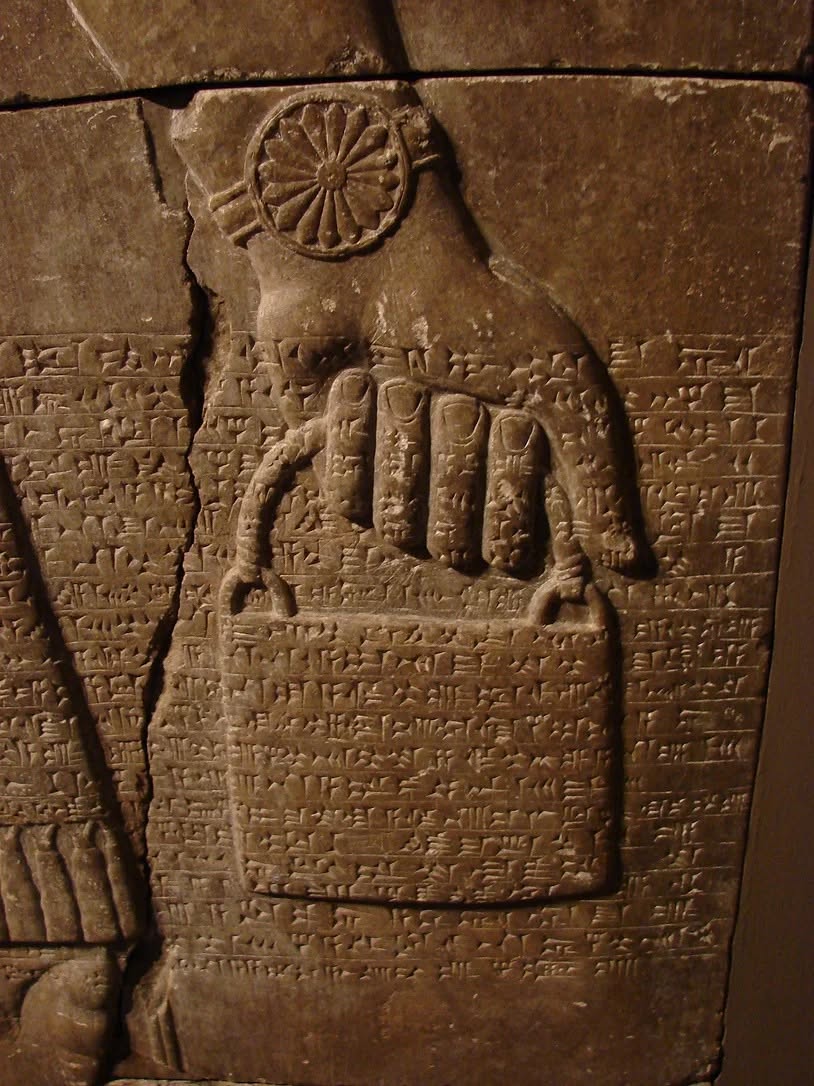
The physical composition of these artifacts is a testament to the sophisticated craftsmanship of ancient Mesopotamian stonemasons. Carved from gypsum alabaster, a soft yet durable stone abundant in the region, the relief panels were originally adorned with vibrant pigments, though the color has largely faded over the millennia. The level of detail—from the individual feathers on the protective spirits to the intricate rosettes on the wristbands and the precise cuneiform script of the “Standard Inscription” crossing the figures—demonstrates a high degree of artistic specialization intended to convey the power, piety, and divine favor of the king.
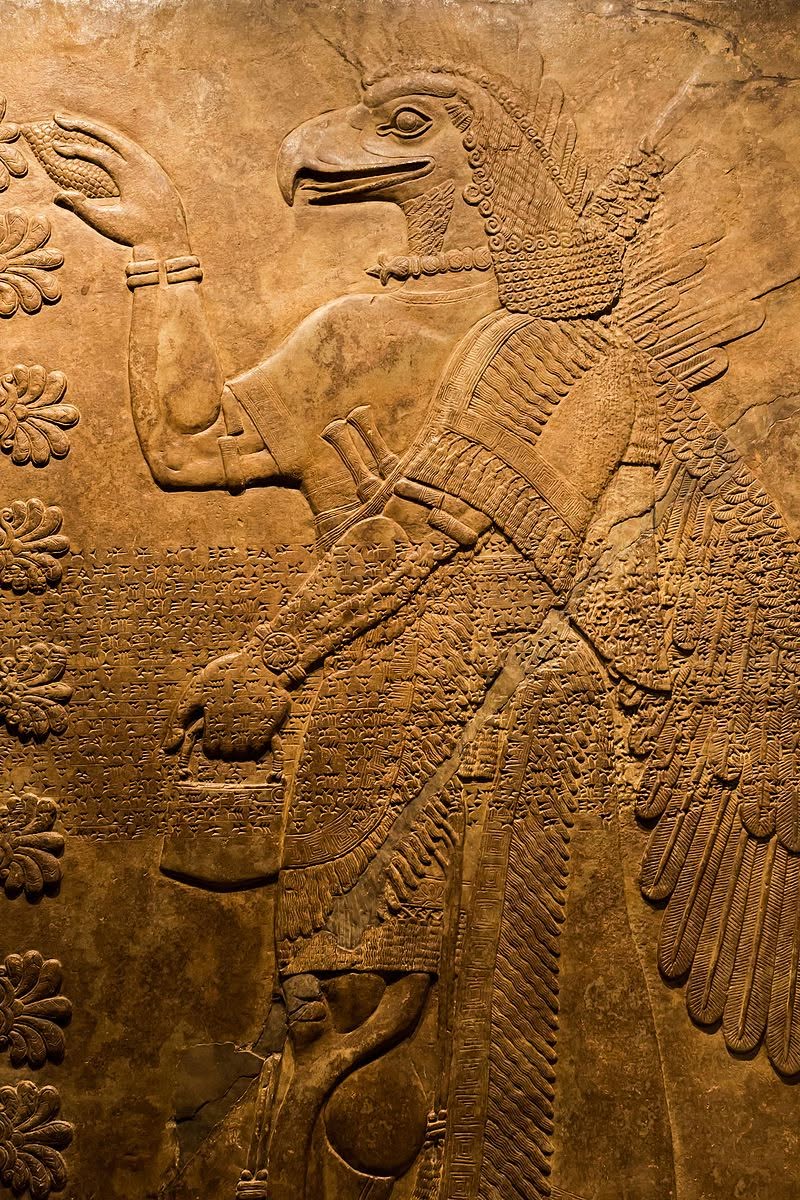
Regarding the ritual iconography, the bucket (Akkadian: banduddû) and the accompanying “cone” (often referred to as a “purifier” or mullilu) are perhaps the most recognizable elements of ᴀssyrian palace decoration. In the scenes, the apkallu is depicted holding the bucket in the left hand, while the right hand gestures with the cone. The wristband, often featuring a rosette, adds another layer of symbolic sophistication, perhaps denoting rank or the divine nature of the spirit. These objects are almost exclusively held by mythological enтιтies, marking them as implements of a sacred, supernatural, or administrative ritual rather than utilitarian tools.
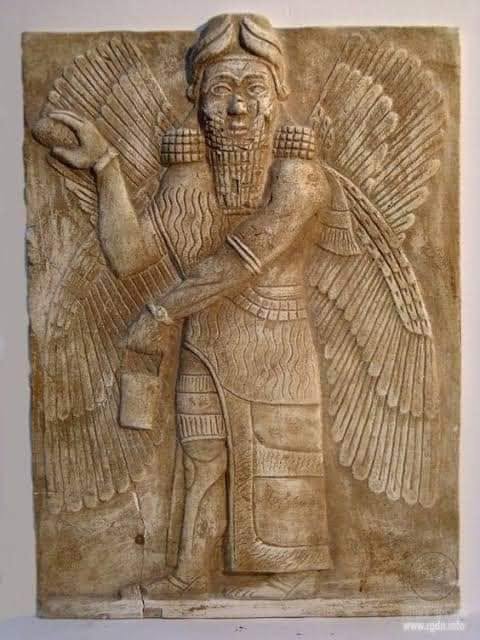
Scholars suggest several interpretations for the primary function of these items. The most prevalent theory is that they depict a purification ceremony: the cone was dipped into the bucket—which likely contained holy water or sacred pollen—and then shaken to sprinkle the purifying substance onto the king, the palace, or sacred trees. This ritual act served to maintain cosmic order and safeguard the monarch from malevolent forces. The botanical resemblance of the cone to a pine or fir cone, or perhaps a date-palm spathe, further links these figures to themes of fertility, growth, and the agricultural success that sustained the empire.
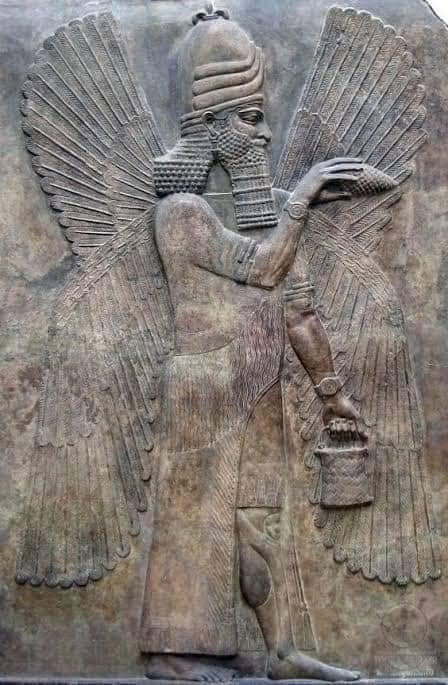
Ultimately, these reliefs were far more than mere interior decoration; they were essential components of the ᴀssyrian worldview. By lining the halls of the king’s palace with these protective sages, the ᴀssyrian state integrated religious ritual into the very architecture of its power. The apkallu served as vigilant guardians of the royal space, bridging the gap between the mundane world of politics and the divine realm of the gods. Today, these artifacts are housed in prestigious insтιтutions worldwide, including the British Museum, the Metropolitan Museum of Art, and the Brooklyn Museum, where they continue to offer profound insights into the complex rituals of ancient Mesopotamia.
✓ hoangduc
The image depicts a quintessential icon of Neo-ᴀssyrian art: the protective winged spirit, or apkallu, clutching a distinctive bucket and wearing a highly detailed wristband. Dating back…