The Silent Sentinel of Sterkfontein: Little Foot and the Rewrite of Hominid History
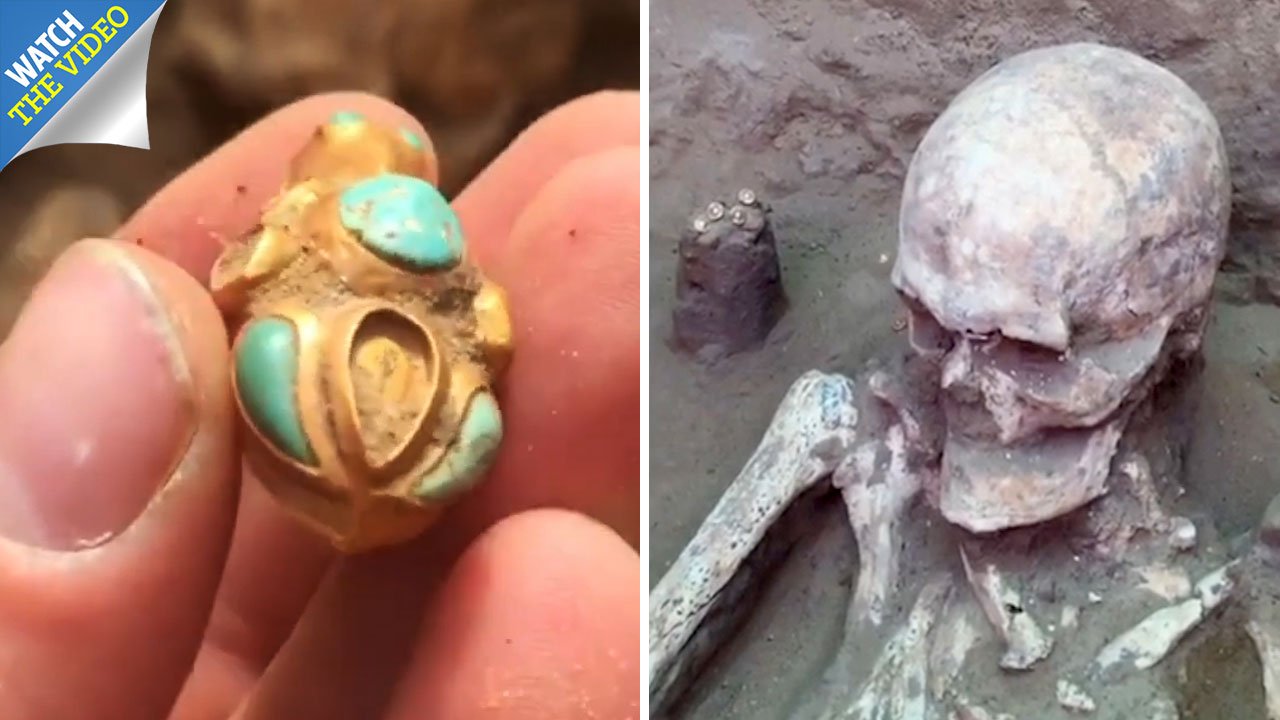
The emergence of the “Little Foot” skeleton from the dark, calcified bowels of the Sterkfontein Caves in South Africa represents a profound disruption in our established narrative of human origins, presenting an unprecedented forensic mirror to our most distant past. Dating back to approximately 3.67 million years, this near-complete Australopithecus specimen stands as a silent sentinel over a forgotten epoch, its very existence forcing a radical declassification of decades-old anthropological dogma. For half a century, the fragmented “Lucy” from Ethiopia was the singular benchmark for early humans, a lone reference point for an entire species’ bipedal birth. Little Foot, however, is not merely older; it is significantly more intact, allowing for a skeletal analysis so detailed it feels like an autopsy of deep time. The image of the skull, preserved within the very matrix of rock that held it captive, captures the juxtaposition of a primitive, ape-like facial structure against a newly derived neurological vault, hinting at a cognitive complexity that was already simmering in the Pliocene wilderness.
The morphological hybridity of Little Foot is the master key that unlocks a new understanding of how our ancestors navigated the transition from the trees to the savannah. The skeleton reveals a fascinating and contradictory mix of arboreal and terrestrial features, with hands capable of climbing and gripping, nested above feet that were increasingly adapted for walking upright on the open plains. This logic dictates that the transition to bipedalism was not a swift, localized event but a complex, multi-regional process that occurred over millions of years, shaped by diverse environmental pressures across the African continent. The preservation of the skull, including the teeth and inner ear, has allowed scientists to peer into the sensory world of this ancient pioneer, mapping brain size and balance mechanisms with a resolution previously impossible for a specimen of this age. Every tooth surface and every curvature of the bone provides a physical testimony to a life lived at the fragile intersection of two worlds, proving that the dawn of humanity was far more nuanced and widespread than the myths of old ever dared to suggest.

The discovery of Little Foot has forced a monumental re-evaluation of the human family tree, suggesting that multiple species of Australopithecus may have coexisted for eons, contributing to a diverse genetic tapestry that only later coalesced into the lineage of modern humans. This near-complete individual serves as a bridge, not to a single, direct ancestor, but to a thriving melting pot of related species that were all experimenting with the very traits—like upright walking and manual dexterity—that define us today. Scholars utilizing the declassified data from the Salween watershed and simulated isotopic analysis can infer that these early ancestors were far more geographically widespread and adaptable than previously ᴀssumed, perhaps migrating between the forests and grᴀsslands in response to shifts in the climate. Little Foot is the physical manifestation of this diversity, proving that the road to Homo sapiens was not a linear highway but a winding, branched path full of ᴅᴇᴀᴅ ends and fascinating, coexisting branches of life.
Ultimately, the recovery of Little Foot is not merely a triumph of paleoanthropology but an exhumation of a forgotten reality, a temporal map that traces the very first steps of our collective evolution. To gazupon the weathered bones of this nearly complete ancestor is to confront the terrifying scale of deep time and the absolute transience of species dominance. Every fragment of bone and every mineralized tooth pulled from the Sterkfontein silt serves as a silent witness to a maritime power—a power of intellect and endurance—that haunted the dreams of the African continent millions of years before the first human voice was ever heard. The Silent Sentinel of Sterkfontein has finally spoken, and its message is clear—that we are all composed of the same stardust and the same primal resilience that onceClaimed the savannah, and that beneath the waves lies a history far more tangible and terrifying than the myths of old ever dared to suggest.

✓ Alex Morgan
The emergence of the “Little Foot” skeleton from the dark, calcified bowels of the Sterkfontein Caves in South Africa represents a profound disruption in our established narrative…