The Silent Stone Witnesses: An Archaeological Analysis of Machu Picchu’s Lithic Engineering
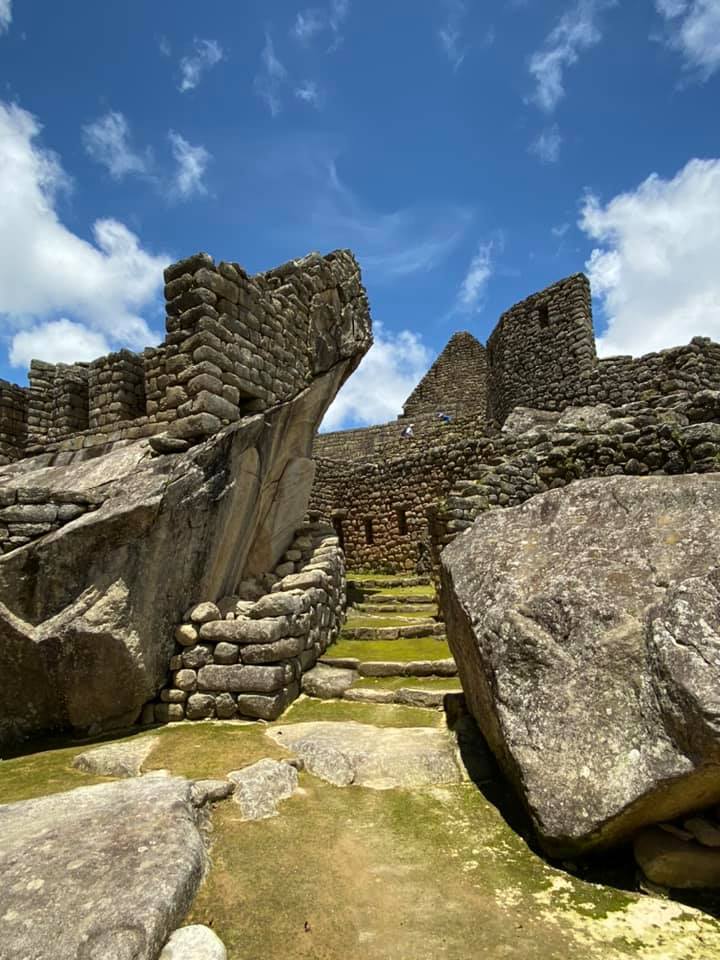
The architectural remains depicted represent a primary example of the monumental stone masonry characteristic of the Inca Empire at its zenith. This specific site is located within the citadel of Machu Picchu, situated on a narrow ridge between two peaks in the Urubamba Valley of modern-day Peru. Archaeologists and historians generally date the construction of this royal estate to the mid-15th century, specifically beginning around 1450 CE under the reign of the Sapa Inca Pachacuti. The chronology of the site is supported by radiocarbon dating of organic remains found within the floors and middens, indicating a relatively short period of occupation that lasted until the Spanish Conquest in the 1530s.

Regarding the material and craftsmanship visible, the primary medium is local white granite, a material chosen for both its abundance in the surrounding batholith and its extreme durability. The technique employed is known as ashlar masonry, where stones are meticulously shaped to fit together without the use of mortar. In the image, we can observe the transition between different structural styles: the rougher, semi-worked stones used for terracing and foundational support, and the finely polished, interlocking blocks characteristic of high-status religious or residential buildings. These stones were worked using bronze or copper tools and harder river cobbles, and they were often fitted so precisely that even a knife blade cannot pᴀss between them, a feat of engineering designed to withstand the region’s frequent seismic activity.

The archaeological significance and function of these structures are deeply rooted in the Inca concept of huaca, or sacred landscape. The architecture is not merely placed upon the mountain but is integrated into the natural rock formations, reflecting a spiritual symbiosis between the built environment and the earth. Functionally, this area likely served as a controlled pᴀssage or transitional space between the agricultural zones and the sacred urban core. The small apertures or windows visible in the background masonry suggest defensive or surveillance capabilities, while the stone-lined stairways facilitated the movement of high-status residents and religious officials through the complex’s vertical topography.
The formal “discovery” of this archaeological marvel to the Western world is credited to Hiram Bingham III, an American historian and lecturer from Yale University. In July 1911, led by local residents Melchor Arteaga and a young boy named Pablito Alvarez, Bingham arrived at the overgrown ruins. His expeditions between 1911 and 1915 were sponsored by Yale University and the National Geographic Society. Although Bingham famously and mistakenly believed he had found “Vilcabamba,” the lost city of the Incas, his systematic mapping and the subsequent publication of his findings brought the site to international prominence. Today, ongoing conservation and excavation efforts are managed by the Peruvian Ministry of Culture (Ministerio de Cultura del Perú), ensuring the site’s preservation for future study.
In conclusion, the structures shown serve as a profound testament to the socio-political sophistication and engineering prowess of the Inca civilization. The site is more than just a collection of ruins; it is a meticulously planned urban center that balanced agricultural necessity with religious devotion. Through the study of its lithic materials and manufacturing details, archaeologists can reconstruct the labor systems and aesthetic values of a society that thrived in one of the world’s most challenging geographic environments. Machu Picchu remains a cornerstone of South American archaeology, providing a vital link to the heritage and ingenuity of the Pre-Columbian Andean world.
✓ hoangduc
The architectural remains depicted represent a primary example of the monumental stone masonry characteristic of the Inca Empire at its zenith. This specific site is located within…