The Stone Arteries of Patara: Unveiling the Siphon Pipeline of the Delikkemer Aqueduct
The image reveals a striking feat of Roman hydraulic engineering located near the ancient city of Patara, in the Lycia region of modern-day Antalya, Turkey. Known as the Delikkemer Bridge (or the “Hole-in-Stone” Bridge), this structure is a critical section of a larger aqueduct system that transported water from the springs of Islamlar to the thriving port city of Patara. While many Roman aqueducts are famous for their arched bridges, Delikkemer is archaeologically unique because it features a “reversed siphon” system designed to bridge a steep 500-meter-long valley. Rather than maintaining a steady gravitational flow through open channels, the engineers utilized stone pressure pipes to force water down one side of the valley and up the other—a monumental solution to a complex topographical challenge.
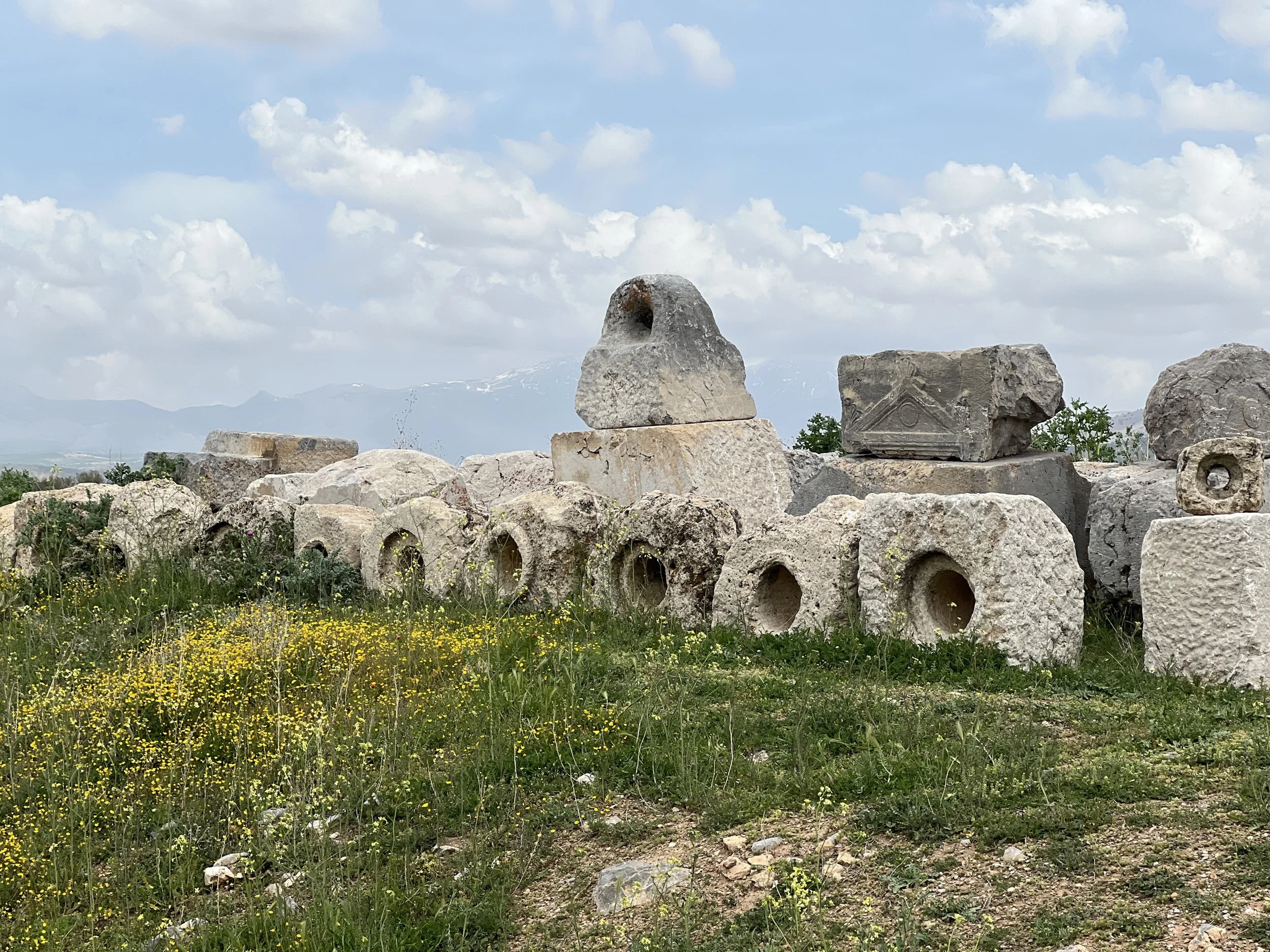
The material utilized for this pipeline consists of mᴀssive blocks of local limestone, meticulously carved into interlocking cylindrical sections. The “craftsmanship” involved in creating this pressure pipe is a testament to Roman industrial precision. Each block was hollowed out to create a central bore approximately 30 centimeters in diameter. To ensure a waterтιԍнт fit capable of withstanding the internal pressure of the flowing water, the blocks were designed with a “male and female” (socket and spigot) joint system. One end of each stone was carved into a protruding ring that fit perfectly into the recessed cavity of the next block. These joints were then sealed with a mixture of quicklime and oil, creating a durable, pressurized conduit that has remained structurally visible for nearly two millennia despite the seismic activity of the Mediterranean coast.

The functionality of the Delikkemer blocks was purely technological: they served as an inverted siphon (siphon reversus). In the Roman world, water was typically moved by gravity in open-air masonry channels. However, when a valley was too deep to bridge with arches, engineers used the principle of communicating vessels. The stone pipes seen in the image were laid across a wall that kept the pipeline at a specific elevation to manage the “static head” or pressure. The significance of this artifact lies in its rarity; while lead and ceramic pipes were common in Roman plumbing, the use of large-scale stone pressure pipes is an exceptional engineering choice, likely motivated by the high pressure of the Patara system and the local availability of high-quality limestone.

The scientific documentation of the Patara aqueduct and the Delikkemer section has been a primary focus of the Patara Excavations Project, a long-term multidisciplinary effort led by Turkish archaeologists from Akdeniz University. Notable figures such as Professor Havva İşkan Işık and the late Professor Fahri Işık have been instrumental in uncovering the city’s hydraulic infrastructure. Their work, supported by the Turkish Ministry of Culture and Tourism, involved clearing centuries of overgrowth and sediment to map the entire 22.5-kilometer route of the aqueduct. These excavations have provided a wealth of data regarding Roman land surveying and the socio-economic investment required by the Roman administration to provide the city of Patara—a seat of the Lycian League—with a consistent supply of fresh water.
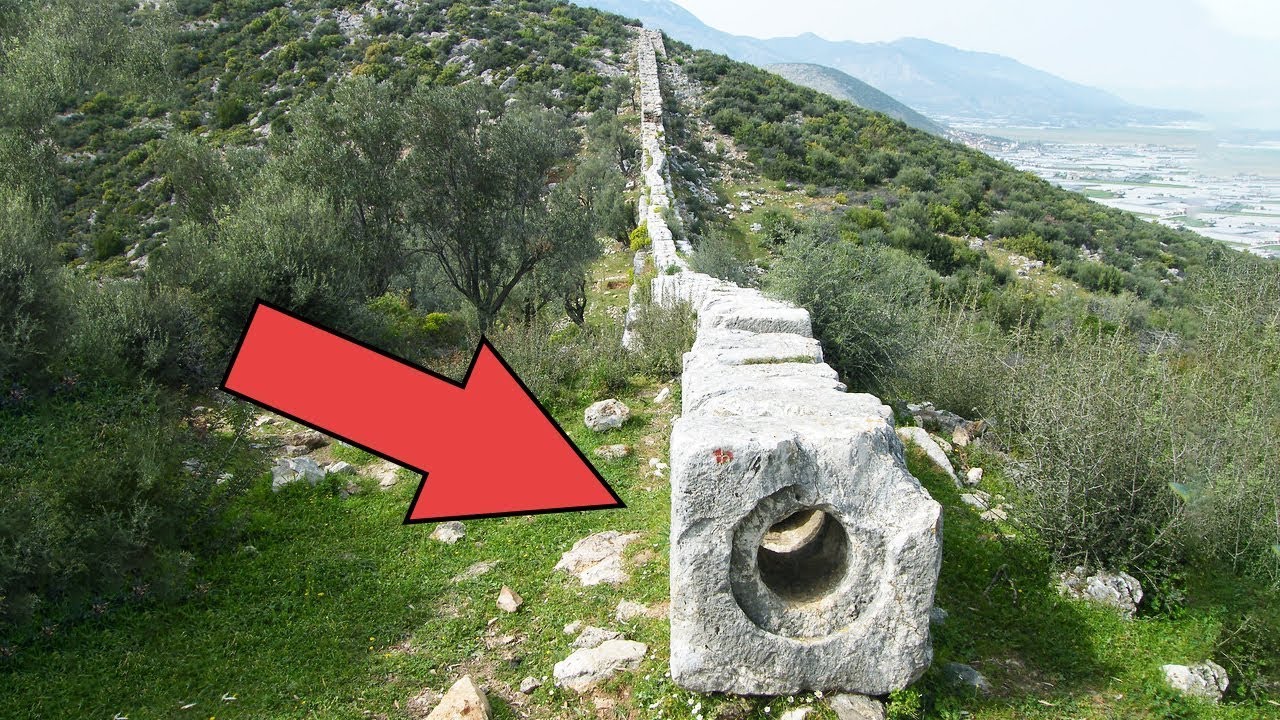
In conclusion, the Delikkemer pipeline stands as a “lithic document” of Roman pragmatism and ambition. It demonstrates that the ancient residents of Patara were not merely pᴀssive recipients of Roman culture but active participants in the most advanced engineering projects of their age. The sight of these stone blocks stretching like a spine across the Turkish landscape offers a profound archaeological insight into the hidden “arteries” that once sustained urban life. Today, the site serves as a vital resource for scholars of ancient hydraulics, proving that the Romans had mastered the physics of fluid dynamics long before the industrial era. It remains a silent monument to the human drive to conquer nature through the marriage of simple stone and sophisticated mathematics.
✓ Team
The image reveals a striking feat of Roman hydraulic engineering located near the ancient city of Patara, in the Lycia region of modern-day Antalya, Turkey. Known as…