The Sunken Sanctuary: Re-examining the Dolmen of Guadalperal
The archaeological site revealed, known as the Dolmen of Guadalperal, is a megalithic monument located in the basin of the Valdecañas Reservoir in the province of Cáceres, Spain. Dating back to the late Neolithic or early Bronze Age, approximately 5000 to 4000 years ago, this circular funerary structure provides a rare glimpse into the ritual and mortuary landscapes of prehistoric Iberia. Frequently submerged beneath the reservoir waters, the site periodically re-emerges during periods of intense drought, offering archaeologists an ephemeral yet invaluable opportunity to study its configuration and the symbolic nature of its placement within the ancient landscape.
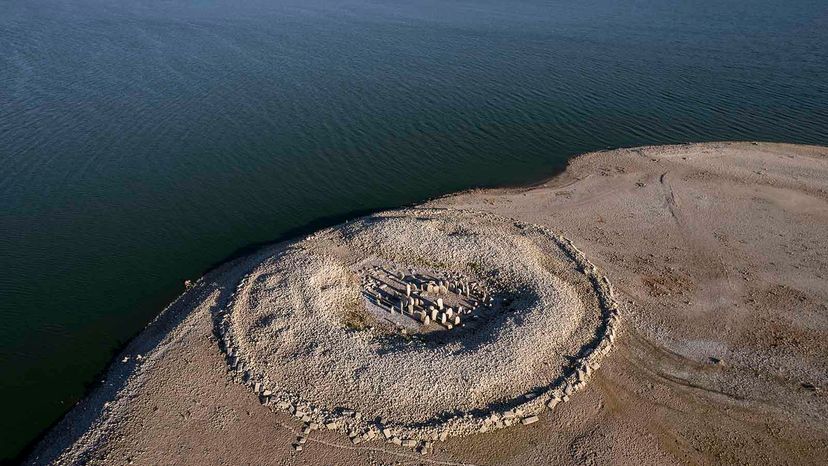
The monument is crafted primarily from upright granite orthostats, which were meticulously arranged to form a central chamber surrounded by a circular perimeter wall. The stones vary in size and height, with some retaining carved motifs or symbolic markings that indicate their ritualistic purpose. The manufacturing details—specifically the careful selection and orientation of these heavy granite slabs—demonstrate a high level of collaborative labor and structural planning typical of the megalithic traditions of the period. These stones were not merely placed; they were anchored into the earth, creating a permanent, defined sacred space that stood as a landmark for surrounding Neolithic communities.
The significance of the Dolmen of Guadalperal likely extends beyond its primary function as a tomb. In addition to housing the remains of the deceased, it may have served as a “solar temple” or a symbolic nexus for the community, reflecting their understanding of the celestial movements and seasonal cycles. The circular enclosure, when viewed from the air as in image_5f960c.jpg, suggests a structured attempt to organize the social space in accordance with cosmological observations. Its placement near a river valley further emphasizes the importance of water and fertility in the belief systems of the prehistoric people who constructed and maintained this enduring monument.
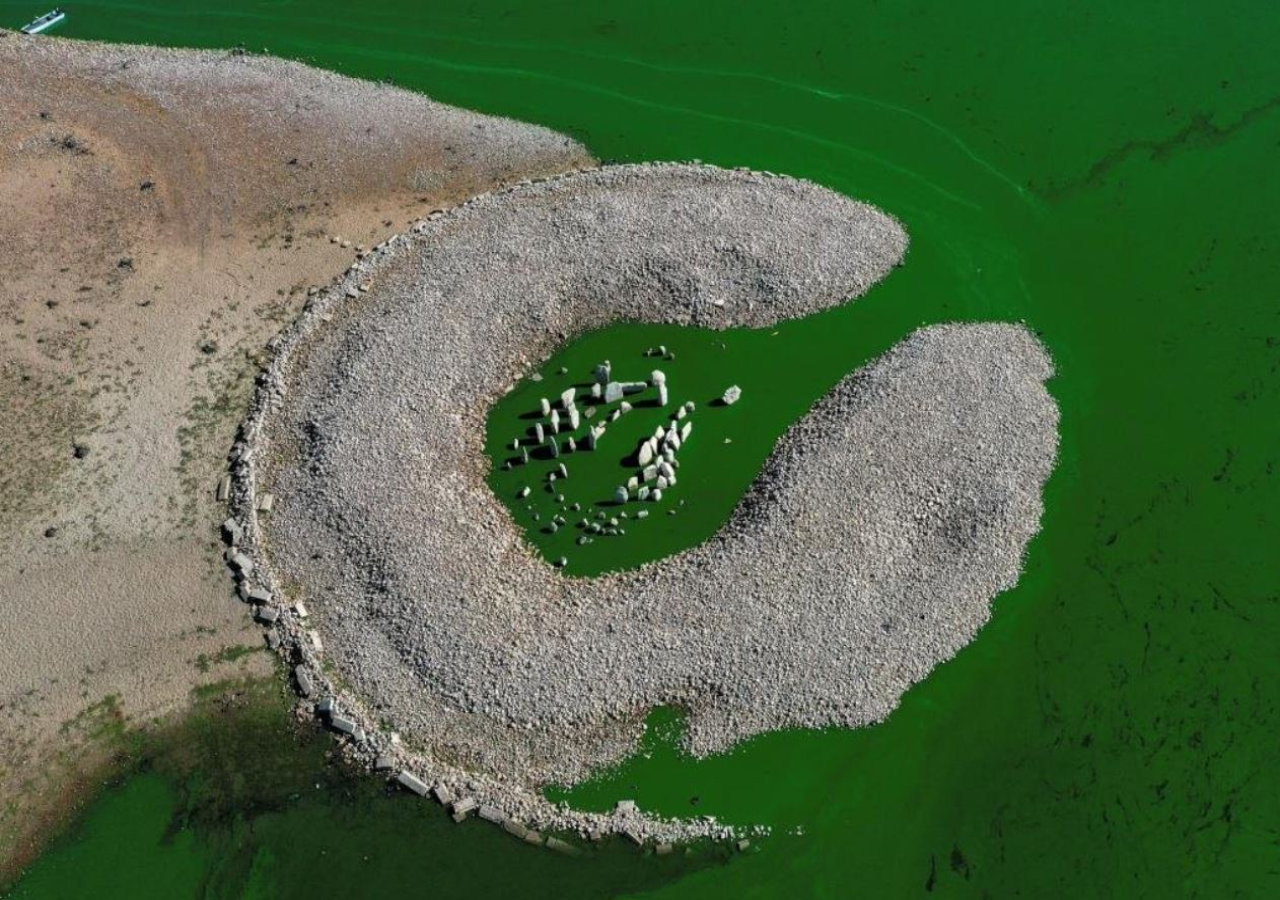
The history of the site’s discovery and research is inextricably linked to the damming of the Tagus River in the 1960s, which led to the permanent submergence of the dolmen. Initially investigated by the German archaeologist Hugo Obermaier in the 1920s, the monument was subsequently lost to view until environmental shifts allowed for its rediscovery and reᴀssessment by modern archaeological teams. Recent efforts by researchers from Spanish universities have aimed to document the site using advanced digital pH๏τogrammetry, providing a permanent record of its physical state despite the ongoing threats posed by water exposure and environmental erosion.

In conclusion, the Dolmen of Guadalperal featured represents an essential, if fragile, chapter in our collective human history. Its periodic emergence from the reservoir serves as a stark reminder of the intersection between modern infrastructure, environmental change, and the protection of our cultural heritage. By studying these ancient granite stones, we gain a deeper appreciation for the complex spiritual and social structures of the Neolithic people who shaped the Iberian landscape. The continued monitoring and study of this sunken sanctuary remain critical for ensuring that its secrets are not lost, but rather integrated into the broader understanding of megalithic culture in Europe.
✓ hoangduc
The archaeological site revealed, known as the Dolmen of Guadalperal, is a megalithic monument located in the basin of the Valdecañas Reservoir in the province of Cáceres,…