The Tomb of Ramesses VI: Architectural Splendor in the Valley of the Kings
The rock-cut tomb designated as KV9, located in the main branch of the Valley of the Kings near modern Luxor, Egypt, represents one of the most structurally impressive and visually complete funerary complexes of the New Kingdom. Originally initiated by Pharaoh Ramesses V during the Twentieth Dynasty around 1147 BCE, the subterranean complex was later usurped, vastly expanded, and completed by his uncle and successor, Pharaoh Ramesses VI, who reigned until approximately 1136 BCE. This period marked a transition in Egyptian history where monumental above-ground pyramids had long been abandoned in favor of hidden, deep-seated hypogeum architecture designed to protect royal mummies. The provided image illustrates this dramatic architectural duality, juxtaposing the unᴀssuming, rough-hewn stone entrance shaft cut into the desert hillside with the breathtaking interior corridors covered in vibrant, symmetrical reliefs and astronomical ceilings.
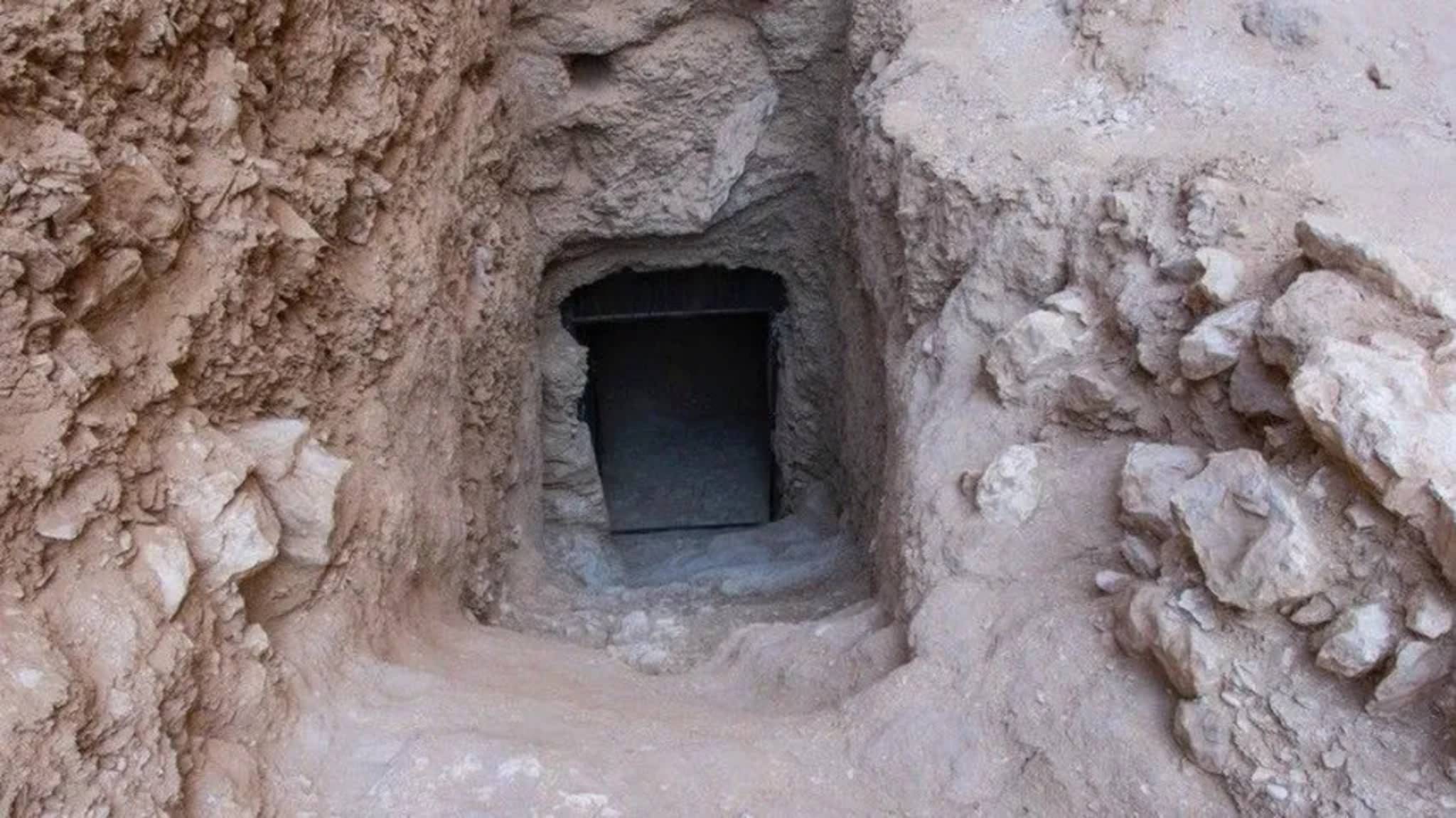
From an engineering and geological perspective, the monument is excavated entirely out of the natural limestone cliffs of the Theban hills, a material favored for its relative consistency but prone to hidden shale fractures. The craftsmanship displays a masterful execution of New Kingdom subtractive architecture, featuring a straight axis that descends over 100 meters into the bedrock across a series of three entrance corridors, a pillared hall, and a mᴀssive burial chamber. The interior walls were first leveled by royal stonemasons, coated with a fine layer of limestone plaster known as jesh, and then meticulously carved in sunk relief by elite artisans. The pigment application utilizes natural, durable minerals—such as Egyptian blue (cuororivait), yellow ochre, and iron oxide red—bound with animal glue, creating an unyielding polychromatic tapestry that has retained its intense brilliance for over three millennia.
Functionally, KV9 served as a highly sacred, multi-dimensional gateway engineered to ensure the resurrection and cosmic deification of the deceased Pharaoh. The elaborate wall decorations are not merely ornamental; they form a complex magical grid derived from sacred funerary compositions, including the Book of Gates, the Book of Caverns, and the Book of the Earth. The pillared halls and descending ramps depict the sun god Ra’s perilous nightly journey through the twelve hours of the underworld. Most notably, the ceiling of the grand burial chamber features a monumental, double-register depiction of the sky goddess Nut swallowing the sun at dusk and giving birth to it at dawn. This continuous astronomical clock symbolized the eternal cycle of rebirth, framing the pharaoh’s sarcophagus as the epicenter of cosmic renewal.

Despite being plundered by ancient tomb robbers a mere generation after its sealing, the modern scientific documentation and clearing of KV9 was a major milestone in Egyptology. While early European travelers like Richard Pococke mapped the tomb’s upper corridors as early as 1739, it was the pioneering French-Tuscan expedition led by Jean-François Champollion and Ippolito Rosellini in 1828–1829 that first conducted a systematic epigraphic study of the hieroglyphs. Later, at the turn of the twentieth century, Georges Daressy, working under the Egyptian Antiquities Service, cleared the deep piles of debris from the burial chamber, recovering the smashed fragments of the mᴀssive green conglomerate anthropoid sarcophagus of Ramesses VI, which has since been meticulously reconstructed by conservation teams.
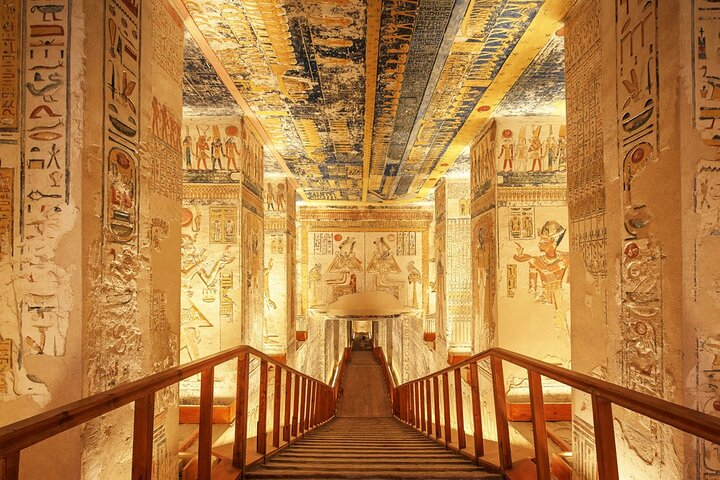
Today, the Tomb of Ramesses VI stands as a premier architectural benchmark for understanding the religious philosophy and logistical capabilities of ancient Egypt’s late Ramesside period. The sheer precision required to maintain a perfectly straight alignment through hundreds of meters of subterranean rock, lit only by oil lamps fed with salted linen wicks to reduce smoke, highlights a peak in ancient structural planning. By turning the dark, restrictive belly of the Theban mountain into a brilliant, light-filled celestial map, the ancient Egyptian architects created an enduring monument that successfully bridged the mortal realm with the infinite cosmos, preserving a timeless legacy of human artistic ambition across thousands of years.
✓ hoangduc
The rock-cut tomb designated as KV9, located in the main branch of the Valley of the Kings near modern Luxor, Egypt, represents one of the most structurally…