The Wandjina: Ancestral Spirits of the Kimberley Rock Art
The striking rock art depicted belongs to the tradition of Wandjina paintings, a profound cultural expression found primarily in the Kimberley region of Western Australia. These anthropomorphic figures, characterized by their lack of mouths, large eyes, and halo-like headdresses, are central to the cosmology of the Indigenous Australian people of this region. Dating the rock art in the Kimberley is a complex archaeological task, with some stylistic layers estimated to be at least 4,000 years old, while others continue to be refreshed and repainted by contemporary traditional owners as part of an unbroken cultural continuity that spans millennia.

The materials utilized in these artworks are primarily natural pigments harvested from the surrounding geological landscape. The artists traditionally employed red, yellow, and brown ochres, along with white kaolin clay and charcoal, to create these vivid figures directly onto the sandstone surfaces of rock shelters. The detail in the painting involves a deliberate application of these mineral-based pigments, often mixed with organic binders to adhere to the stone. The style of the figures highlights the specific artistic conventions of the Wandjina tradition, where the elongated limbs and elaborate headdresses serve as powerful symbolic representations of ancestral spirits rather than mere human likenesses.
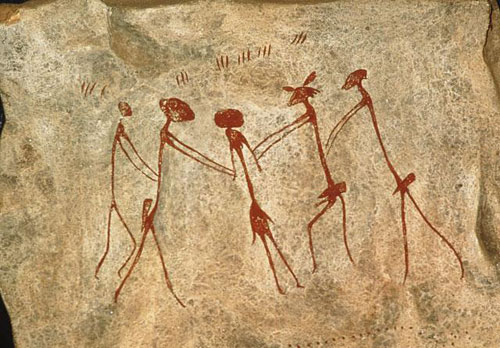
The significance and utility of the Wandjina paintings are deeply intertwined with Indigenous law, spirituality, and the management of the land. In the belief system of the Kimberley peoples, the Wandjina are creator spirits who shaped the landscape, established moral and social laws, and control the weather, particularly the life-giving monsoonal rains. These paintings function as sites of ritual engagement; by repainting them, the traditional owners maintain their spiritual connection to the ancestors, ensuring the continuity of the natural world and the health of the community. They are not simply “art” in a Western sense, but rather living repositories of cultural knowledge and physical anchors for the Dreaming, the foundational reality of Indigenous spirituality.
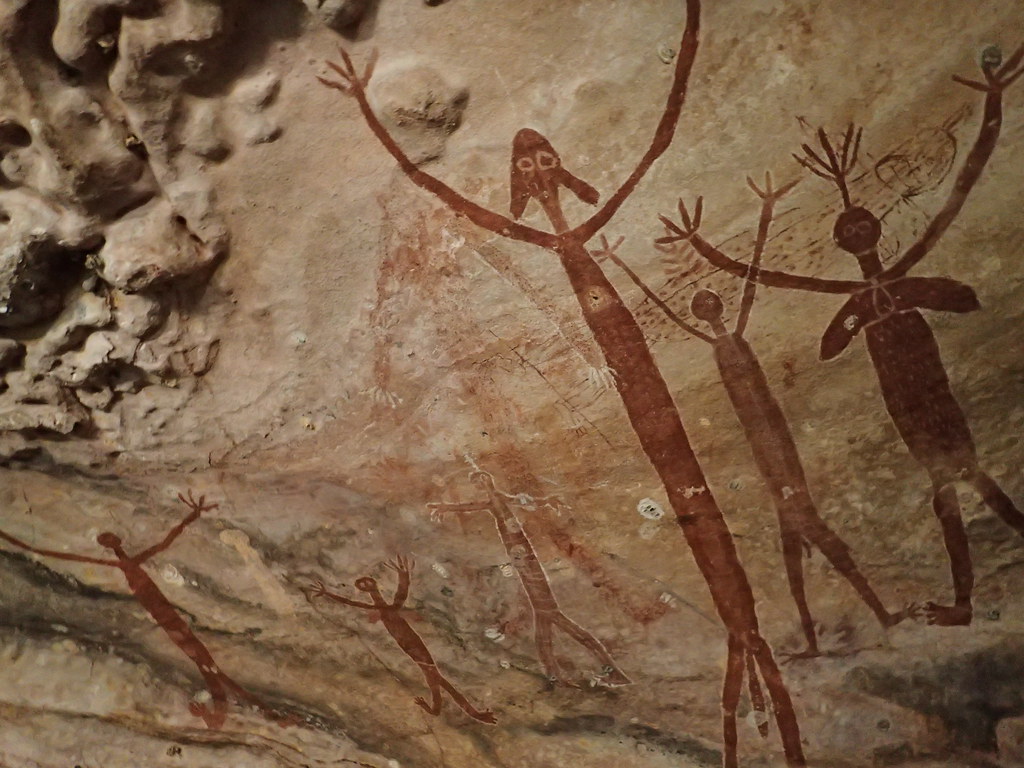
The documentation and study of these sites involve a collaborative approach between archaeologists, anthropologists, and the Indigenous traditional owners. Rather than traditional colonial-style “excavations,” modern research in the Kimberley emphasizes the protection of these sites through partnerships with organizations such as the Australian Insтιтute of Aboriginal and Torres Strait Islander Studies (AIATSIS) and local Indigenous land councils. These collaborative efforts ensure that the archaeological record respects the deep cultural authority of the Indigenous groups, who manage the sites as part of their ancestral heritage and ongoing living practice, rather than as static, historical curiosities to be “discovered” or removed.
In conclusion, the Wandjina figures showcased provide a rare, enduring connection to one of the world’s oldest continuous cultural traditions. By analyzing the materials, the symbolic iconography, and the ritual context of these paintings, archaeologists and cultural researchers gain invaluable insights into how Indigenous Australians have navigated and conceptualized their environment for thousands of years. As the field moves toward more inclusive and respectful research models, the study of these paintings continues to highlight the importance of recognizing the dynamic, living nature of indigenous archaeological sites. They remain essential monuments to the enduring legacy of the Kimberley peoples, reminding us that true history is found not just in the past, but in the active, ongoing relationship between a people, their ancestors, and their land.
✓ hoangduc
The striking rock art depicted belongs to the tradition of Wandjina paintings, a profound cultural expression found primarily in the Kimberley region of Western Australia. These anthropomorphic figures,…