The Ziggurat of Ur: A Monumental Bridge Between Earth and Heaven
The Ziggurat of Ur, prominently featured in the comparative views , stands as one of the most iconic architectural achievements of ancient Mesopotamia. Located in present-day Dhi Qar Province, Iraq, this mᴀssive stepped pyramid was constructed during the Early Bronze Age, with its primary phase of building dating to the reign of King Ur-Nammu of the Third Dynasty of Ur, approximately 2100 BCE. The structure, which served as the centerpiece of a larger temple complex dedicated to the moon god Nanna, represents the culmination of Sumerian architectural ingenuity and reflects the profound intersection of religion, royal power, and urban organization in the ancient Near East.

The construction of the Ziggurat of Ur was a triumph of material engineering, utilizing a core of sun-dried mud bricks encased in a thick, protective outer layer of kiln-fired bricks. As seen in the restoration imagery, the structure was built to be exceptionally resilient, with layers of reed matting and bitumen placed between courses of bricks to provide structural stability and manage the settling of the mᴀssive weight. The detailed craftsmanship is evident in the monumental, triparтιтe staircase system that converges at a gatehouse, leading to the elevated temple platform. This deliberate layering of materials allowed the ziggurat to withstand millennia of environmental exposure and seismic activity, demonstrating the advanced technical knowledge possessed by Sumerian master builders.

The significance of the ziggurat lay in its dual function as a religious sanctuary and an administrative hub. It was conceptualized as a “mountain of god,” a sacred bridge connecting the terrestrial realm to the celestial heights, where the priests could perform the rituals necessary to maintain the cosmic order and ensure the prosperity of the city-state. By physically elevating the temple above the surrounding urban landscape, the ziggurat served as a constant, visual reminder of the divine protection over Ur and the legitimacy of the King, who acted as the earthly steward of the gods. The temple at the summit served as the dwelling place of Nanna, housing the deity during the performance of lavish state sacrifices and seasonal festivals.
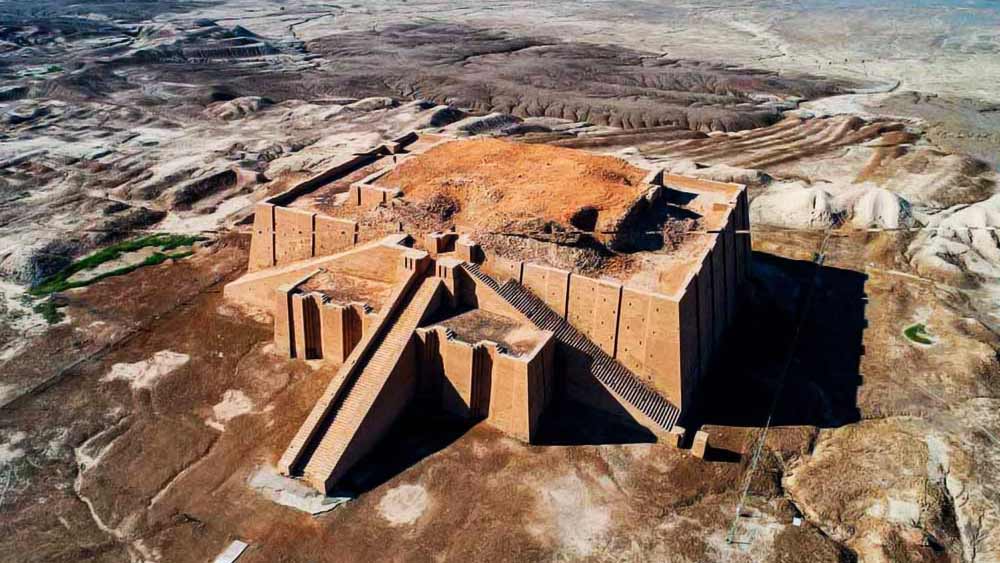
The rediscovery and scientific excavation of the Ziggurat of Ur are central milestones in the history of Near Eastern archaeology. The site was first formally surveyed and excavated in the mid-19th century by British consul William Loftus, but it was the systematic, large-scale excavations led by Sir Leonard Woolley in the 1920s and 1930s, sponsored by the British Museum and the University of Pennsylvania, that fully revealed its complexity. Woolley’s meticulous mapping of the city and its surrounding tombs provided the foundational data necessary to reconstruct the ziggurat’s history and place it within the broader context of Sumerian civilization, offering modern scholars an unparalleled insight into ancient urban life.

In conclusion, the Ziggurat of Ur remains an enduring record of human ambition, spiritual devotion, and engineering prowess. Whether viewed in its partially eroded state or its reconstructed form as displayed, the structure continues to command scholarly and public fascination. Its legacy persists as a critical site for studying the emergence of the world’s first cities and the sophisticated religious systems that governed them. Through ongoing archaeological research and global efforts to protect this vulnerable cultural site, we ensure that the lessons and history preserved within its kiln-fired bricks continue to inform our understanding of the foundations of ancient civilization.
✓ hoangduc
The Ziggurat of Ur, prominently featured in the comparative views , stands as one of the most iconic architectural achievements of ancient Mesopotamia. Located in present-day Dhi…