Unveiling the Urfa Man: A Neolithic Masterpiece from the Dawn of Civilization

The recent discovery of a monumental, life-sized statue in the ancient city of Urfa (modern Şanlıurfa, Turkey) has sent shockwaves through the archaeological world. This extraordinary find, dating back to approximately 9500 BCE, challenges our understanding of early human artistic expression and social complexity during the Pre-Pottery Neolithic B (PPNB) period. Unearthed at the archaeological site of Balıklıgöl, within the historical boundaries of Urfa, this statue, often referred to simply as the “Urfa Man,” is a rare and breathtaking example of figurative art from a time long thought to be devoid of such creations. Its existence provides a crucial window into the sophisticated worldview and technical capabilities of the communities that inhabited the Upper Mesopotamia region at the very dawn of settled life.

Carved from a single block of local limestone, the Urfa Man stands as a testament to the remarkable skill and craftsmanship of its creators. Though exhibiting a stylized and elongated form, the statue displays an impressive level of anatomical detail, particularly in the rendering of the face and hands. The almond-shaped eyes are deeply set, with pupils inlaid with black obsidian, giving them a piercing, lifelike quality. A prominent brow ridge and a delicate, well-defined mouth further enhance the statue’s expressive power. The hands, held together in front of the abdomen, are meticulously sculpted, with each finger and thumb clearly articulated, hinting at a symbolic gesture or posture of reverence. The back of the figure is also detailed, featuring incised lines that suggest a garment or perhaps a complex tattoo, adding another layer of interpretation.
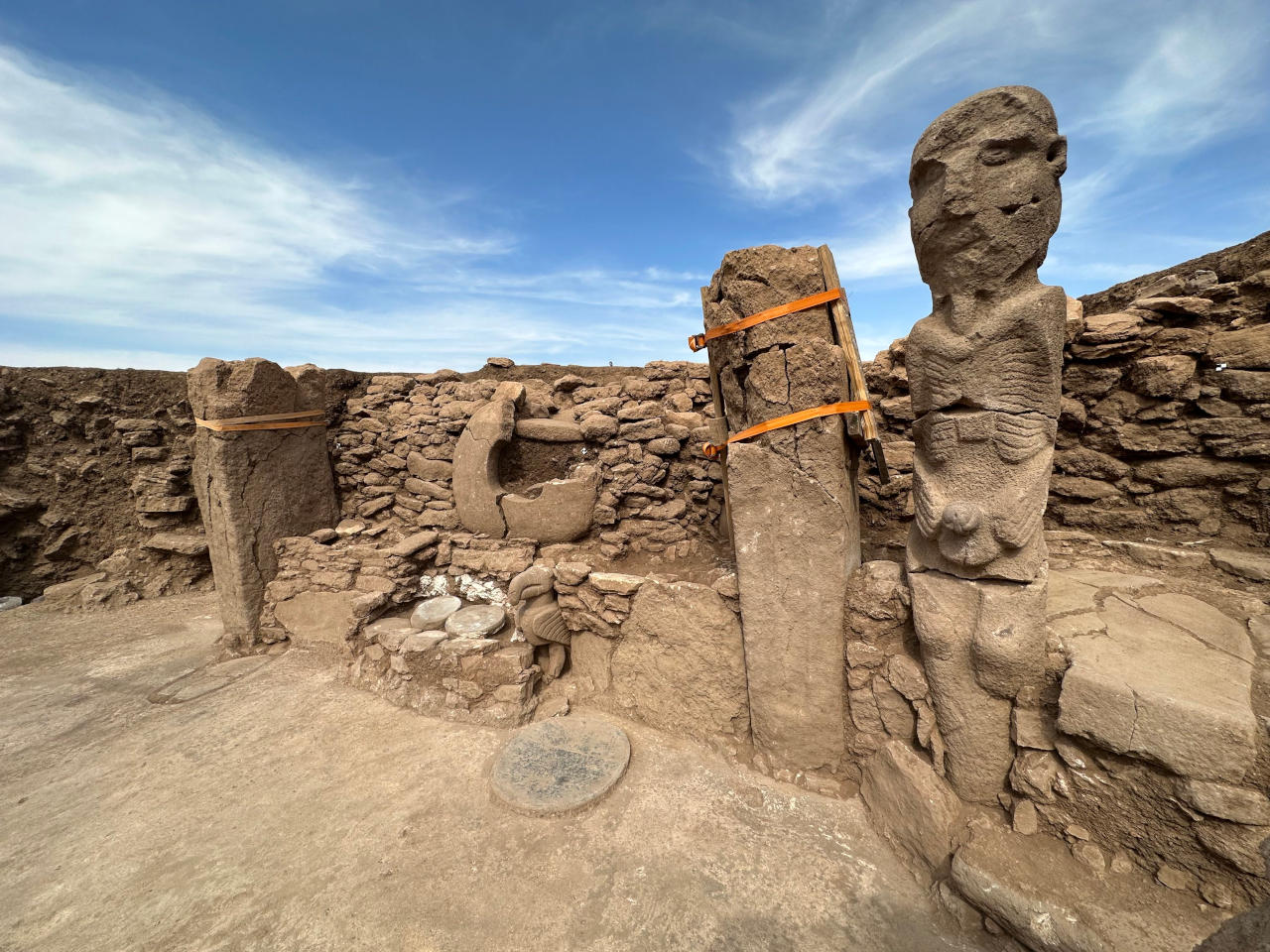
The significance of the Urfa Man extends far beyond its aesthetic appeal; it is a profound artifact that sheds light on the spiritual and social life of the Neolithic people. Standing over 1.8 meters tall, it was clearly intended to be a focal point, perhaps representing a deity, an ancestor, or an idealized human figure of great importance. Its context within the settlement of Balıklıgöl, potentially ᴀssociated with a public or ritual building, reinforces its role in communal life and belief systems. The statue’s prominent phallus, a common motif in Neolithic art, further underscores themes of fertility and regeneration, central concerns for early agricultural societies. The meticulous care with which it was fashioned, including the use of exotic materials like obsidian for the eyes, indicates that the creation of such an object was a major undertaking, requiring specialized knowledge and a significant investment of resources, suggesting a more hierarchical and organized society than previously ᴀssumed for this period.
The discovery of the Urfa Man is the culmination of meticulous archaeological work carried out by a dedicated team of researchers from the Şanlıurfa Museum and other academic insтιтutions. Directed by Turkish archaeologist Bahattin Çelik, the excavations at Balıklıgöl have yielded a wealth of information about Neolithic lifeways in the region, and the statue stands as their most significant finding. Its careful excavation and subsequent conservation have ensured that this fragile masterpiece of human history is preserved for future generations to study and admire. The careful documentation of its context within the settlement has been crucial in understanding its function and meaning, preventing it from being interpreted in isolation.
In conclusion, the Urfa Man is not merely an ancient statue but a cornerstone in the narrative of human civilization. Its discovery has irrevocably altered our understanding of the Neolithic period in Upper Mesopotamia, revealing a level of artistic sophistication and social complexity that was previously unimagined. It stands as a powerful reminder of the universal human drive to create, to symbolize, and to grapple with the profound mysteries of existence, from the very beginning of settled life. As research and analysis of this extraordinary artifact continue, it will undoubtedly yield further insights into the minds and lives of our ancient ancestors, enriching our understanding of the shared heritage of humanity.
✓ hoangduc
The recent discovery of a monumental, life-sized statue in the ancient city of Urfa (modern Şanlıurfa, Turkey) has sent shockwaves through the archaeological world. This extraordinary find,…