Whispers Beneath the Vines: The Rediscovery of the Roman Villa Mosaic in Negrar

The archaeological exploration of agricultural landscapes frequently reveals long-lost architectural treasures, perfectly exemplified by the stunning mosaic floors uncovered beneath the rows of a working vineyard in northern Italy. Dating back to the late 3rd to 4th century CE (circa 250–400 CE) during the Roman imperial period, this exceptionally well-preserved pavement was unearthed in the town of Negrar di Valpolicella, near Verona. Originally indicated by fragmentary finds in the late 19th century and partial probes in 1922, the precise location of the grand Roman villa had been lost to history beneath the fertile topsoil of a flourishing agricultural estate. The recent strategic excavation through narrow exploratory trenches among terraced grapevines has brought a remarkably vivid chapter of classical antiquity back into the light.

The physical composition of this discovery consists of thousands of multi-colored tesserae meticulously arranged to form intricate polychrome pavements. The creation of these vibrant floors involved highly specialized Roman craftsmanship, utilizing natural stone and marble cubes cut by hand and embedded into a thick bed of mortar and concrete. The excavated trenches reveal continuous, unbroken stretches of geometric patterns, interwoven guilloche bands, stylized wave motifs, floral vaults, and semi-circular pelta designs. The exceptional quality of the materials and the precision of the alignment reflect an elite standard of interior decoration, indicating that the original inhabitants possessed considerable wealth and refined aesthetic tastes.

Functionally, these ornate mosaic pavements served as the luxurious reception and living floor surfaces of a vast aristocratic Roman villa, which historical estimates suggest may have spanned up to 1,000 square meters. Within the domestic architecture of the empire, such vivid artistry not only provided structural durability and easy maintenance but also functioned as a visual display of the owner’s high social status, political connections, and cultural sophistication. Archaeologists believe the estate belonged to a wealthy local official or an affluent ᴀssociate of the imperial entourage who commanded considerable economic influence in the region north of Verona.
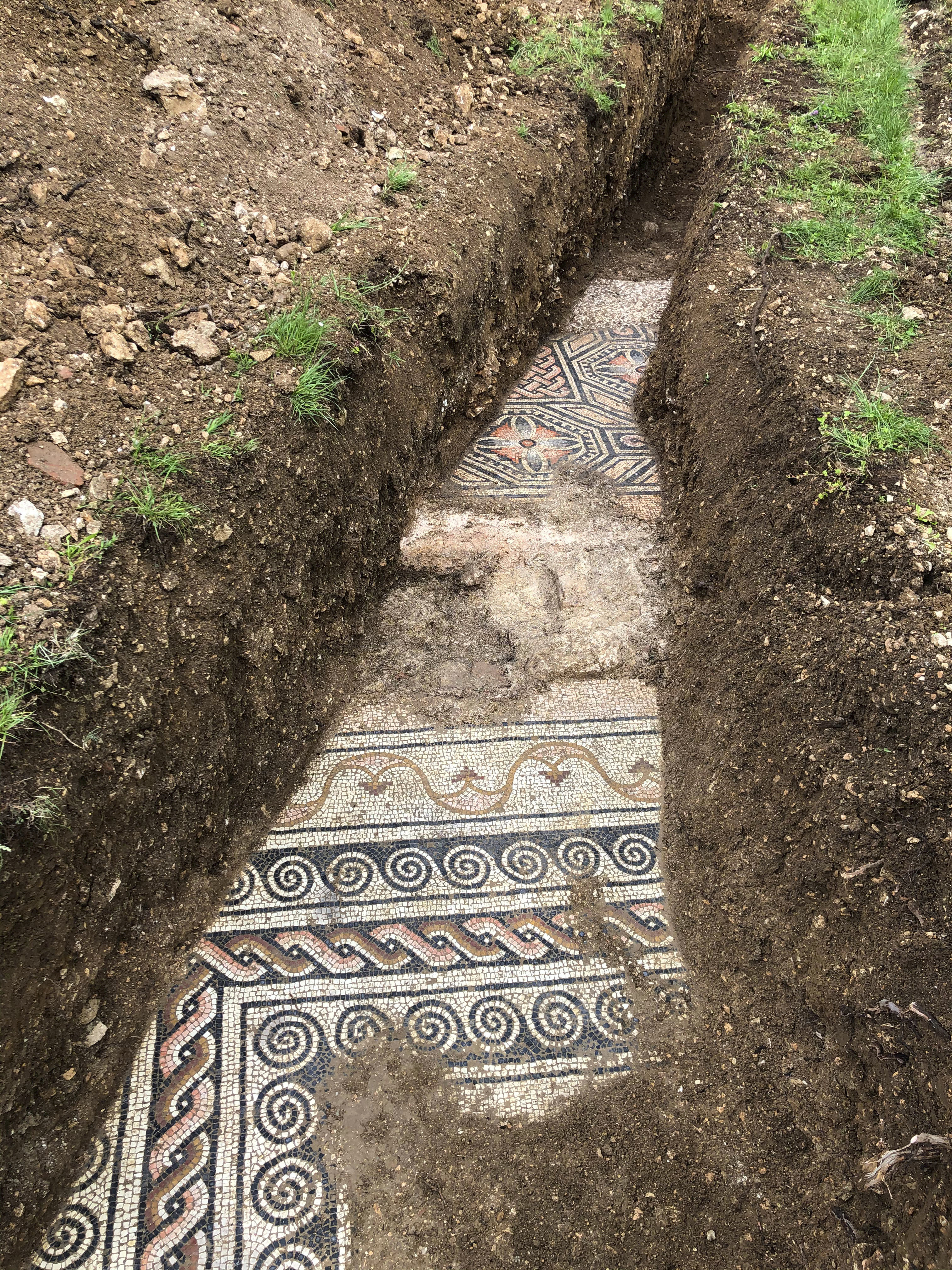
The rediscovery, documentation, and protection of this site have been spearheaded by the Superintendent of Archaeology, Fine Arts and Landscape of Verona, alongside municipal authorities and academic specialists. Following historical explorations—including initial uncoordinated digs in 1887 and a poorly documented survey in 1922—modern archaeological teams resumed systematic investigations using historical notes and targeted test trenches. Led by officials such as head archaeologist Gianni de Zuccato and supported by local municipal leaders like Mayor Roberto Grison, the excavation project carefully navigates the active agricultural use of the land to safeguard both the cash crops and the delicate cultural strata beneath.
Ultimately, this ancient mosaic floor stands as a breathtaking cultural monument to the permanence of Roman art and the complexities of modern heritage preservation. It bridges the gap between contemporary agricultural production and ancient archaeological legacy, proving that centuries-old history can peacefully coexist directly beneath our feet. As regional authorities and technicians collaborate to secure the resources needed to finish the clearance, this stunning subterranean villa remains an invaluable educational resource for understanding provincial Roman life.
✓ hoangduc
The archaeological exploration of agricultural landscapes frequently reveals long-lost architectural treasures, perfectly exemplified by the stunning mosaic floors uncovered beneath the rows of a working vineyard in…