Detailed Sandstone Bas-Reliefs of Banteay Srei and the Master Sculptors of the 10th-Century Khmer Empire
Dedicated in 967 CE under the reign of King Rajendravarman II and his successor Jayavarman V, the temple of Banteay Srei stands as an unmatched apex of medieval Southeast Asian artistic expression and theological architecture. Situated within the central heartland of the Angkor region in modern-day Cambodia, this sacred monument was commissioned not by a monarch, but by the royal scholar Yajnavaraha, a figure of profound spiritual learning and political influence. Constructed primarily from a rare, fine-grained rose-pink sandstone known locally for its extreme density, the site allowed 10th-century artisans to achieve a level of sculptural depth and precision that surpᴀssed previous brick and volcanic tuff construction techniques. Early epigraphic studies recorded on the temple’s foundational stelae detail how stone carvers manipulated this hard geological substrate with toolsets traditionally reserved for woodworking, yielding complex multi-layered friezes that have endured centuries of monsoon exposure. The historical convergence of royal patronage, specialized mineral extraction from the Phnom Kulen quarries, and refined iconographic traditions established Banteay Srei as a definitive benchmark for classic Khmer artistic canon.
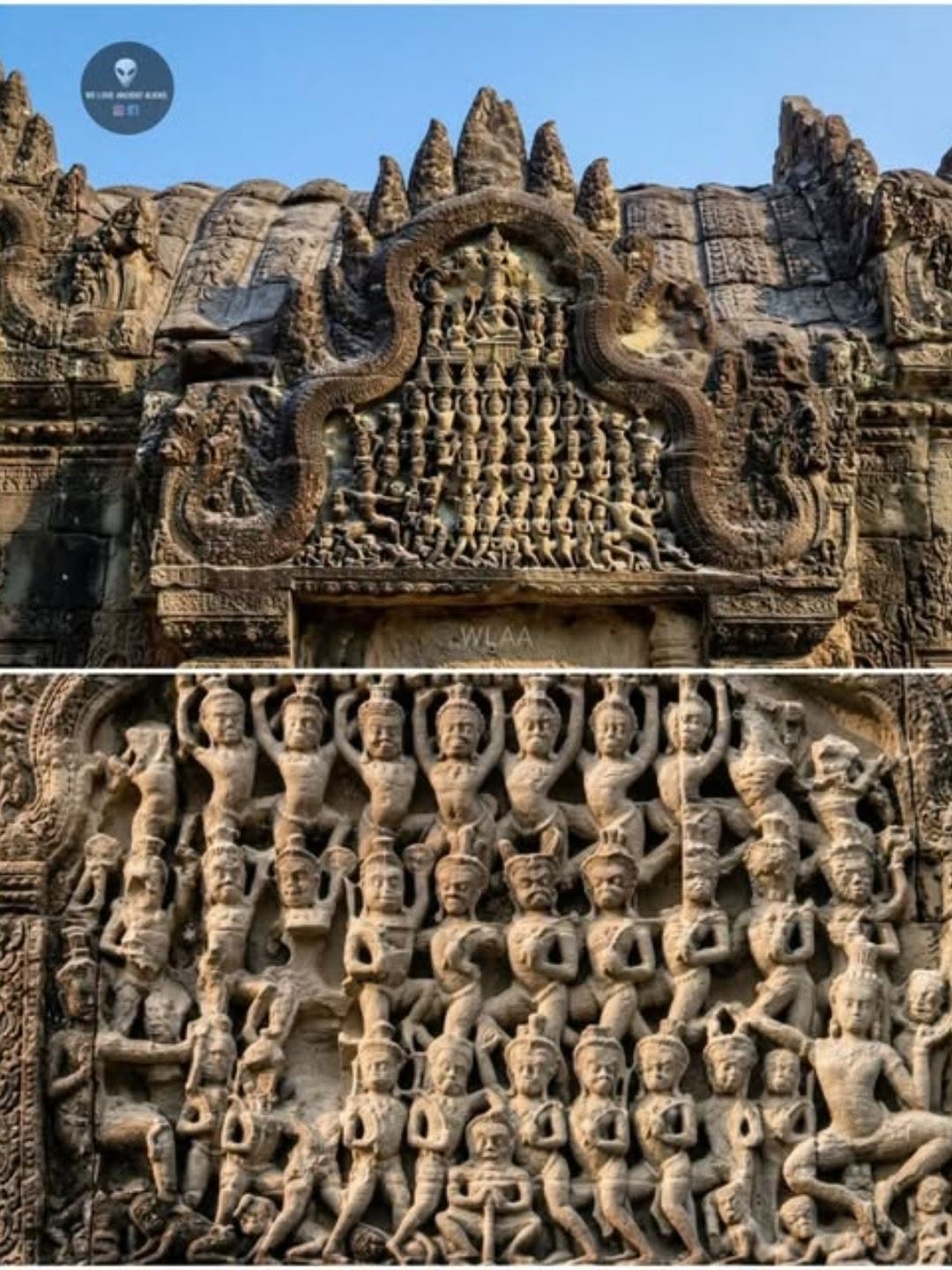
The intricate decorative program embedded upon the pediments, lintels, and pilasters of Banteay Srei reflects a sophisticated integration of Hindu cosmology and narrative tradition. Fine carvings present dense rows of dynamic celestial guardians, multi-armed deities, and revered mythic figures framed by elaborate floral scrolls and protective multi-headed naga arches. Foremost among these reliefs are detailed depictions from sacred epics, including the Ramayana and the Mahabharata, where divine conflicts and cosmic order are immortalized in deep, high-relief stone. Scholars analyzing the structural iconography note that the physical depth of these carvings was deliberately designed to catch the shifting angles of sunlight, creating a dramatic play of light and shadow that brought the sacred narratives to life for medieval pilgrims. Metallurgical and architectural analyses of the surrounding enclosures confirm that the temple functioned as both a spiritual sanctuary dedicated to Shiva and a permanent repository for the theological knowledge of the court, demonstrating how architectural space was systematically utilized as an enduring medium for religious education.
Beyond its stylistic brilliance, the stone masonry of Banteay Srei provides crucial historical documentation regarding the administrative, artistic, and social organization of the medieval Khmer Empire. Epigraphic inscriptions carved directly into the doorjambs record the precise allocation of land, livestock, and specialized labor required to erect and maintain the complex, revealing a highly organized network of stone cutters, polishers, and master sculptors working in structured guilds. The preservation of these fine details across a millennium offers scholars direct physical evidence of the sophisticated engineering standards and economic stability that characterized the Angkorian state during the late 10th century. By translating complex cosmological principles into permanent stone iconography, the master builders created a physical testament to the empire’s cultural reach and artistic maturity, cementing the region’s role as a major hub of religious exchange in historic Southeast Asia.

The enduring preservation of Banteay Srei continues to serve as an invaluable window into the artistic and historical achievements of human civilization. Modern architectural preservation efforts and 3D geospatial scanning have further highlighted the exact mathematical proportions and symmetry employed by its medieval architects, confirming that the site was planned with meticulous technical rigor. The delicate sandstone reliefs remain a cornerstone for understanding the evolution of Southeast Asian art, illustrating a seamless synthesis of imported theological concepts and distinct local craftsmanship. As research into the broader Angkorian urban landscape expands, Banteay Srei remains a paramount cultural monument, testifying to the extraordinary creative vision, technical mastery, and spiritual dedication of the historic Khmer civilization.
✓ Alex Morgan
Dedicated in 967 CE under the reign of King Rajendravarman II and his successor Jayavarman V, the temple of Banteay Srei stands as an unmatched apex of…